

Maddy summaryThis bill reauthorizes the National Alzheimer's Project Act through 2035 (extending the previous deadline of 2025) and adds new requirements to promote healthy aging and reduce Alzheimer’s risk factors. It mandates the program to provide information on healthy behaviors that may lower cognitive decline risk and expands the advisory group to include representatives from agencies like the Department of Justice, FEMA, and Social Security Administration, plus experts with diverse clinical trial experience. The bill directly affects Alzheimer’s research, care programs, and the federal advisory group overseeing national efforts. Key changes include requiring annual evaluations instead of initial ones and adding a focus on reducing health disparities in Alzheimer’s initiatives.
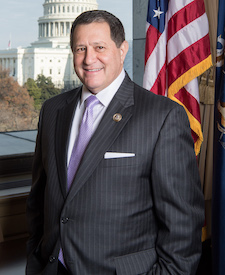
Rep. Joseph D. Morelle
Sponsored bills
Maddy summaryThe HELP Act of 2023 provides $550 million annually for 2024-2025 and $450 million for 2026-2030 to strengthen 211 (human services information and referral) and 988 (mental health crisis) services nationwide. It requires states to develop coordinated systems that ensure 24/7 accessibility, reduce non-emergency 911 calls, and connect individuals to appropriate human services and mental health resources. The bill mandates states to create comprehensive service databases, ensure accessibility for people with disabilities, and establish oversight councils with diverse representation to monitor racial equity and service effectiveness. States must also implement diversion programs to connect individuals with mental health responders instead of law enforcement for non-emergency situations. The legislation includes regular reporting requirements and biennial evaluations to measure how effectively the program connects people to needed services and reduces unnecessary law enforcement interactions.
Maddy summaryHR 895, the Combating Organized Retail Crime Act of 2023, expands federal law to better prosecute organized retail theft by amending sections 2314 and 2315 of Title 18. It clarifies that crimes involving stolen goods valued at $5,000 or more over 12 months - including retail theft - can be prosecuted under existing federal statutes, and broadens definitions to include goods taken via "any facility of interstate or foreign commerce." The bill also creates a new Organized Retail Crime Coordination Center within Homeland Security, requiring it to coordinate federal, state, and local law enforcement efforts, share threat information with retailers, and produce annual public reports on trends. This directly affects law enforcement agencies, retailers, and criminal justice systems by standardizing prosecution thresholds and enhancing interagency collaboration.
Maddy summary# Summary of Legislative Text This is a comprehensive legislative proposal focused on addressing substance use disorder through public health approaches, with significant funding and program requirements. Key elements include: 1. **Major Funding Programs:** - **Subtitle A (Local Grants):** $3.0 billion annually (2024-2033) for local entities to provide prevention, treatment, and recovery services - **Subtitle B (State/Regional Grants):** $4.6 billion annually (2024-2033) for state-level programs - **Subtitle C (Other Grants):** $1.0 billion annually (2024-2033) for specific entities and underserved populations - **Subtitle D (Innovation/Training):** $1.5 billion annually (2024-2033) for training, research, and capacity building 2. **Key Program Requirements:** - Mandates for evidence-based treatment services across multiple levels of care - Requirements for cultural competency, particularly for Native American communities - Specific focus on harm reduction, prevention, and recovery support - Provisions for naloxone distribution and overdose reversal programs 3. **Regulatory Changes:** - New certification requirements for covered manufacturers, distributors, and dispensers of Schedule II controlled substances - Penalties for failure to submit certifications or submitting false certifications - Creation of a "Comprehensive Addiction Resources Fund" for penalty revenues 4. **Focus Areas:** - Prevention services (including trauma-informed approaches) - Early intervention services - Recovery support services - Harm reduction programs - Workforce development for treatment providers - Special attention to underserved populations (rural communities, racial minorities, formerly incarcerated individuals) 5. **Funding Priorities:** - 10% of funds for Native American communities - Specific requirements for cultural competency and language access - Mandated data collection and reporting systems This legislation represents a significant shift toward public health approaches to substance use disorder, emphasizing prevention, treatment, and recovery support rather than punitive measures, with substantial funding commitments over a decade.
Maddy summaryThis resolution expresses support for designating May 16, 2024, as "National Day of Light" to highlight the importance of light-based technologies. It recognizes these technologies' role in medicine (e.g., laser surgery), communication (internet), transportation safety, national security, and innovation like quantum computing. The resolution encourages schools, colleges, and universities to observe the day with educational activities. It is a symbolic gesture with no legal requirements or direct impact on policy.
Maddy summaryThe Public Service Freedom to Negotiate Act of 2024 establishes federal minimum standards for collective bargaining rights for public employees and supervisory employees. The Federal Labor Relations Authority will determine if each state's laws "substantially provide" for these rights, and if not, federal standards will apply to that state. These standards include the right to self-organization, collective bargaining, recognition of labor organizations, and procedures for resolving disputes. The bill preserves existing collective bargaining agreements and excludes certain employee categories like emergency services workers from some provisions.
Maddy summaryThe Rights for the TSA Workforce Act of 2024 would transition Transportation Security Administration (TSA) employees, particularly screening agents, from TSA-specific personnel rules to the standard federal government personnel system under Title 5 of the U.S. Code by December 31, 2024. The bill prohibits changes to current personnel policies for covered employees until the transition date and ensures no reduction in pay or benefits during the conversion process. It preserves certain benefits like law enforcement availability pay for Federal air marshals and maintains collective bargaining rights for screening agents. The bill also requires various reports to Congress on recruitment, implementation, diversity, and workplace safety to be submitted within specified timeframes.
Maddy summaryHR 8388, the Aaron Salter, Jr., Responsible Body Armor Possession Act, bans civilians from purchasing, owning, or possessing "enhanced body armor" (defined as bullet-resistant protection meeting Type III standards per National Institute of Justice guidelines). This law directly affects most non-law enforcement civilians, with key exceptions for law enforcement officers (including corrections officers), government entities, and individuals who legally owned such armor before the law took effect. The bill creates a new federal offense punishable by fines or up to 10 years in prison for knowingly violating the ban. It does not restrict standard body armor or apply to law enforcement personnel.
Maddy summaryThis non-binding House resolution honors teachers' resilience during Teacher Appreciation Week (May 6-13, 2024), recognizing their efforts to address pandemic learning gaps, support diverse learners, and maintain high professional standards. It highlights teachers' work in creating inclusive school environments and their commitment to student success, citing statistics like 84% retention in the profession and 46.5% having over 15 years of experience. The resolution expresses congressional appreciation through five formal acknowledgments but does not create new policies, funding, or legal obligations. It is purely ceremonial, encouraging public gratitude for teachers' contributions without altering any laws or programs.
Maddy summaryHR 8319 creates a federal grant program to support the development, research, and adoption of innovative learning models in K-12 education. The bill authorizes $570 million annually for competitive grants to fund the development of evidence-based learning models through early-phase, mid-phase, and expansion grants, and $180 million annually for states to distribute to school districts to implement these models. It defines "innovative learning models" as comprehensive programs that integrate teaching resources, instructional practices, and technology to improve student outcomes, rather than just providing technology tools, and requires states to coordinate with schools and communities in their implementation.