Emmett Till and Mamie Till-Mobley Congressional Gold Medal Act of 2021 This bill provides for the posthumous presentation of a Congressional Gold Medal in commemoration of Emmett Till and Mamie Till-Mobley. After the award the medal shall be given to the National Museum of African American History and Culture.
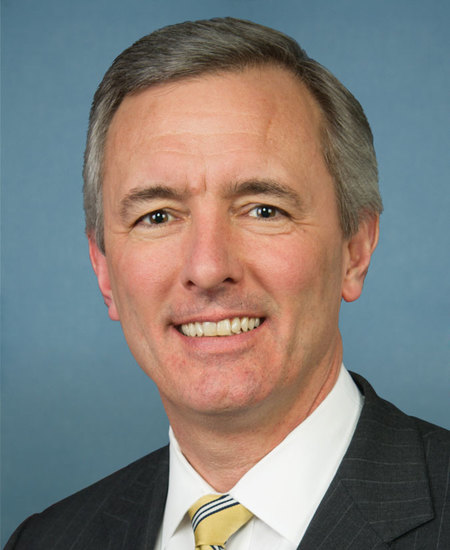
Rep. John Katko
Sponsored bills
Survivors' Access to Supportive Care Act or SASCA This bill sets out programs and requirements to address access and quality issues related to sexual-assault examinations. Specifically, the bill establishes training and technical assistance programs for health care providers on conducting sexual-assault examinations and treating survivors of sexual assault, including in rural and tribal settings; grants for states to assess the availability of trained providers to perform sexual-assault examinations; and a task force to assist state-level efforts to improve medical forensic evidence collection related to sexual assault. The bill also requires institutions of higher education to provide information about the availability of sexual-assault examinations to survivors of sexual assault. Additionally, hospitals and specified components of the Department of Health and Human Services (HHS) must report on access and quality issues concerning sexual-assault examinations and related services. Furthermore, HHS must address access to, and the quality of, trained health care providers who conduct sexual-assault examinations in the National Quality Strategy. This is a national effort to align public-sector and private-sector stakeholders to achieve better health and health care.
Neighborhood Homes Investment Act This bill establishes a new business-related tax credit to finance home building and rehabilitation in neighborhoods that meet certain eligibility criteria relating to poverty rates, income, and home values. The credit is limited to 35% of the lesser of the qualified development cost (i.e., the cost of construction, substantial rehabilitation, demolition, and environmental remediation of residential properties) or 80% of the national median sale price for new homes. The credit applies to single family homes containing four or fewer residential units, condominiums, or houses or apartments owned by cooperative housing corporations.
Freedom To Invest in Tomorrow's Workforce Act This bill allows the use of funds in a qualified tuition program (commonly known as a 529 account) to pay for expenses associated with obtaining or maintaining recognized postsecondary credentials.
Military Family Violence Prevention Act This bill requires the Department of Defense (DOD) to take various actions and implement programs related to the prevention of and response to domestic violence and child abuse and neglect among military families. Specifically, the bill requires DOD to report on current and recommended staffing levels for the Family Advocacy Programs (FAPs) of the Armed Forces at each installation, ensure that appropriate statistical data on incidents report to the FAPs is shared among and across the Armed Forces, establish a pilot program to assess the feasibility and advisability of various mechanisms to inform families about the FAPs and resiliency training of the Armed Forces during their enrollment in the Defense Enrollment Eligibility Reporting System, report on the results of the study conducted by the Defense Department Advisory Committee on Women in the Services that includes information on initial entry points for use by members of military families seeking support for domestic abuse or child abuse and neglect, and modify internal policy related to FAPs to enhance collaboration among the specified DOD programs (e.g., the Defense Suicide Prevention Office). Each military department must improve the information available to military families on the services available in connection with domestic abuse or child abuse and neglect. Finally, the bill requires the Inspector General of DOD to report on best practices among military installations in prevention and response to domestic abuse and child abuse and neglect among military families.

Safe Step Act This bill requires a group health plan to establish an exception to medication step-therapy protocol in specified cases. A medication step-therapy protocol establishes a specific sequence in which prescription drugs are covered by a group health plan or a health insurance issuer. A request for such an exception to the protocol must be granted if (1) an otherwise required treatment has been ineffective, (2) such treatment is expected to be ineffective and delaying effective treatment would lead to irreversible consequences, (3) such treatment will cause or is likely to cause an adverse reaction to the individual, (4) such treatment is expected to prevent the individual from performing daily activities or occupational responsibilities, (5) the individual is stable based on the prescription drugs already selected, or (6) there are other circumstances as determined by the Employee Benefits Security Administration. The bill requires a group health plan to implement and make readily available a clear process for an individual to request an exception to the protocol, including required information and criteria for granting an exception. The bill further specifies timelines under which plans must respond to such requests.
Hire Veteran Health Heroes Act of 2021 This bill requires the Department of Veterans Affairs (VA) to consult with the Department of Defense to identify members of the Armed Forces in health care occupations who are separating from the Armed Forces. The VA must refer interested members to a recruiter for consideration of open positions in the member's specialty and geography of interest.
Veteran Suicide Prevention Act This bill requires the Department of Veterans Affairs (VA) to complete a review of the deaths of all covered veterans who died by suicide during the five-year period preceding the enactment of this bill. Covered veterans are those who received VA hospital care or medical services during the five-year period preceding the death of the veteran. The VA shall report on the results of the review and make such report publicly available.
VA Billing Accountability Act This bill authorizes the Department of Veterans Affairs (VA) to waive the requirement that a veteran make co-payments for medications, hospital care, nursing home care, and medical services in certain situations. Specifically, a veteran may have such co-payments waived if (1) an error committed by the VA or a non-VA facility delayed co-payment notification to the veteran, and (2) the veteran received such notification later than 180 days (18 months in the case of a non-VA facility) after the date on which the veteran received the care or services. In requiring a veteran to make a co-payment for care or services provided at a VA or a non-VA medical facility, the VA shall notify the veteran not later than 180 days (18 months in the case of a non-VA facility) after the date on which the veteran received the care or services. If the VA does not provide notification by such date, it may not collect the payment, including through a third-party entity, unless the veteran is provided with (1) information about applying for a waiver and establishing a payment plan with the VA, and (2) an opportunity to make a waiver or establish a payment plan. Finally, the bill requires the VA to review and improve its co-payment billing internal controls and notification procedures.
Just and Unifying Solutions To Invigorate Communities Everywhere Act of 2021 or the JUSTICE Act This bill addresses policies and issues regarding policing practices and law enforcement accountability. The bill funds state and local grants, incentivizes state and local reporting on the use of certain policing practices, creates new federal offenses for certain misconduct, and establishes best practices and training requirements. The bill funds state and local grants, including to support the use of body-worn cameras, to implement information sharing systems for disciplinary records of law enforcement officers, and to prohibit officers from engaging in sexual acts under color of the law. Further, it requires state and local governments that receive grants under the Edward Byrne Memorial Justice Assistance Grant program to report information related to use-of-force incidents and the use of no-knock warrants. At the federal level, the bill establishes new criminal offenses related to falsifying police reports and engaging in sexual acts under color of law. The bill directs the Department of Justice to develop training on de-escalation tactics, behavioral health crises, alternatives to the use of force, and the duty to intervene when another officer uses excessive force. Finally, the bill establishes and funds the National Criminal Justice Commission. Among other tasks, the commission must develop best practices for policing tactics and procedures.