Protect and Serve Act of 2021 This bill establishes a new criminal offense for knowingly assaulting a law enforcement officer and causing serious bodily injury (or attempting to do so) in circumstances that affect interstate commerce. It imposes criminal penalties—a prison term, a fine, or both—on a violator.
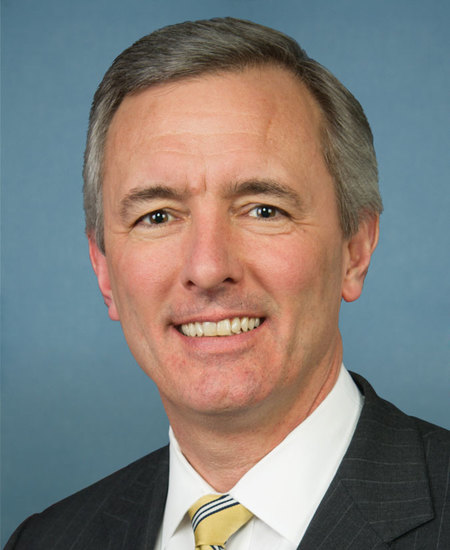
Rep. John Katko
Sponsored bills
Protecting America's First Responders Act of 2021 This bill makes changes to the Public Safety Officers' Benefits (PSOB) program. The PSOB program provides death, disability, and education benefits to public safety officers and survivors of public safety officers who are killed in the line of duty or permanently disabled as a result of catastrophic injuries sustained in the line of duty. Among the changes, the bill expands the public safety officers eligible for coverage under the PSOB program to include firefighters whose primary duty during an emergency response is to secure the scene or manage traffic and cadets or trainees in candidate-officer training; extends coverage under the PSOB program to certain public safety officers responding outside their jurisdiction; increases the interim benefit amount payable on a claim for death benefits and requires the interim amount to be adjusted annually for inflation; increases the benefit amount payable on a death or disability claim that has been pending for more than 365 days on the date of the final determination; allows the Department of Justice (DOJ) to use investigative tools, including subpoenas, to expedite the processing of claims and obtain information or documentation from third parties (e.g., public agencies); specifies that an injury resulting from a neurocognitive disorder qualifies as a catastrophic injury for the purposes of disability benefits; requires (currently, authorizes) DOJ to provide retroactive education benefits to qualifying children and spouses; specifies that hearing officers appointed to review claims are special government employees (i.e., employees who perform temporary duties for a limited period of time) and are authorized to conduct examinations; and allows responders to the World Trade Center or their surviving family members to file claims for death or disability benefits in certain circumstances.
This resolution recognizes the service and sacrifices of the Transportation Security Administration's (TSA's) employees and officers on the occasion of the 20th anniversary of the establishment of the TSA and the role its employees and officers play in keeping our nation secure.
Mary Jo Lawyer Spano Mesothelioma Patient Registry Act of 2021 This bill requires the Agency for Toxic Substances and Disease Registry, which is part of the Department of Health and Human Services, to establish a mesothelioma patient registry. (Mesothelioma is a cancer of the tissue lining the lung, chest, and abdomen areas and is generally associated with asbestos exposure.) The registry must include information relating to the incidence and prevalence of mesothelioma in the United States, including treatment outcomes and demographics.
Fiscal State of the Nation Resolution This concurrent resolution requires the congressional budget committees to conduct an annual joint hearing to receive a presentation from the Comptroller General regarding (1) the Government Accountability Office's audit of the financial statement of the executive branch, and (2) the financial position and condition of the federal government.
Ending the Monopoly of Power Over Workplace Harassment through Education and Reporting Act or the EMPOWER Act This bill makes it an unlawful labor practice for an employer to enter into, or attempt to enforce, a contract with an employee or job applicant that contains a nondisparagement or nondisclosure clause that covers workplace or sexual harassment, including retaliation for participating in a workplace harassment proceeding. The bill exempts certain settlement or separation agreements from such prohibition. The bill also requires the Securities and Exchange Commission to promulgate a regulation that requires any issuer of securities to submit a report for the most recent five-year period with respect to workplace and sexual harassment. The commission must provide for the development and dissemination of training programs and information regarding workplace and sexual harassment. The bill denies a tax deduction for amounts related to judgments and expenses in connection with litigation related to workplace or sexual harassment. It also excludes from gross income, for income tax purposes, any amount received in connection with a claim or settlement related to workplace or sexual harassment, or other unlawful discrimination.
Exposing China's Belt and Road Investment in America Act of 2021 This bill requires the Committee on Foreign Investment in the United States to review certain investments made by China in the United States. Specifically, the committee must review any investment by a foreign person that (1) involves the acquisition of real estate in the United States and the establishment of a U.S. business on such real estate, and (2) could result in direct or indirect control of that U.S. business by China. A party to any such investment must submit to the committee a declaration containing basic information regarding the transaction.
Family Violence Prevention and Services Improvement Act of 20 21 This bill modifies, expands, and reauthorizes through FY2026 the Family Violence and Prevention Services program, which funds emergency shelters and supports related assistance for victims of domestic violence. Specifically, the bill requires the Department of Health and Human Services (HHS) to award grants and enter cooperative agreements with state and tribal domestic violence coalitions, and community-based organizations, to support prevention services. Depending on the type of organization, grant recipients must use funding to (1) provide technical assistance; (2) promote evidence-informed prevention strategies; (3) implement coordinated, community responses to reduce risk factors for family violence; and (4) develop prevention partnership strategies. Further, HHS must award specified grants to organizations that provide population-specific services in underserved communities and to community-based organizations that provide culturally specific domestic violence services to racial and ethnic minority groups. The bill also establishes a grants program for tribal domestic violence coalitions to support the provision of local, tribal, family domestic or dating violence services and requires HHS to award a grant for the administration of a hotline dedicated to serving Indians affected by domestic violence. In addition, the bill modifies certain program-wide definitions; changes the requirements for specified grant applications, eligibility criteria, and use of funds; and makes other technical revisions.

Original National Domestic Violence Awareness Month Resolution of 2021 This resolution supports the goals and ideals of National Domestic Violence Awareness Month. Further, it expresses the sense of the House of Representatives that Congress should continue to raise awareness of and support programs to end domestic violence.
State, Local, Tribal, and Territorial Fiscal Recovery, Infrastructure, and Disaster Relief Flexibility Act This bill allows states, tribes, territories, and localities to use certain COVID-19 relief funds for new categories of spending, including for natural disasters and infrastructure projects. It also makes changes to expenditure deadlines and other aspects of this funding. Specifically, recipients may use funds for emergency relief from natural disasters and associated negative economic impacts of natural disasters. In addition, recipients may use a portion of their COVID-19 relief funds for designated infrastructure projects, such as nationally significant freight and highway projects. Furthermore, the bill allows recipients to expend COVID-19 relief funds on these types of infrastructure projects until September 30, 2026. Under current law, recipients must expend the funds by December 31, 2024. Other changes in the bill include (1) modifying eligibility and allocation requirements for funding set aside for counties and Indian tribes that are near public lands, (2) allowing Indian tribes an additional year to expend their COVID-19 relief funds, and (3) establishing a process for government entities to decline COVID-19 relief funds and requiring any declined funds to be used to reduce the federal deficit.