

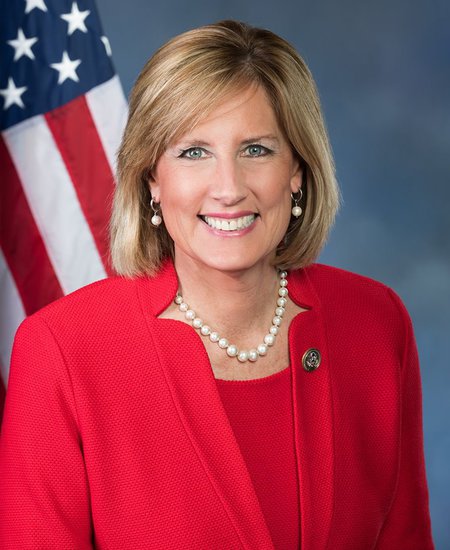
Photo of Claudia Tenney
R United States House · District 24 · New York On the 2026 ballot

Rep. Claudia Tenney

Compare
Total votes
2,811
all sessions
Attendance
99%
20 missed
Higher than 78% of chamber peers
With party
95%
of cast votes
Higher than 90% of chamber peers
Bipartisan score
3%
crosses aisle rarely
Lower than 91% of chamber peers
Sponsored
1,793
bills & resolutions
Higher than 94% of chamber peers
Committees
8
assignments
1,793 bills and resolutions

Sponsored bills

Total
1,793
Primary
194
Co-sponsor
1,599
This page
1,793
matching current filters
Co-sponsor HR 589
Passed · United States House · Co-sponsor
MAHSA Act

Maddy summaryHR 589, the MAHSA Act, imposes U.S. sanctions on Iran's Supreme Leader, President, and affiliated entities responsible for human rights abuses and terrorism. It targets the Supreme Leader's Office, the President's cabinet, security forces involved in the crackdown following Mahsa Amini's death, and entities financing abuses. The bill requires the President to annually determine and apply existing sanctions - like property blocking and visa bans - against these individuals and entities. This directly affects Iran's top leadership and security apparatus, aiming to hold them accountable for abuses including the Morality Police's role in Amini's detention and the subsequent violent suppression of protests.

Passed Dec 17, 2024 1 co-sponsor
Co-sponsor HR 407
In committee · United States House · Co-sponsor
Protect the UNBORN Act

Maddy summaryHR 407, the "Protect the UNBORN Act," prohibits federal agencies from implementing or enforcing two specific executive orders issued by President Biden in 2022 (Executive Orders 14076 and 14079), which aimed to protect access to reproductive healthcare services. The bill bans the use of federal funds, including those from the 2022 Consolidated Appropriations Act, to carry out, administer, or enforce these executive orders. It directly affects federal agencies and programs that would otherwise comply with the Biden administration's policies on reproductive healthcare access. The bill does not create new healthcare rules but blocks the implementation of existing executive actions.

In committee Dec 17, 2024 1 co-sponsor
Co-sponsor HR 7
In committee · United States House · Co-sponsor
No Taxpayer Funding for Abortion and Abortion Insurance Full Disclosure Act of 2023

Maddy summaryThis bill bans federal funding for abortions in most cases, prohibiting the use of taxpayer money for abortion services or health insurance plans covering abortion. Exceptions allow funding for abortions resulting from rape, incest, or when a pregnancy endangers a woman's life. It requires health insurance plans sold through the Affordable Care Act (ACA) marketplaces to clearly disclose any separate costs for abortion coverage and prohibits ACA subsidies from being used for plans that cover abortion (except in the specified exceptions). The law directly affects federal programs like Medicaid, ACA marketplace plans, and insurers offering health coverage to individuals using federal subsidies.

In committee Dec 17, 2024 1 co-sponsor
Co-sponsor HJRES 181
In committee · United States House · Co-sponsor
Providing for congressional disapproval under chapter 8 of title 5, United States Code, of the rule submitted by the Department of Labor relating to "Definition of 'Employer'-Association Health Plans".

Maddy summaryHJRES 181 is a congressional resolution seeking to block a Department of Labor rule that defined "Employer-Association Health Plans." The bill would prevent this specific rule - published in the Federal Register on April 30, 2024 - from taking effect. It directly affects employers and health plan administrators who use these association-based health coverage models. If passed, the rule would have no legal force, reversing the Labor Department's regulatory definition.

In committee Dec 16, 2024 1 co-sponsor
Primary HR 10411
In committee · United States House · Lead sponsor
Federal Employee Performance and Accountability Act of 2024

Maddy summaryHR 10411 establishes a 5-year pilot program for federal employees in mid-to-senior positions (GS-11 through GS-15 or higher) with measurable work duties. The bill creates a tiered pay system where employees exceeding performance metrics (Tier 1) may receive up to a 10% salary increase, those meeting standards (Tier 2) get no change, and those falling short (Tier 3) face a 10% pay reduction plus required training. Participating agencies must set annual productivity, quality, and timeliness metrics for employees, with agency heads able to opt out for national security reasons. The program requires annual reports on productivity gains, cost savings, and employee satisfaction, using existing agency funds without new appropriations.

In committee Dec 16, 2024 0 co-sponsors
Primary HR 10413
In committee · United States House · Lead sponsor
Implementing DOGE Act

Maddy summaryHR 10413, the "Implementing DOGE Act," would require automatic reductions to nonsecurity federal spending starting in fiscal year 2026. It mandates a pro-rata cut equal to the "excess growth percent" (how much nonsecurity discretionary spending grew beyond 1% compared to the previous year) for all nonsecurity discretionary programs. This affects agencies funding programs like education, transportation, and environmental initiatives, but not defense or security-related spending. The cuts would apply automatically on the day after federal appropriations become available for each fiscal year. The bill focuses on budget mechanics, not specific policy changes to programs.

In committee Dec 16, 2024 0 co-sponsors
Primary HR 10412
In committee · United States House · Lead sponsor
Federal Freeze Act

Maddy summaryHR 10412, the Federal Freeze Act, imposes a one-year freeze on federal hiring and salary increases for all executive branch agencies. It prohibits agencies from exceeding their current staffing levels (defined as the employee count on the bill's enactment date) and bans any raises to basic pay rates. The bill further requires agencies to reduce staff by 2% within two years and by 5% within three years of enactment. Exceptions allow hiring for law enforcement, public safety, or national security needs during the initial freeze period.

In committee Dec 16, 2024 0 co-sponsors
Primary HR 10410
In committee · United States House · Lead sponsor
Commission to Relocate the Federal Bureaucracy Act

Maddy summaryHR 10410, the *Commission to Relocate the Federal Bureaucracy Act*, establishes a commission to study relocating non-security federal agencies from the Washington, DC metropolitan area to other U.S. locations. The commission, composed of senior agency leaders including Cabinet secretaries, will analyze factors like cost of living, infrastructure, industry partnerships, and telework history to recommend potential relocations. It must submit a report to Congress within one year of the bill's enactment, but the bill itself does not mandate any relocations - only directs a study. This affects covered agencies (non-security federal departments) currently based in the DC area, such as Agriculture, Education, and Energy. The focus is on assessing feasibility, not implementing changes.

In committee Dec 16, 2024 0 co-sponsors
Primary HR 10373
In committee · United States House · Lead sponsor
PRECEPT Nurses Act

Maddy summaryHR 10373, the PRECEPT Nurses Act, creates a $2,000 annual tax credit for eligible nurse preceptors who mentor nursing students or newly hired nurses in designated health professional shortage areas. To qualify, preceptors must complete 200 hours of mentoring annually, verified by certifications from academic institutions or clinical sites. The credit applies to taxable years 2024 through 2030, with the Treasury required to report on its usage and effectiveness to Congress. This policy directly supports nurses in underserved communities by incentivizing clinical training roles.

In committee Dec 11, 2024 0 co-sponsors
Co-sponsor HR 7764
Signed into law · United States House · Co-sponsor
Commission to Study the Potential Transfer of the Weitzman National Museum of American Jewish History to the Smithsonian Institution Act

Maddy summaryThis bill establishes a commission to study whether the Weitzman National Museum of American Jewish History in Philadelphia should be transferred to the Smithsonian Institution. The commission, composed of 8 members appointed by congressional leaders with expertise in Jewish American history and museum administration, will examine the museum's collections, financial status, governance, and feasibility of transfer within two years. The commission must submit a report detailing findings, a fundraising plan, and legislative recommendations for any potential transfer. The bill does not transfer the museum but creates a process to evaluate the possibility.

Signed into law Dec 11, 2024 1 co-sponsor
Showing 761 to 770 of 1,793 bills
Previous 1 … 76 77 78 … 180 Next