

Maddy summaryThis bill expands eligibility for death and disability benefits under the public safety officers' death benefits program to include retired law enforcement officers who die or become permanently disabled from targeted attacks directly related to their past service. It specifically covers officers who retired in good standing from public agencies, including those who served without compensation. The policy change applies retroactively to cases occurring since August 28, 2012, and amends the Omnibus Crime Control and Safe Streets Act of 1968. This provides financial support to retired officers and their families affected by violence targeting their law enforcement careers.
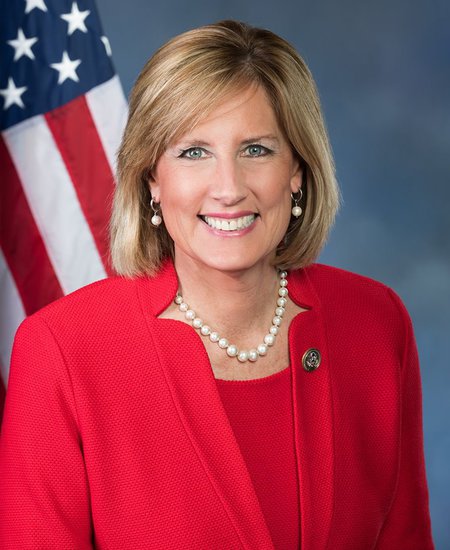
Rep. Claudia Tenney
Sponsored bills
Maddy summaryHR 1256, the Long-Term Care Transparency Act, requires the federal Assistant Secretary to annually submit a consolidated report to Congress summarizing findings from state long-term care ombudsman programs. This report aggregates all state-level reports submitted under existing law and provides a summary of their key findings. The bill directly affects state ombudsman programs by requiring them to submit annual reports, and it affects Congress by mandating an annual summary of those reports for oversight purposes. This is a procedural requirement focused on transparency, not a change to long-term care services or regulations.
Stop Human Trafficking of Unaccompanied Migrant Children Act of 2025 This bill establishes requirements relating to placing unaccompanied alien children with sponsors. (Under federal law, an unaccompanied alien child is a minor with no lawful immigration status and no parent or legal guardian in the United States to provide care and physical custody.) Before the Department of Health and Human Services (HHS) may release such a child to a sponsor, the sponsor must complete a fingerprint background check and vetting that includes (1) a public records check, (2) a National Sex Offender Registry check, (3) a Federal Bureau of Investigation National Criminal History Check, (4) a child abuse and neglect check, and (5) state and local criminal history checks. Each adult in the sponsor's household must also undergo such vetting before the placement. The bill also requires HHS to visit the home of a proposed sponsor before the placement and to conduct periodic home visits after. A child may not be placed with a sponsor who is unlawfully present in the United States unless the sponsor is the child's parent, relative, or legal guardian. HHS must retroactively apply these vetting standards to all sponsors for placements made since January 20, 2021.
Maddy summaryHR 1216, the Defund Government-Sponsored Propaganda Act, prohibits federal funding for the Public Broadcasting Service (PBS) and National Public Radio (NPR) starting upon enactment, including direct support or indirect use of federal funds by public broadcast stations. The bill directly affects PBS and NPR, as well as any successor organizations, by ending their federal financial support. Key provisions require the Corporation for Public Broadcasting to transfer allocated funds to reduce the public debt for fiscal years 2025-2027, instead of funding PBS or NPR. This bill implements a concrete policy change by eliminating federal appropriations for these public media organizations.
Maddy summaryHR 1189, the National Plan for Epilepsy Act, creates a coordinated federal strategy to address epilepsy through a National Plan for Epilepsy. The plan requires the Secretary of Health and Human Services to establish an annual assessment, maintain a diverse Advisory Council (including people with epilepsy, caregivers, and experts), and coordinate research and care across federal agencies. Key provisions include annual progress reports to Congress, data sharing between agencies, and recommendations to improve diagnosis, treatment access, and reduce epilepsy-related disparities. The plan expires December 31, 2035, and directly affects the estimated 3.4 million people in the U.S. living with epilepsy and their caregivers.
Maddy summaryHR 1195, the Protect Medicaid Act, prohibits federal Medicaid funds from covering administrative costs related to health benefits provided to unauthorized immigrants who lack lawful immigration status and are ineligible for Medicaid. This directly affects states that currently provide such benefits, requiring them to separate these administrative costs from general Medicaid program expenses. The bill adds a new provision to the Social Security Act clarifying that federal funds cannot be used for these specific administrative costs, while allowing funds for systems designed to enforce this rule. It also mandates an Inspector General report detailing how states separate costs, ensure compliance, finance these programs (e.g., through provider taxes), and the impact on drug pricing for this population.
Maddy summaryHR 1207 transfers the administration of the Food for Peace Act's food aid programs from USAID to the Department of Agriculture. This means the Agriculture Secretary, not the USAID Administrator, will now handle all related functions, including managing assets, grants, and rules for distributing U.S. food aid overseas. The bill requires immediate implementation upon enactment, with references in law automatically updating to the Agriculture Secretary, and allows for swift interim rules to maintain program continuity. It also specifies that the Famine Early Warning Systems Network will continue under Agriculture, and the Department must consult with the State Department on certain aspects of the program.
Maddy summaryHR 1177, the "Improve and Enhance the Work Opportunity Tax Credit Act," increases tax credits for employers hiring from targeted groups. It raises the credit rate from 40% to 50% for qualified first-year wages up to $6,000, plus 50% for wages between $6,000 and $12,000. The bill also creates higher credit limits for veterans (up to $24,000/$48,000), removes an age cap for Supplemental Nutrition Assistance Program (SNAP) recipients, and adjusts rules for summer youth workers and long-term family assistance recipients. These changes apply to employees hired after December 31, 2024, directly benefiting employers who hire from these eligible groups.
Maddy summaryHR 1160, the Health Care Provider Shortage Minimization Act of 2025, changes tax treatment for temporary healthcare providers. It clarifies that locum tenens physicians (including doctors of medicine, dentistry, or podiatry) and advanced care practitioners (like nurse practitioners and physician assistants) working temporarily at a site for up to one year are not treated as employees for tax purposes. This means their pay is not considered employment income, and neither the facility, contracting agency, nor payor is treated as their employer. The law applies to services performed under written contracts specifying this tax status, effective after the bill's enactment.
Maddy summaryThe SAFE Act requires Medicare to cover falls risk assessments and fall prevention services for seniors aged 65+ who have fallen in the previous year. These services, provided by physical or occupational therapists, will be included in Medicare's annual wellness visits and initial preventive physical exams starting January 1, 2026. The bill also mandates annual reports to Congress beginning in 2027 on falls among seniors aged 65+ that required treatment for fall-related injuries. This policy directly affects Medicare beneficiaries with a documented history of falls by adding targeted preventive care to their covered benefits.