

Maddy summaryThis bill expands access to employee ownership by modifying the Small Business Act to allow S corporations owned by employee stock ownership plans (ESOPs) to retain small business status, even when an ESOP owns over 49% of the company. It creates a new Treasury Department office to provide education and technical assistance for S corporations establishing ESOPs, and establishes a Labor Department Advocate for Employee Ownership to coordinate outreach and resolve disputes. These changes directly affect S corporations transitioning to ESOP ownership and their employees, who gain retirement benefits through ESOP accounts. The bill aims to increase employee ownership by removing eligibility barriers and improving support for businesses adopting this model.
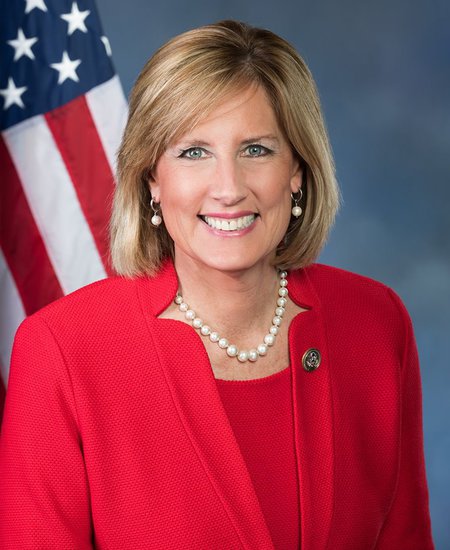
Rep. Claudia Tenney
Sponsored bills
Maddy summaryThis bill amends federal law to allow qualified active and retired law enforcement officers who already meet specific certification standards (under sections 926B and 926C) to carry concealed firearms in school zones while on duty. It removes the existing prohibition that prevented such officers from carrying concealed weapons in school areas, but only for those already authorized under current law. The change applies solely to officers with pre-existing authorization, not to all police or new categories of personnel. It does not alter school safety requirements for other individuals or create new exceptions.
Maddy summaryHR 3126, the Promoting Submetering for Affordable Housing Act, increases tax credits for affordable housing projects that implement water submetering. It adds a 5% credit increase to the eligible basis for buildings with four or more units that use submeters for individual tenant billing and provide tenants access to meter readings within 72 hours of a request. This applies to projects receiving housing credit allocations after the bill's enactment. The law directly affects affordable housing developers and property owners who build or renovate qualifying properties to meet these submetering requirements.
Maddy summaryThis bill designates the U.S. Postal Service facility at 216 Cumberland Street in Rochester, New York, as the "Minister Franklin Florence Memorial Post Office." It updates all official references in federal laws, maps, regulations, and documents to reflect this new name. The bill does not create new policies, funding, or services - it solely changes the facility's official designation for commemorative purposes. It directly affects how the location is identified in government records but has no broader policy impact.
Maddy summaryHR 3081, the Law Enforcement Solidarity Act, restricts federal funding for jurisdictions that prohibit local law enforcement from cooperating with federal officers. Beginning 60 days after enactment, such jurisdictions become ineligible for federal funds intended to provide services like food, shelter, healthcare, legal aid, or transportation to undocumented immigrants. The bill defines a "jurisdiction with law enforcement cooperation restrictions" as any state or local government that blocks officials from assisting, aiding, or responding to federal law enforcement requests. This directly affects local governments with policies limiting collaboration with federal immigration enforcement. The law aims to link federal funding eligibility to cooperation with federal law enforcement on immigration matters.
Canadian Snowbird Act This bill authorizes the Department of Homeland Security to admit into the United States qualifying Canadian citizens as long-term nonimmigrant visitors. A qualifying Canadian citizen is an individual who (1) is at least 50 years old, (2) maintains a Canadian residence, (3) owns a U.S. residence or has rented a U.S. accommodation for the duration of the individual's stay, (4) is not inadmissible or deportable, (5) will not engage in employment or labor for hire in the United States other than for a non-U.S.-based person or entity by whom the Canadian citizen was employed in Canada or for whom the Canadian citizen performed services in Canada, and (6) will not seek certain forms of assistance or benefits. A qualified individual may be admitted for up to 240 days during any single 365-day period. The spouse of such an individual may be admitted under the same terms, except that the spouse is not required to separately satisfy the requirement for owning or renting a residence in the United States. An individual admitted into the United States under this bill shall have nonresident alien tax status.
Maddy summaryHR 3078 requires the U.S. Department of Energy to develop new technologies that detect fentanyl vapor or particles. The bill mandates coordination between the Energy Secretary, Attorney General, Homeland Security Secretary, and Postmaster General to test these technologies. Specifically, the program focuses on rapid screening for fentanyl in mail, prisons, U.S. borders, and other related settings. This creates a new federal research initiative with defined use cases for fentanyl detection technology.
Maddy summaryThis bill requires most private health insurance plans to cover diagnostic and supplemental breast exams with no out-of-pocket costs (like deductibles or copays) for enrolled patients. It specifically covers exams used to evaluate abnormalities found in screenings (diagnostic) or for high-risk screening without abnormalities (supplemental), based on medical guidelines. Plans can still require prior authorization for these exams, and state laws offering stronger protections remain in effect. The rule takes effect for plan years starting January 1, 2026.
Maddy summaryThe MMEDS Act of 2025 creates tax credits for medical manufacturers operating in economically distressed zones (areas with high poverty rates) to encourage job creation and medical manufacturing in these communities. It provides a 40% tax credit for wages, employee benefits, and facility costs related to medical manufacturing in these zones, with higher credits (60%) for facilities that repatriated manufacturing from foreign countries or produce "population health products" for vulnerable populations. The bill establishes a process for designating economically distressed zones based on poverty rates and requires states to submit strategic development plans. The tax credits apply to taxable years beginning after December 31, 2024.
Maddy summaryHR 3033, the "Protecting the Mailing of Firearms Act," repeals a federal law (18 U.S.C. §1715) that previously prohibited mailing firearms and related items. This bill directly affects firearm sellers, buyers, and the U.S. Postal Service by removing the ban on mailing firearms, ammunition, and components. It also prohibits the Postmaster General from creating rules that would block firearm mailings or require disclosure of sales receipts, transaction records, or firearm serial numbers. The law takes effect immediately for pending cases and prevents new restrictions on firearm shipping through the postal system.