Maddy summaryHR 276, the Gulf of America Act, would rename the Gulf of Mexico to the Gulf of America in all U.S. federal documents and maps. It requires all federal agencies to update their records, maps, and publications within 180 days of enactment to reflect this new name. The bill directly affects federal agencies responsible for geographic naming and documentation, such as the Department of the Interior and the Board on Geographic Names. This is a procedural change with no impact on policy, environmental regulations, or affected communities.
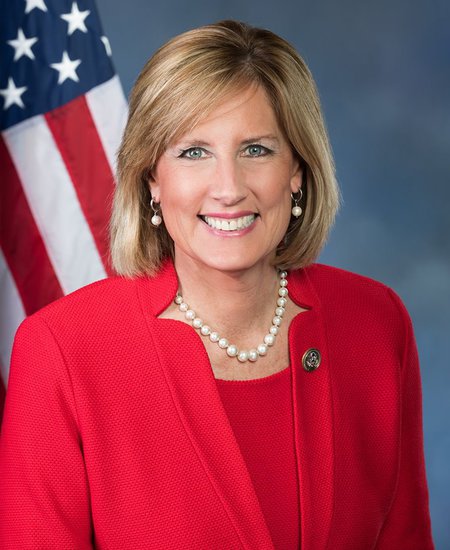
Rep. Claudia Tenney
Sponsored bills
This joint resolution eliminates new, more stringent energy conservation standards for commercial refrigerators, freezers, and refrigerator-freezers. Under the joint resolution, such equipment is no longer required to comply with the new standards. Specifically, the joint resolution nullifies the rule titled Energy Conservation Program: Energy Conservation Standards for Commercial Refrigerators, Freezers, and Refrigerator-Freezers and published by the Department of Energy's Office of Energy Efficiency and Renewable Energy on January 21, 2025. Under the rule, the office adopted new energy conservation standards for commercial refrigeration equipment to achieve the maximum improvement in energy efficiency that is technologically feasible and economically justified. The rule required the equipment to comply with the those standards by January 22, 2029.
Maddy summaryH.J. Res. 42 is a congressional disapproval resolution that voids a Department of Energy (DOE) rule on appliance energy efficiency standards. The resolution specifically targets the DOE's 2024 rule requiring certification, labeling, and enforcement for energy-efficient appliances and commercial equipment. By disapproving this rule under federal law (5 U.S.C. § 801), the resolution prevents the rule from taking effect, meaning appliance manufacturers and retailers would not need to comply with its requirements. This resolution directly affects the implementation of the DOE's energy conservation program for consumer products and commercial equipment.
Maddy summaryH.J.Res. 24, enacted May 9, 2025, disapproves a Department of Energy (DOE) rule establishing energy efficiency standards for walk-in coolers and freezers. This resolution, passed under the Congressional Review Act, blocks the rule (published December 23, 2024) from taking effect, meaning the DOE’s proposed standards will have no legal force. The action directly affects commercial food equipment manufacturers and businesses using such cooling systems by preventing the implementation of new energy conservation requirements.
Maddy summaryThis resolution blocks a Department of Energy rule that would have set new energy efficiency standards for gas-fired instant water heaters. It prevents the rule from taking effect, meaning appliance manufacturers would not have to meet the proposed efficiency requirements. The rule, submitted in December 2024, directly affected manufacturers of these water heaters and consumers purchasing them. Congress approved this disapproval through a joint resolution passed on May 9, 2025.
Maddy summaryHRES 402 is a symbolic House resolution honoring mothers and recognizing the significance of motherhood on Mother's Day. It affirms that mothers are women who raise children, supports policies recognizing mothers as mothers, and encourages the public to celebrate mothers' contributions to families and society. The resolution does not create new laws, allocate funds, or affect specific policies - it is a ceremonial gesture expressing support for traditional definitions of motherhood. It directly addresses the public and the House's recognition of mothers, with no concrete policy changes or impacts on individuals or programs.
Maddy summaryThe Pregnancy.Gov Act requires the creation of a federal website, pregnancy.gov, to help pregnant and postpartum women find local resources. The website must allow users to search by ZIP code, filter services by distance (1-100 miles), and provide feedback on usability. It prohibits listing organizations that provide or support abortions (including abortion counseling, referrals, or financial support) and excludes such entities from receiving federal grants for resource aggregation. Within 180 days of launch, the government must report to Congress on website traffic, user experience, and gaps in available services, with multilingual access required.
Maddy summaryHRES 395 is a non-binding resolution (not a law) that establishes a symbolic "Bill of Rights" for U.S. law enforcement officers during internal investigations into alleged misconduct. It outlines specific procedural protections, including the right to have legal counsel present during interviews, the right to know investigation details in advance, protection from offensive language or threats during questioning, and the right to not face discipline for invoking the Fifth Amendment. The resolution aims to support officers by ensuring fair investigation processes while condemning calls to defund or dismantle police departments. It does not create new legal rights or change existing laws but encourages states to adopt similar protections for officers.
More Opportunities for Moms to Succeed Act or the MOMS Act This bill establishes requirements to enable the collection of certain child support during pregnancy, establishes grants for supportive services for women that promote alternatives to abortions, and requires the Department of Health and Human Services (HHS) to establish a website with pregnancy resources other than those about abortions. Specifically, the bill requires states to apply child support obligations to the time period during pregnancy under the Child Support Enforcement program. (The program enables states to receive federal matching funds for expenses related to child support enforcement activities and related services.) Such child support applies at the request of the mother and may be applied retroactively. Also, HHS must award grants to nonprofits to provide pregnant and postpartum women, and women parenting young children, with services or information on topics including health care (excluding abortions), child care, and employment assistance. It also requires HHS to provide grants to health care providers in rural or medically underserved areas, as well as tribal areas, to purchase equipment enabling telehealth visits for prenatal and postnatal care (e.g., monitoring devices). Additionally, the bill requires HHS to establish a public website to inform pregnant and postpartum women, and women parenting young children, of nearby services and resources on topics including health care, material or legal support, and alternatives to abortion. States must, as a condition of receiving certain federal funds, provide lists of nonprofit child placement agencies for potential inclusion on the site.

Maddy summaryHR 3228, the Constitutional Hearing Protection Act, reclassifies firearm silencers as firearms under federal tax law and eliminates their separate registration under the National Firearms Act. It requires the Attorney General to destroy all existing federal silencer registration records within one year and preempts state laws that impose taxes, registration, or recordkeeping requirements on silencers. The bill defines "firearm silencer" and specifies that manufacturers must mark silencers on a "keystone part" with a serial number. This directly affects silencer owners, manufacturers, and state governments by standardizing federal regulation and removing state-level restrictions.