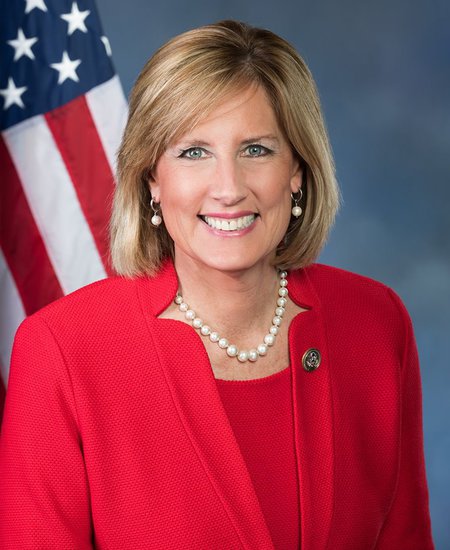
Photo of Claudia Tenney
R United States House · District 24 · New York On the 2026 ballot

Rep. Claudia Tenney

Compare
Total votes
2,811
all sessions
Attendance
99%
20 missed
Higher than 78% of chamber peers
With party
95%
of cast votes
Higher than 90% of chamber peers
Bipartisan score
3%
crosses aisle rarely
Lower than 91% of chamber peers
Sponsored
1,792
bills & resolutions
Higher than 95% of chamber peers
Committees
8
assignments
1,792 bills and resolutions

Sponsored bills

Total
1,792
Primary
194
Co-sponsor
1,598
This page
1,792
matching current filters
Co-sponsor HR 7421
In committee · United States House · Co-sponsor
SAFE Olympic Sports Act

Maddy summaryHR 7421, the SAFE Olympic Sports Act, requires national governing bodies for Olympic sports to maintain eligibility rules based on an athlete's biological sex as defined in the bill. It mandates that competitions must restrict participation to athletes whose sex at conception aligns with the event's category (e.g., female-only events for those biologically female). The bill defines "sex" as an immutable biological classification determined at conception, with specific biological criteria for male and female. This applies to Olympic, Paralympic, Pan-American, and other sanctioned amateur competitions, requiring governing bodies to continue sanctioning single-sex events they previously approved.

In committee Feb 9, 2026 1 co-sponsor
Primary HR 7410
In committee · United States House · Lead sponsor
To designate the facility of the United States Postal Service located at 15422 NY 104 in Martville, New York, as the "Sergeant Staret J. Engleston Memorial Post Office Building".

This bill designates the facility of the United States Postal Service located at 15422 NY 104 in Martville, New York, as the "Sergeant Staret J. Engleston Memorial Post Office Building".

In committee Feb 5, 2026 0 co-sponsors
Co-sponsor HR 7387
In committee · United States House · Co-sponsor
Stop Settlement Slush Funds Act of 2026

Maddy summaryThis bill prohibits federal officials from using settlement agreements to direct payments to third parties unless those payments directly compensate for actual harm caused by the defendant or pay for services rendered in the case. It prevents the government from creating slush funds through settlements that benefit unrelated organizations or individuals beyond the scope of direct restitution. Federal agencies must annually report to the Congressional Budget Office on settlement payments that meet the new criteria, while agency inspectors general must audit and publicly report any violations. The reporting and audit requirements are set to expire seven years after the law takes effect.

In committee Feb 5, 2026 1 co-sponsor
Co-sponsor HR 7356
In committee · United States House · Co-sponsor
To amend the Help America Vote Act of 2002 to prohibit the use of Federal funds for election administration in States that permit ballot harvesting.

Maddy summaryHR 7356, the "No Federal Funds for Ballot Harvesting Act," amends the Help America Vote Act to block federal funding for election administration in states that permit third parties (non-voters) to collect and transmit mailed ballots for federal elections. It requires states to prohibit such collection by non-authorized individuals, with exceptions for election officials, USPS employees, and family/caregivers living with or assisting the voter. States failing to adopt this prohibition would lose federal funds for administering federal elections. The bill cites concerns about ballot chain-of-custody vulnerabilities and references the Supreme Court’s Brnovich ruling upholding state restrictions on ballot harvesting.

In committee Feb 4, 2026 1 co-sponsor
Co-sponsor HR 3699
In committee · United States House · Co-sponsor
Energy Choice Act

Maddy summaryThis bill prevents state or local governments from banning or restricting energy connections (like installation, modification, or access) based on the type or source of energy, such as electricity, natural gas, or renewable fuels. It directly affects consumers choosing energy providers and energy companies seeking to offer services. The key provision prohibits local laws, regulations, or policies that limit energy services sold in interstate commerce, covering all energy types listed in the bill’s definitions. It does not create new programs but limits regulatory authority at the state or local level. The law aims to ensure open access to diverse energy sources without source-based restrictions.

In committee Feb 4, 2026 1 co-sponsor
Co-sponsor HR 7300
In committee · United States House · Co-sponsor
Make Elections Great Again Act

Maddy summaryThe Make Elections Great Again Act (HR 7300) would require voters to present photo identification to cast ballots in person or by mail for federal elections, with limited exceptions for religious objections or military voters. It would establish new requirements for proving U.S. citizenship during voter registration, including documentary proof of citizenship and proof of state residency. The bill would change mail-in ballot procedures by requiring voters to request mail-in ballots (rather than universal mail-in voting), implementing barcode tracking for mail-in ballots, and setting strict deadlines for ballot receipt. These provisions would apply to all states for federal elections held in 2027 or later, affecting how voters register, vote in person, and submit mail-in ballots for federal office elections.

In committee Feb 2, 2026 1 co-sponsor
Co-sponsor HR 6866
In committee · United States House · Co-sponsor
Securing Smart Investments in our Ports Act

Maddy summaryThis bill amends existing port infrastructure funding programs to require fair geographic distribution of projects across U.S. regions. It adds new requirements to two key programs: the Port and Intermodal Improvement Program (46 U.S.C. § 54301(a)(6)(B)) and assistance for small inland river/coastal ports (46 U.S.C. § 54301(b)(4)). The key provision mandates that selected projects must ensure equitable representation among all U.S. regions, preventing concentration of funds in specific areas. This directly affects how federal port funding is allocated, requiring the Department of Transportation to consider regional balance when approving projects.

In committee Feb 2, 2026 1 co-sponsor
Co-sponsor HR 4242
In committee · United States House · Co-sponsor
Innovate Less Lethal to De-Escalate Tax Modernization Act

Maddy summaryThis bill exempts certain less-than-lethal projectile devices from federal sales taxes and National Firearms Act restrictions. It directly affects manufacturers, importers, and producers of these devices, which are defined as non-lethal tools (like rubber bullets or beanbag rounds) designed not to cause serious injury and unable to be easily converted to use standard firearm ammunition. Key mechanisms include a 90-day classification process for manufacturers seeking exemption, an annual public list of approved devices, and annual congressional reports on devices excluded from the exemption. The policy change applies to devices meeting specific safety criteria, such as projectile velocity limits and design features preventing misuse as conventional weapons.

In committee Feb 2, 2026 1 co-sponsor
Co-sponsor HR 7296
In committee · United States House · Co-sponsor
SAVE America Act

Safeguard American Voter Eligibility Act or the SAVE America Act This bill requires individuals to provide documentary proof of U.S. citizenship when registering to vote, and requires photo identification to vote, in federal elections. Specifically, the bill prohibits states from accepting and processing an application to register to vote in a federal election unless the applicant presents documentary proof of U.S. citizenship. The bill specifies what documents are considered acceptable proof of U.S. citizenship, such as identification that complies with the REAL ID Act of 2005 that indicates U.S. citizenship. Further, the bill (1) prohibits states from registering an individual to vote in a federal election unless, at the time the individual applies to register to vote, the individual provides documentary proof of U.S. citizenship; and (2) requires states to establish an alternative process to demonstrate U.S. citizenship. Each state must take affirmative steps on an ongoing basis to ensure that only U.S. citizens are registered to vote, which shall include establishing a program to identify individuals who are not U.S. citizens using information supplied by certain sources. Additionally, states must remove noncitizens from their official lists of eligible voters. The bill (1) provides for a private right of action for certain violations, and (2) establishes criminal penalties for certain offenses. Individuals voting in federal elections must present an eligible photo identification document. An individual who votes by absentee ballot must submit a copy of their identification document with both the request for, and the submission of, the absentee ballot.


In committee Jan 30, 2026 1 co-sponsor
Co-sponsor HR 6945
Passed · United States House · Co-sponsor
Supporting Pregnant and Parenting Women and Families Act

Maddy summaryHR 6945 clarifies that states may use federal grants under Section 403 of the Social Security Act to support pregnancy centers meeting specific criteria. These centers must promote protecting both mother and unborn child life while providing services like counseling, pregnancy testing, and material support (e.g., diapers, baby clothes). The bill explicitly prohibits interpreting existing law as barring such funding for eligible centers. It does not create new funding but defines which pregnancy resource organizations qualify for existing grants.

Passed Jan 26, 2026 1 co-sponsor
Showing 151 to 160 of 1,792 bills
Previous 1 … 15 16 17 … 180 Next