

Law-Enforcement Innovate to De-Escalate Act This bill removes less-than-lethal projectile devices (e.g., certain TASERs) from regulation under the Gun Control Act. The term less-than-lethal projectile device means a device that (1) is not designed or intended to expel (and may not be readily converted to discharge) commonly used ammunition or projectiles exceeding a velocity of 500 feet per second; (2) is designed and intended to be used in a manner not likely to cause death or serious bodily injury; and (3) does not accept (and cannot be readily modified to accept) an ammunition feeding device. The bill also requires the Bureau of Alcohol, Tobacco, Firearms and Explosives to determine whether a device satisfies the definition of a less-than-lethal projectile device within 90 days of a request.
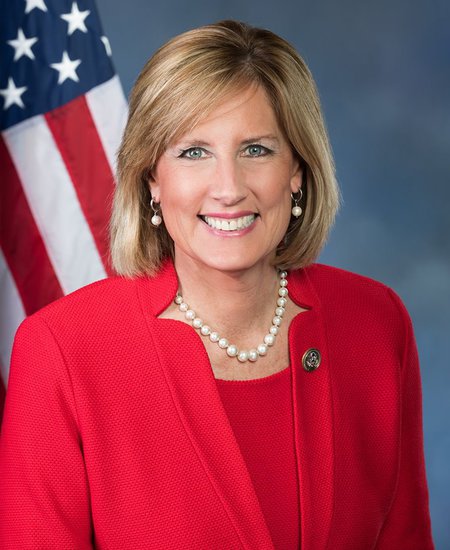
Rep. Claudia Tenney
Sponsored bills
Maddy summaryHRES 1073 is a non-binding resolution designating February 21-28, 2026, as "National FFA Week" to recognize the National Future Farmers of America (FFA) Organization’s role in developing agricultural education leaders and to celebrate the 50th anniversary of Alaska’s State FFA Association. It does not create new laws or affect any specific groups or policies; instead, it formally expresses the House’s support for this commemorative week. The resolution highlights FFA’s mission to prepare students for leadership and careers in agriculture, food, and natural resources. As a symbolic gesture, it has no direct legislative or financial impact on constituents.
Maddy summaryThis bill directs U.S. agencies to support Iranian people's access to uncensored information and hold Iranian officials accountable for human rights abuses. It requires the State Department and FCC to report on technologies (like satellite networks and mesh systems) that could bypass internet restrictions in Iran, and authorizes $2 million annually to develop such tools. The bill also establishes a new "Iran Kleptocracy Initiative" at FinCEN to track corruption, freeze assets of Iranian regime officials and state-owned businesses, and coordinate with international partners. These measures apply to U.S. policy toward Iran but do not alter Iran's domestic laws; they focus on U.S. sanctions, technology development, and anti-corruption efforts targeting the Iranian regime.
Maddy summaryThis bill changes tax depreciation rules for specific equipment used in restaurants and bars. It classifies "qualified energy-efficient draft alcohol property" (like stainless steel/aluminum containers and tap systems for serving alcohol) as 15-year property for tax purposes, allowing faster depreciation deductions. The change applies to equipment installed after December 31, 2025, and directly affects restaurant, bar, and entertainment venue owners who purchase this equipment. The bill does not alter tax rates or create new programs, only modifying how eligible equipment is treated under existing tax code provisions.
Maddy summaryHR 7612 (End Sanctuary Cities Act of 2026) prohibits state and local government officials from interfering with federal immigration enforcement by blocking Department of Homeland Security (DHS) requests for "reasonable advance notice" (at least 48 hours) about releasing criminal aliens. It directly affects local leaders who establish policies restricting such notice, imposing criminal penalties: up to 25 years in prison for failures leading to the release of individuals convicted of murder, rape, or sex offenses against minors. Penalties decrease to 5-10 years for serious violent felonies and 30 days-6 months for other criminal offenses. The law creates new federal criminal charges under Title 18, Section 1925, targeting officials who obstruct DHS compliance with immigration laws.
Protection of Women in Olympic and Amateur Sports Act This bill requires certified national governing bodies (NGBs) of amateur sports (e.g., USA Gymnastics) to prohibit a person whose sex is male from participating in an amateur athletic competition that is designated for females, women, or girls. Under the bill, male means an individual who has, had, will have—or would have, but for a developmental or genetic anomaly or historical accident—the reproductive system that at some point produces, transports, and utilizes sperm for fertilization.
Maddy summaryThis bill establishes the United States-Israel Defense Technology Cooperation Initiative to accelerate joint development and integration of defense technologies between the two countries. It directs the U.S. Secretary of Defense, with Israel’s agreement, to identify Israeli-origin technologies for rapid adoption into U.S. military systems, focusing on areas like counter-drone systems, missile defense (including "Golden Dome for America"), AI, cyber defense, and directed energy. The initiative requires annual congressional reporting on progress, partnerships with industry, and technology transitions, while authorizing $150 million annually for fiscal years 2027-2029. It aims to strengthen bilateral defense innovation and streamline the use of Israeli technologies within U.S. military programs.
Maddy summaryThis bill authorizes the U.S. Mint to produce two types of commemorative $2.50 coins for the 250th anniversary of the Declaration of Independence: a circulating coin for everyday use and a numismatic (collector) coin. Both would feature designs based on the 1926 Sesquicentennial coin - showing allegorical liberty holding the Declaration on one side and Independence Hall on the other - with "1776-2026" inscriptions. The bill requires the Mint to issue these coins by July 4, 2026, if technically and economically feasible, but does not mandate their production or affect any specific groups beyond the public who may purchase them.
Maddy summaryHR 3190, the BRAVE Burma Act, extends sanctions authority for Burma by 10 years and requires annual reports on whether specific Burmese entities - like state-owned enterprises, Myanma Economic Bank, and jet fuel sector operators - meet sanctions criteria. It also limits Burma's potential increase in International Monetary Fund shareholding if the military-led State Administration Council remains in power. The bill creates a U.S. Special Envoy for Burma to coordinate all diplomatic and sanctions policy, develop multilateral sanctions strategies, and work with international partners on issues like arms embargoes and support for Burmese civil society. These provisions directly affect Burmese military entities, Burma's IMF representation, and U.S. diplomatic efforts toward Burma.
Maddy summaryThe No Tax Dollars for Terrorists Act requires the U.S. State Department to identify foreign countries and organizations receiving U.S. foreign aid that have provided financial or material support to the Taliban, including the amounts of aid they receive and the support they give to the Taliban. It mandates a strategy to use U.S. aid to discourage such support, with initial and follow-up reports to Congress on the strategy and its implementation. The bill also demands detailed reports on U.S. cash assistance programs in Afghanistan and the Afghan Fund, explaining how funds are transferred (including traditional money transfer systems) and how safeguards prevent Taliban access.