

Transatlantic Telecommunications Security Act This bill directs the Department of State and other federal agencies to help certain countries improve the security of their telecommunications networks and addresses related issues. Assistance provided under this bill shall be available to projects in a country that falls below certain gross domestic product per capita thresholds and is (1) a NATO member state that shares a border with Russia, or (2) a European country that has not participated in or aided Russia's invasion of Ukraine. A project located in such a country shall be eligible for assistance if the project (1) improves telecommunications networks; (2) is inclusive, transparent, economically viable, sustainable, supplied only with secure equipment and services, and compliant with international standards and laws; and (3) does not use equipment or services from China or Russia or replaces such equipment or services. To support eligible projects, the State Department shall provide diplomatic and political support and shall also encourage international financial institutions to provide investment support. The U.S. Trade and Development Agency, the U.S. International Development Finance Corporation, and other specified federal agencies shall also provide project support, such as feasibility studies and finance-related support, as necessary. The State Department must also appoint, from among its existing personnel, an International Telecommunication Union Security Campaign Director. The director must, among other duties, lead efforts to promote candidates for elections at the International Telecommunication Union who will support and defend democratic values, internet freedom, and telecommunication security.
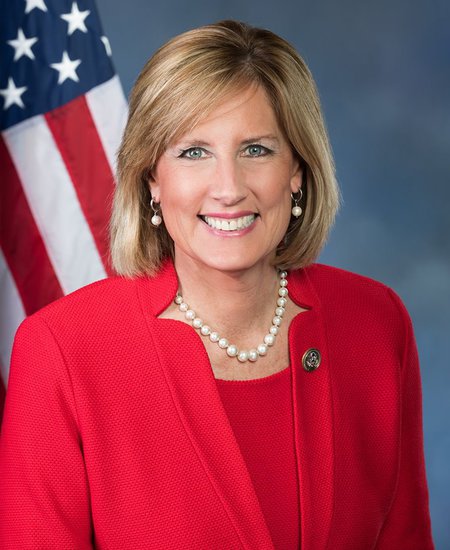
Rep. Claudia Tenney
Sponsored bills
Veterans First Act of 2022 This bill prohibits the Department of Veterans Affairs from obligating or expending any amounts to provide emergency assistance in response to an emergency at the southern border directly resulting from the repeal of certain public health orders from the Centers for Disease Control and Prevention. Specifically, the bill prohibits such emergency assistance in response to the repeal of the order issued on August 2, 2021, titled Public Health Reassessment and Order Suspending the Right To Introduce Certain Persons From Countries Where a Quarantinable Communicable Disease Exists ; the order issued on April 1, 2022, titled Public Health Determination and Order Regarding Suspending the Right To Introduce Certain Persons From Countries Where a Quarantinable Communicable Disease Exists ; and an order relating to the same public health concerns as the listed orders.
Maddy summaryThis bill prohibits using federal funds to establish a Disinformation Governance Board under the Department of Homeland Security. It directly affects the DHS by blocking any allocation of taxpayer money for creating this board. The key provision is a funding restriction that prevents the board's formation, requiring Congress to specifically authorize such spending if desired. The bill does not address disinformation policies or content, only the funding mechanism for the proposed board.
Maddy summaryThis bill prohibits the use of federal funds to establish or operate a Disinformation Governance Board under the Department of Homeland Security. It directly affects the Department of Homeland Security by blocking funding for this specific board, preventing its creation or activities. The measure restricts how existing federal appropriations can be applied, without altering other funding mechanisms.
This resolution celebrates the contributions of small businesses in every U.S. community and supports the designation of National Small Business Week. Further, it supports efforts to provide small businesses with aid and assistance through certain programs and initiatives.
This resolution acknowledges that Specialist Bishop E. Evans was discovered, deceased, along the Rio Grande, near Eagle Pass, Texas. The resolution also honors the life and service of Specialist Evans and recognizes that his actions resulted in the survival of two migrants.
Improve Management, Programs, Resources, and Oversight for Vital Entrepreneurs the SBA Act or the IMPROVE the SBA Act This bill makes various changes to the Small Business Administration's (SBA) programs and operations, including prohibiting the SBA from making direct loans under the 7(a) Program and requiring annual appearances before Congress to provide information about the effectiveness of specified SBA programs. The bill also prohibits the SBA from providing assistance under its programs to certain organizations, including (1) entities primarily engaged in lobbying, (2) entities established to conduct public policy research or advocacy, and (3) the Planned Parenthood Federation of America Inc. or its affiliates.
Assessing Xi's Interference and Subversion Act or AXIS Act This bill requires the Department of State to periodically report to Congress on whether and how China's government, the Chinese Communist Party, or any other Chinese entity has provided support for Russia's invasion of Ukraine. The report must address specified matters, including any efforts to (1) help Russia's government or Russian entities evade sanctions or export controls, (2) provide Russia with technology to support Russia's military or intelligence capabilities, or (3) further Russia's disinformation and propaganda efforts.
This joint resolution nullifies the rule issued by the Centers for Disease Control and Prevention on February 3, 2021, that requires the use of face masks on planes, trains, buses, and other public conveyances and at transportation hubs to prevent the transmission of COVID-19.
Women's Business Centers Improvement Act of 2022 This bill reauthorizes the Women's Business Center Program through FY2025, raises the cap on individual center grants, establishes an accreditation program for grant recipients, and revises the duties of the Office of Women's Business Ownership. Specifically, the bill modifies the Women's Business Center Program to enable the Small Business Administration (SBA) to provide initial and continuation grants to eligible entities to operate women's business centers for the benefit of women-owned small businesses. The SBA must also publish standards for a program to accredit entities that receive grants from the Women's Business Center Program, and such entities' receipt of continuation grants shall be contingent upon their obtaining accreditation.