Stop Iranian Drones Act This bill expands existing provisions requiring sanctions against individuals or entities that provide certain types of weapons to Iran. Specifically, the bill modifies the provisions by adding unmanned combat aerial vehicles to the list of weapons covered by the sanctions. The bill also requires the Department of State to periodically report to Congress on the identities of any Iranian entity that has attacked a U.S. citizen using an unmanned combat aerial vehicle. The President must designate any such entity as a foreign terrorist organization.
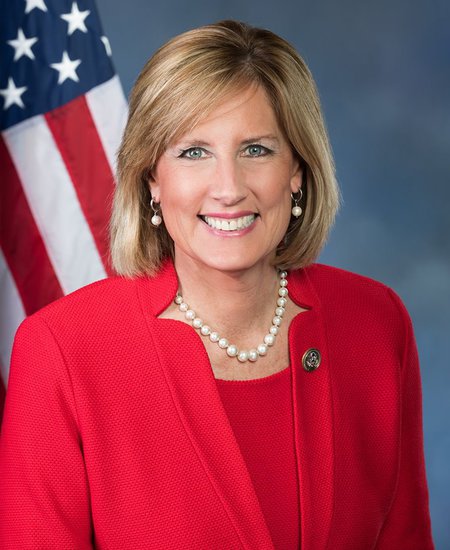
Rep. Claudia Tenney
Sponsored bills
Deterring Enemy Forces and Enabling National Defenses Act of 2022 or the DEFEND Act of 2022 This bill requires the Department of Defense to seek to cooperate with Middle East allies and partners (i.e., countries of the Gulf Cooperation Council, Iraq, Israel, Jordan, Egypt, and other countries in the region as appropriate) to identify and develop an approach for such allies and partners to implement an integrated air and missile defense capability to protect against attacks from Iran and groups linked to Iran.
WHO Withdrawal Act This bill requires the President to immediately withdraw the United States from the World Health Organization (WHO) and prohibits using any federal funds to provide for U.S. participation in the WHO. The bill also repeals the 1948 act authorizing the United States to join the WHO.
Prohibition of Agricultural Land for the People's Republic of China Act This bill requires the President to prohibit nonresident aliens, foreign businesses, and agents associated with China's government from (1) purchasing agricultural (including ranching) real estate located in the United States, or (2) participating in Department of Agriculture programs that are unrelated to food and safety regulatory requirements.
This bill requires institutions of higher education (IHEs) to disclose information regarding gifts from and contracts with China-affiliated organizations. China-affiliated organization refers to any entity that receives support directly or indirectly from the Chinese government, including certain educational institutes or programs, think tanks, and business entities. Under current law, an IHE must disclose to the Department of Education (ED) a gift or contract from a foreign source that is valued at $250,000 or more, considered alone or in combination with all other gifts from or contracts with that foreign source in a calendar year. This bill establishes a special disclosure rule relating to China-affiliated organizations. Specifically, the bill requires an IHE to disclose a gift from or contract with a China-affiliated organization that is valued at $5,000 or more, considered alone or in combination with all other gifts from or contracts with that organization in a calendar year. Additionally, the bill requires an IHE that receives federal grants to annually file a report with ED that identifies any activities conducted pursuant to a contract or other agreement between the IHE and a China-affiliated organization, including any joint research or academic exchanges. Such a contract or other agreement must be made available on a publicly accessible website of the IHE.

Halting Academic Liaisons To Our Adversaries Act or the HALT Our Adversaries Act This bill requires the Department of Defense (DOD) to identify academic institutions of China, Russia, and other countries that are known to provide support to China's People's Liberation Army or Russia's armed forces. Further, the bill prohibits an institution of higher education from receiving federal funds if it maintains a contract or other agreement with such an academic institution identified by DOD.
Taylor Force Martyr Payment Prevention Act of 2022 This bill expands the institutional factors the Department of the Treasury must consider when making a finding that a foreign financial institution is of primary money laundering concern and is therefore subject to special measures, including the prohibition of opening or maintaining correspondent accounts in U.S financial institutions. Specifically, Treasury must consider (1) the extent to which an institution knowingly provides financial services to Hamas, or to an agent of Hamas; and (2) the extent to which an institution, transaction, or type of account is used to facilitate or promote payments for certain acts of terrorism against U.S. and Israeli citizens.
Babies Need More Formula Now Act of 2022 This bill addresses the regulation of infant formula, including by authorizing the Food and Drug Administration (FDA) to waive certain requirements related to importation. The FDA may waive labeling requirements related to the importation (or distribution or sale) of infant formula from a country with requirements that provide a similar assurance of safety as U.S. requirements. The FDA must, when appropriate, enter into arrangements to harmonize U.S. regulatory requirements pertaining to infant formula with the requirements of other nations. The bill imposes time lines for the FDA to respond to submissions for market approval for new infant formula. The FDA must also issue guidance as to what types of changes in the ingredients of infant formula, if any, may not require a new growth study to meet FDA requirements. The bill also authorizes a person to import, without prior notice to the FDA, up to a three-month supply of infant formula for personal use from a country with formula safety standards similar to U.S. standards, such as Canada. Before recommending or requiring a recall of infant formula due exclusively to a labeling deficiency, the FDA must ensure that the recall will not negatively affect the supply of formula in the United States. The bill also requires the FDA to (1) notify Congress no later than 24 hours after initiating a formula recall, and (2) provide certain information to formula manufacturers about restarting production after an inspection of a manufacturing facility impacted by a recall.
Community Services Block Grant Modernization Act of 2022 This bill reauthorizes the Community Services Block Grant program through FY2032 and otherwise modifies the program. The program supports various antipoverty activities, primarily through formula-based allotments to states, Indian tribes, and territories. In particular, the bill makes changes to the program's administration and leadership; performance measurement; and allotments to states and territories. The bill also expands eligibility for services and activities funded by the program to 200% of the federal poverty line (FPL). Under current law, eligibility is generally set at the FPL.
This resolution condemns the unauthorized leak of a draft Supreme Court opinion concerning abortion and the related violence, property damage, and attempted intimidation of Supreme Court Justices by activists. It also encourages the enforcement of federal criminal laws that prohibit protests and picketing outside of the homes of federal judges, jurors, witnesses, and others involved in the U.S. court system.