

Maddy summaryHR 441, the Leak and Lose Act of 2023, makes it a federal crime to conceal, remove, destroy, or alter unpublished Supreme Court opinions or draft opinions before they are officially published. The bill targets anyone who willfully engages in these actions while handling such materials within Supreme Court buildings. Violators face a $5,000 fine and lose the right to practice law in any federal court for life. This law directly affects individuals with access to Supreme Court documents, such as clerks or staff, by imposing severe professional penalties for mishandling sensitive court materials.
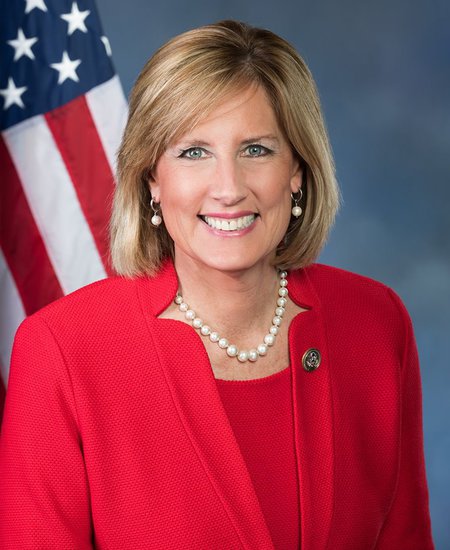
Rep. Claudia Tenney
Sponsored bills
Standardizing Thresholds Of Penalties for Fentanyl Act or the STOP Fentanyl Act This bill reduces the drug quantity thresholds that trigger a mandatory minimum prison term for a defendant who manufactures, distributes, imports, exports, or possesses with intent to distribute fentanyl. The bill also creates enhanced criminal penalties for certain violations involving fentanyl that was imported along the U.S.-Mexico border. Specifically, the bill reduces from 400 to 5 grams the fentanyl quantity and from 100 to 0.05 grams the fentanyl analogue quantity that trigger a mandatory minimum prison term for high-level first-time or repeat offenders. It also reduces from 40 to 0.5 grams the fentanyl quantity and from 10 to 0.005 grams the fentanyl analogue quantity that trigger a mandatory minimum prison term for low-level first-time or repeat offenders. Additionally, the bill creates enhanced mandatory minimum prison terms for importing or exporting fentanyl that was imported along the U.S.-Mexico border.
Maddy summaryHR 128, the Defund Planned Parenthood Act of 2023, blocks federal funding to Planned Parenthood Federation of America and its affiliates for one year unless they certify they will not perform or fund abortions (except in cases of rape, incest, or life-threatening conditions for the patient). This directly affects Planned Parenthood clinics and their federal funding streams. The bill redirects $235 million to community health centers under the Public Health Service Act to continue providing women’s health services like contraception, cancer screenings, and prenatal care. It requires repayment of funds if Planned Parenthood violates the certification and explicitly states the law won’t reduce overall federal funding for women’s health services.
This resolution expresses the sense of the House of Representatives that the courts should find New York's Concealed Carry Improvement Act unconstitutional and that all states should pass legislation supporting Second Amendment rights.
Maddy summaryHJRES 17 is a congressional resolution disapproving the District of Columbia Council's approval of the Local Resident Voting Rights Amendment Act of 2022 (D.C. Act 24-640), which the Council enacted on October 18, 2022. If passed by Congress and signed into law, this resolution would block the local voting rights amendment from taking effect. The bill directly affects the District of Columbia government by preventing implementation of the amendment, which aimed to address voting rights for residents. This resolution follows the District of Columbia Home Rule Act's requirement for congressional disapproval of certain local laws.
Maddy summaryThe Protect Local Farms Act (HR 353) would override state laws that require overtime pay for agricultural workers after fewer than 60 hours in a workweek. It amends federal labor law to preempt any state regulation setting a lower maximum workweek threshold (e.g., 40 or 50 hours) for farm employees. This directly affects agricultural employers and workers in states with stricter overtime rules, such as California or New York, by replacing those state standards with the federal 60-hour threshold. The bill does not change federal overtime rules but ensures states cannot impose more stringent requirements on farm labor.
Maddy summaryHR 348, the Transparency in COVID-19 Expenditures Act, requires a nonpartisan government auditor to review how federal funds from major pandemic relief laws were spent. The audit covers all money provided by key legislation including the CARES Act, Families First Act, and the American Rescue Plan. The auditor must produce a detailed report for Congress on how the funds were used, focusing on accountability and spending details. This bill does not change funding levels or create new programs - it only mandates a review of existing pandemic relief expenditures. The summary applies to all federal agencies that received these specific relief funds.
No Taxpayer Funding for the World Health Organization Act This bill prohibits the United States from providing any assessed or voluntary contributions to the World Health Organization.
Maddy summaryThe GAS Act (HR 337) prohibits any federal agency from banning the sale or use of gas-burning stoves in the United States. This applies to all agencies defined under federal law, including the Environmental Protection Agency and Consumer Product Safety Commission. The bill directly blocks agencies from enacting new regulations that would restrict gas stoves, preventing future regulatory actions. It does not affect existing stove sales or current agency authority but sets a clear restriction on future rulemaking.
Maddy summaryHRES 29 is a procedural resolution that would amend House rules to create the "Committee on the Elimination of Nonessential Federal Programs." This committee would study and recommend cutting underperforming or nonessential federal programs, requiring annual reports listing such programs and submitting related legislation. The resolution also establishes expedited procedures for bills reported by this committee, including limiting debate to 10 hours and making motions to proceed highly privileged. It does not directly affect constituents but changes House committee structure and procedures.