

Ceasing Age-Based Trucking Restrictions Act This bill exempts drivers who transport goods from a port of entry and another place within the same state from age restrictions and other requirements that apply to federal commercial driver's licenses.
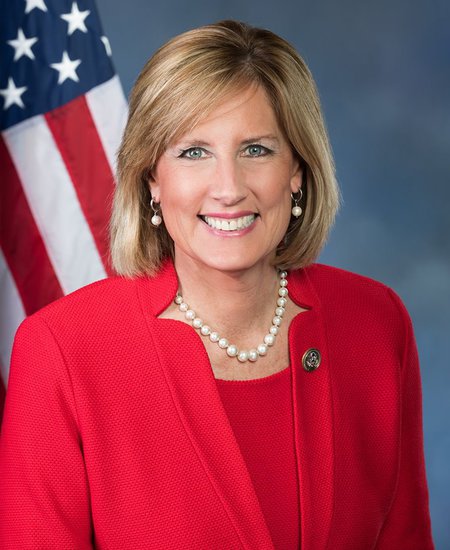
Rep. Claudia Tenney
Sponsored bills
Maddy summaryHR 683 (PASS Act of 2023) expands the Committee on Foreign Investment in the United States (CFIUS) review process to cover foreign investments in U.S. agriculture businesses, agricultural biotechnology, and private farmland. It mandates that the President block transactions involving foreign entities from China, Russia, Iran, or North Korea that would give them control over U.S. agricultural operations or land used for farming. The bill allows limited presidential waivers for national security reasons but requires a 30-day review period before any waiver. Additionally, it requires the Secretary of Agriculture to submit biannual reports to Congress on risks posed by foreign ownership in U.S. agriculture.
This bill establishes the National Commission on Domestic Terrorist Attacks on the United States by Antifa. The commission must investigate and report on the involvement of antifa in the riots some cities experienced in 2020 and make recommendations to prevent further attacks and violent riots by antifa.
This resolution recognizes and appreciates the dedication and devotion demonstrated by the men and women of law enforcement. It also condemns calls to defund, disband, dismantle, or abolish the police.
This resolution expresses support for the Supreme Court's holding in Dobbs v. Jackson Women's Health Organization (that there is no constitutional right to abortion). The resolution also applauds the courage of the Justices for standing by their allegiance to the Constitution and the legitimacy of the Supreme Court, and it expresses a commitment to supporting policies that continue to protect all life.
Maddy summaryThe HEAL Act (HR 603) requires the U.S. Holocaust Memorial Museum Director to study how public elementary and secondary schools teach about the Holocaust and related antisemitism. The study will examine curriculum requirements, teaching methods (like project-based learning), instructional materials, and assessment approaches across states and school districts. It specifically analyzes whether Holocaust education is mandatory, optional, or integrated across subjects, and how schools address antisemitism and genocide prevention. The resulting report, due within 180 days of the study or three years after enactment, will inform Congress but does not change current school policies. This is a data-gathering measure, not a policy mandate.
Maddy summaryHCONRES 7 is a symbolic resolution passed by the U.S. House of Representatives that commends Iranian protesters - particularly women - who have risked safety to demonstrate against the Iranian regime's human rights abuses, including the mandatory hijab law and violent crackdowns following Mahsa Amini's death. It condemns the regime's use of violence (reportedly killing over 450 protesters) and detention of activists, while urging the Biden Administration to impose additional human rights sanctions on officials involved in repression and support internet freedom tools to bypass Iranian censorship. The resolution makes no binding policy changes but formally expresses congressional support for protesters' demands for freedom, justice, and an end to discriminatory laws targeting women. It does not directly affect any U.S. laws or policies but serves as a statement of U.S. position.
Maddy summaryHJRES 22 disapproves a rule issued by the Department of Commerce that established procedures for temporarily suspending the payment of import duties under a specific presidential proclamation. The rule, published in the Federal Register (87 Fed. Reg. 56868), would have allowed delays in paying duties on certain imported goods. By passing this resolution, Congress nullifies the rule, preventing the Department of Commerce from enforcing it. This directly affects the Department's ability to manage duty suspensions for imports covered by the proclamation.
Maddy summaryThe American Innovation and Manufacturing Act creates a new investment facility to support manufacturing small businesses by providing financial assistance to small business investment companies (SBICs) that invest in eligible manufacturing firms with NAICS codes 31, 32, or 33. The program requires at least 50% of investments to go to these manufacturing businesses and establishes a pathway for new or underrepresented fund managers through a protégé program. The government can purchase bonds from participating SBICs with 15-year terms at 2% interest, receiving a share of profits equal to one-third of the commitment amount divided by total commitment plus regulatory capital. The program is authorized to spend up to $10 billion over two years to strengthen the manufacturing supply chain.
Maddy summaryThe Educational Choice for Children Act creates tax credits for individuals and corporations that contribute to scholarship granting organizations providing education scholarships. Individuals can claim a credit up to $5,000 or 10% of their income, while corporations can claim up to 5% of taxable income. The scholarships are available to students from households with income up to 300% of the area median income, and can be used for private school tuition, tutoring, and other educational expenses at elementary and secondary schools. The bill includes strict requirements for scholarship organizations to verify income, conduct audits, and prevent misuse of funds, while also prohibiting government control over these organizations and protecting private and religious schools from discrimination in the program. It establishes a $10 billion annual cap on the total tax credits available.