Permanent Tax Cuts for American Families Act of 2023 This bill permanently increases the standard tax deduction for nonitemizing taxpayers. It also requires an inflation adjustment to the increased deduction amounts.
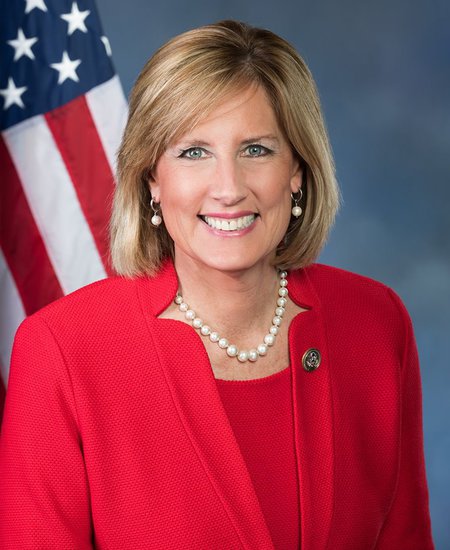
Rep. Claudia Tenney
Sponsored bills
Maddy summaryHR 3238, the Affordable Housing Credit Improvement Act of 2023, updates the Low-Income Housing Tax Credit (LIHTC) program to increase the availability of affordable housing across the United States. The bill makes several key changes including increasing state funding formulas, modifying tenant eligibility rules to better serve vulnerable populations (such as domestic violence victims and students), and expanding credit eligibility for projects in rural and Native American communities. Specific provisions raise the credit for properties serving extremely low-income households, clarify rules around tenant income increases, and require housing providers to protect victims of domestic violence. The bill also updates terminology from "low-income" to "affordable" throughout the tax code and enhances program transparency through data sharing requirements. These changes aim to make the LIHTC program more effective at creating and preserving affordable housing units for low-income households nationwide.
Maddy summaryThe Protecting Taxpayers and Victims of Unemployment Fraud Act allows states to retain 25% of funds recovered from fraudulent unemployment claims (for pandemic-related benefits) to improve fraud prevention systems. States can use these retained funds to modernize unemployment systems, hire fraud investigators, reimburse administrative costs, or conduct other fraud prevention activities. The bill requires states to use specific data matching systems like the National Directory of New Hires to detect fraud more effectively. It modifies federal rules to ensure states can use recovered funds without violating deposit requirements. This legislation aims to reduce unemployment fraud while protecting taxpayers and victims of fraud.
Maddy summaryThe HELPER Act of 2023 creates a new FHA mortgage insurance program specifically for first responders and K-12 teachers. It allows eligible first-time homebuyers in these professions to secure mortgages with 100% financing (no down payment required) for purchasing or repairing a primary residence. To qualify, applicants must be employed as law enforcement, firefighters, paramedics, or K-12 teachers, have completed housing counseling, and meet specific employment history requirements (e.g., 4 years in the role or disability-related release). The program authorizes $660,000 for fiscal year 2024 and $160,000 annually through 2030, with authority expiring after 5 years.
Maddy summaryHR 1715 requires the Department of Energy (DOE) and National Oceanic and Atmospheric Administration (NOAA) to collaborate on research using artificial intelligence and high-performance computing to improve weather forecasting and climate models. The bill mandates a competitive funding process for research groups - including universities, labs, and nonprofits - to develop better modeling techniques, avoid duplication, and share data securely. It also requires both agencies to submit progress reports to Congress within two years and sets a five-year expiration for the initiative. This bill directly affects federal agencies, research institutions, and the development of more accurate weather prediction systems.
Maddy summaryHRES 376 is a non-binding resolution expressing the House of Representatives' view that the U.S. Postal Service (USPS) must maintain door-to-door delivery for all residential and business customers. It cites concerns that ending this service would disproportionately affect elderly and disabled individuals who rely on secure, convenient mail access for essential items like medications. The resolution notes that voluntary shifts to centralized pickup in 2013 affected only 0.8% of businesses, highlighting dependence on in-person delivery for security and revenue. It urges USPS to avoid reducing door delivery or requiring customers to pay for it.
Maddy summaryHR 2757, the Puerto Rico Status Act, establishes a process for Puerto Rico to determine its political status through a plebiscite on November 2, 2025, offering three options: independence, sovereignty in free association with the United States, or statehood. If no option receives a majority in the initial vote, a runoff plebiscite would be held on March 8, 2026. The bill outlines transition processes for each option, including constitutional conventions, implementation steps, and provisions for citizenship, immigration, and economic benefits. It mandates bilingual voter education materials and requires oversight by the Elections Commission and the Attorney General to ensure fair representation of all options. This legislation directly affects Puerto Rico's residents by providing a structured process to choose their permanent political relationship with the United States.

Maddy summaryHR 3124 removes a prohibition in the tax code that previously prevented certain tax-exempt bond proceeds from being used for private or commercial golf courses and country clubs. The bill amends Section 144 of the Internal Revenue Code by deleting the specific language barring these facilities from using such funds. This change directly affects private golf courses and country clubs by allowing them to access tax-exempt bond financing they were previously excluded from. The key mechanism is the straightforward deletion of the restriction from the tax code, with effective dates applying to new bond issuances and specific tax credit provisions after enactment.
This resolution urges transatlantic unity on a robust deterrence policy to maintain peace and stability across the Taiwan Strait. The resolution also (1) encourages NATO allies to work with their partners in the Indo-Pacific to address shared global security challenges; and (2) commends the people of Taiwan for their commitment to democracy, civil liberties, and human rights.
Maddy summaryThis bill establishes a Space National Guard as part of the organized militia in states, territories, Puerto Rico, and D.C. where the Space Force operates, creating two distinct components: state-level "Space National Guard" forces and a federal "Space National Guard of the United States" that serves as the Space Force's reserve component. It defines these terms in federal law, clarifies their structure (including personnel requirements and status when not on active duty), and requires implementation within 18 months, with annual congressional briefings on progress. The bill does not create new missions or funding but formalizes existing National Guard roles within the Space Force framework.