

Maddy summaryHR 4787, the Volunteer First Responder Housing Act, provides housing benefits for volunteer firefighters and emergency medical responders who meet specific service requirements. It allows qualified volunteers to receive an $18,000 annual income deduction when applying for USDA single-family home loans, and qualifies them for discounted home purchases under HUD’s Good Neighbor Next Door program (normally for certified firefighters/EMTs). To qualify, volunteers must have served continuously for two years (meeting minimum hour requirements or active membership) and hold state certification, with employer verification confirming their eligibility. This directly affects volunteer first responders in communities served by eligible fire departments or emergency services organizations.
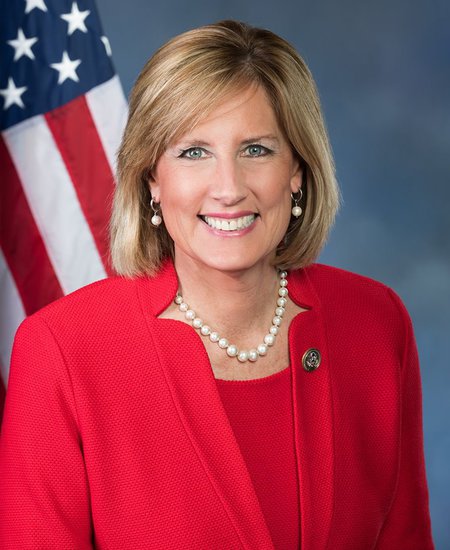
Rep. Claudia Tenney
Sponsored bills
Maddy summaryThis bill creates two tax credits to support local media and small businesses. It provides a credit for small businesses (under 50 full-time employees) that advertise in qualifying local newspapers or broadcast stations, covering 80% of first-year ad costs up to $5,000 and 50% of subsequent-year costs up to $2,500. It also establishes a payroll tax credit for employers hiring local news journalists, covering 50% of wages for the first four quarters (capped at $12,500 per journalist) and 30% thereafter, with a maximum of 1,500 journalists per employer. Both credits expire after five years and require strict definitions of "local media" (e.g., publishers with local journalists and community focus) to prevent misuse.
Maddy summaryThis bill amends the Child Nutrition Act to extend liability protections for food and pet supply donations. It adds definitions for "pet," "emotional support animal," and "pet supply" to the Act, clarifying that donations of pet food or supplies for pets, service animals, or emotional support animals are covered. The key provision (Section 22(c)(4)) shields donors and nonprofits from civil/criminal liability when donating such items in good faith for direct distribution to animals. It directly affects pet food donors, animal welfare nonprofits, and local governments distributing pet supplies. The bill does not create new programs but modifies existing donation rules to include pet-related items.
Maddy summaryHR 4721, the Main Street Tax Certainty Act, makes a permanent the 20% tax deduction for eligible small business owners under Section 199A of the tax code. This provision directly affects pass-through business owners (like S-corps, partnerships, and sole proprietorships) who qualify for the deduction. The bill achieves this by removing the temporary expiration language (subsection (i)) from the existing tax code provision. The key change is ending the need for annual congressional extensions of this deduction, providing long-term tax certainty for small businesses.
Maddy summaryHR 2768, the PFC Joseph P. Dwyer Peer Support Program Act, establishes a VA grant program to fund peer-to-peer mental health support for veterans. It provides up to $250,000 per grant to eligible nonprofits, veteran service organizations, or state/local Tribal agencies to create programs where veterans serve as peer specialists offering 24/7 nonclinical support. The program requires adherence to VA-developed standards for volunteer training and service delivery, while prohibiting the collection of veterans' personally identifying information. The bill authorizes $25 million over three years to implement this initiative, directly benefiting veterans seeking accessible mental health assistance through peer networks.
Maddy summaryHR 1815 creates a three-year pilot program to test assisted living services as an alternative to VA nursing home care for eligible veterans. It directly affects veterans currently receiving VA nursing home care or needing higher care than VA domiciliary services but not meeting full nursing home criteria. The program selects six VA service networks (prioritizing regions with high nursing home use and rural areas), contracts with approved facilities meeting VA standards, and pays lower rates than nursing home costs. The VA must report annually on participants, costs, barriers, and quality, with a final report recommending whether to expand the program nationwide.
Maddy summaryThis bill, HR 1282 (Major Richard Star Act), expands benefits for certain military retirees by allowing them to receive both veterans' disability compensation and military retirement pay simultaneously. It specifically affects combat-related disabled retirees under Chapter 61 of the military retirement system who have fewer than 20 years of service. The key change removes the automatic reduction of military retirement pay when these retirees also receive disability compensation, as amended in Section 1413a(b)(3) of Title 10. Technical updates to the law’s structure and effective date (starting after enactment) complete the provisions.
Maddy summaryHR 4615, the National Emergency Expenditure Reporting Transparency Act, requires federal agencies to provide detailed public reports on spending during national emergencies declared by the President. It mandates disclosure of specific data - including budget authority, obligations, unobligated balances, and spending by program activity and funding source - beginning six months after the bill's enactment. This applies to all national emergencies under the National Emergencies Act (50 U.S.C. 1621), directly affecting federal agencies managing emergency funds and increasing transparency for the public. The bill updates existing federal spending data standards to include unique identifiers for emergency-related funds, requiring agencies to report this information through the government’s public spending database.
Maddy summaryThe Mount Rushmore Protection Act prohibits federal funding for any changes to the Mount Rushmore National Memorial, including altering, destroying, or removing its carved faces or features. It specifically bans the use of federal funds to modify the memorial's existing names, faces, or other physical elements. The bill also formally designates the site as "Mount Rushmore" in all federal records, maps, and documents. This legislation directly affects federal agencies and government documents that reference the memorial, ensuring its current appearance remains protected from funded modifications.
Maddy summaryThis bill prohibits U.S. federal agencies from entering new contracts with companies that boycott Israel after January 1, 2024. Companies must certify they are not boycotting Israel at contract signing, and contracts must include this prohibition. It applies to federal contracts over $100,000 for services or IT with companies employing more than 10 people. If a company violates the boycott prohibition, the agency must terminate the contract after 30 days unless the company ends the boycott. The bill explicitly states it does not infringe on First Amendment rights or take sides on the Israeli-Palestinian conflict.