

Creating Access to Rural Employment and Education for Resilience and Success Act or the CAREERS Act This bill reauthorizes the Rural Innovation Stronger Economy (RISE) Grant Program and expands the program to include support for career pathway programs or industry or sector partnerships in industries in rural communities. As background, this Department of Agriculture (USDA) program offers grant assistance to create and augment high-wage jobs, accelerate the formation of new businesses, support industry clusters, and maximize the use of local productive assets in eligible low-income rural areas. Under the bill, RISE grant program funds may be used to support career pathway programs (i.e., a combination of rigorous and high-quality education, training, and other services) or industry or sector partnerships in industries in rural communities. These industries may include public utilities (i.e., telecommunications, broadband, water, wastewater, disposal, and electric supply services), conservation practices and management, health care, child care, manufacturing, and agribusiness. The bill removes the current requirement that the program provide grants (to the maximum extent practicable) for job accelerators in at least 25 states. Instead, USDA must ensure the regional diversity of grant recipients or participants in providing for job accelerators, career pathway programs, and industry or sector partnerships. The bill also includes additional reporting requirements for career pathway programs and industry or sector partnership grant recipients.
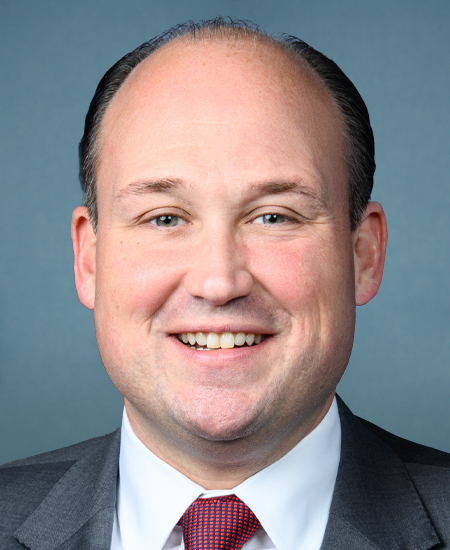
Rep. Nicholas A. Langworthy
Sponsored bills
Maddy summaryThis bill requires the federal crop insurance program to develop new policies protecting table, wine, and juice grape growers against crop losses from freezing temperatures. Within one year, the program must research or contract for research on such insurance, and within 18 months, make the policy available if standard requirements are met. A report detailing the research findings and policy availability must be submitted to Congress within two years.
Maddy summaryHR 294, the Dairy Farm Resiliency Act, amends the Dairy Margin Coverage Program to adjust eligibility and coverage limits. It changes the required production history from specific years (2011-2013) to the most recent three-year period, updated every five years. The bill also increases the premium coverage threshold from $5 million to $6 million for both Tier I and Tier II program participants. This directly affects dairy farmers enrolled in the federal margin coverage program by expanding their potential coverage limits and simplifying eligibility calculations.
Rural Telehealth and Education Enhancement Act of 2025 This bill reauthorizes the Distance Learning and Telemedicine Program through FY2030. This Department of Agriculture program provides grants to help rural communities gain the technology and training necessary to engage in telemedicine and distance learning.
Maddy summaryThis bill requires dairy manufacturers to report detailed production cost and yield information for all dairy products processed at their facilities. It amends existing law to mandate this reporting to the Secretary of Agriculture, replacing previous electronic reporting requirements with a general "reporting" framework. The Secretary must then publish a public report on these costs every two years, starting three years after the bill's enactment. The bill directly affects dairy manufacturers by imposing new transparency requirements for their processing costs.
This concurrent resolution declares that Congress should not impose any new performance fee, tax, royalty, or other charge relating to the public performance of sound recordings on a local radio station for broadcasting sound recordings over the air, or on any business for such public performance of sound recordings.
Maddy summaryHR 1301, the Death Tax Repeal Act, would eliminate the federal estate tax and generation-skipping transfer tax for estates of individuals dying on or after its enactment date. It directly affects individuals inheriting significant assets, as it removes taxes on estates exceeding $10 million (adjusted for inflation) and repeals taxes on large transfers between generations. The bill modifies the gift tax by establishing a $10 million lifetime exemption with annual inflation adjustments, replacing previous tax brackets. It applies to estates, gifts, and transfers occurring on or after the bill's effective date.
Maddy summaryThis bill requires the Pension Benefit Guaranty Corporation (PBGC) to recalculate monthly pension benefits for retirees in six specific Delphi-related pension plans to reflect the full vested amount they would have received without prior benefit limits. It mandates lump-sum payments for past underpayments, including 6% annual interest, to eligible retirees and beneficiaries who received lower benefits than guaranteed under ERISA. The PBGC must fund these payments through a new Delphi Full Vested Plan Benefit Trust Fund established in the Treasury. This directly affects retirees in the Delphi Hourly-Rate, Delphi Retirement Program for Salaried Employees, PHI Non-Bargaining, ASEC Manufacturing, PHI Bargaining, and Delphi Mechatronic Systems pension plans. The law does not alter existing PBGC rules for other plans or change how the agency administers benefits generally.
Maddy summaryHR 1330 establishes the Smithsonian National Museum of the American Latino, authorizing its location within the National Mall's "Reserve" area. The bill requires the Smithsonian Board to coordinate with federal agencies managing potential museum sites, including notifying relevant congressional committees before land transfers. It mandates that the museum's exhibits and programs accurately represent the diverse cultures, histories, and viewpoints of Hispanic and Latino communities in the U.S., seeking input from a broad range of community experts. The Smithsonian must also submit regular reports to Congress detailing compliance with these representation requirements.
More Homes on the Market Act This bill increases the amount of gain from the sale of a principal residence that an individual may exclude from gross income (for federal tax purposes). Under the bill, an individual may exclude from gross income gain from the sale of a principal residence of up to $500,000 (currently $250,000), and taxpayers who are married and file a joint federal income tax return may exclude up to $1 million (currently $500.000). The bill also requires these amounts to be adjusted annually for inflation.