

Maddy summaryHR 1940, the Tanning Tax Repeal Act of 2025, removes a federal excise tax on indoor tanning services. It directly affects tanning salons and businesses providing these services by eliminating the tax they previously paid. The bill repeals Chapter 49 of the Internal Revenue Code, which imposed the tax, and the change takes effect for services provided after the bill becomes law. This is a straightforward tax repeal with no new requirements or funding mechanisms.
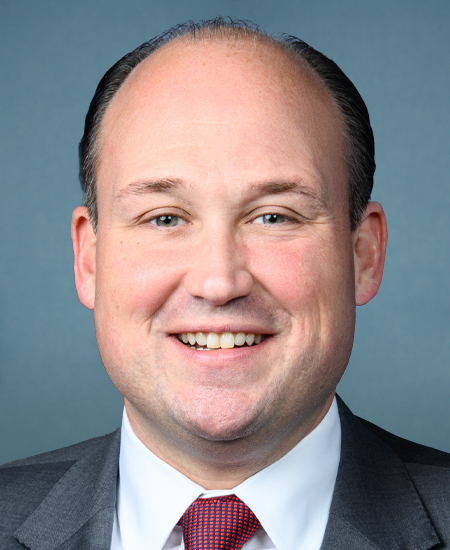
Rep. Nicholas A. Langworthy
Sponsored bills
Maddy summaryThis bill prohibits the non-consensual sharing of digitally manipulated intimate images (deepfakes) of identifiable people. It creates a civil right for victims to sue individuals who distribute such images without consent, allowing claims for actual damages, $150,000 in liquidated damages, or punitive damages, plus attorney fees. Criminal penalties up to 10 years in prison apply for malicious disclosure intended to harass, harm reputation, or facilitate violence. Exceptions include disclosures to law enforcement for investigations, legitimate public interest matters (excluding mere public figure status), or efforts to assist the victim. The law specifically defines "intimate digital depictions" to include explicit body parts, sexual fluids, or sexual conduct in manipulated images.
Maddy summaryThis bill restores pension benefits for retirees affected by the termination of specific Delphi pension plans. It requires the Pension Benefit Guaranty Corporation (PBGC) to recalculate monthly benefits to the "full vested plan benefit" (the amount retirees would have received without prior reductions) and pay lump-sum payments for past underpayments, including 6% annual interest. The law applies to retirees of six Delphi pension plans, including the Delphi Hourly-Rate Employees Pension Plan and Delphi Retirement Program for Salaried Employees, who are currently receiving benefits or eligible for future payments. Payments will be funded from existing PBGC resources without changing prior asset allocations.
Maddy summaryThis resolution formally censures Representative Al Green (D-TX) for disrupting President Trump's address during a joint session of Congress on March 4, 2025. It requires him to appear in the House chamber for the public reading of the censure resolution, which states his actions violated decorum rules and brought disrepute to Congress. As a procedural resolution, it does not enact policy changes but serves as a formal reprimand for conduct during a congressional session.
Maddy summaryHR 1875, the Medicaid Provider Screening Accountability Act, requires states to conduct monthly checks starting January 1, 2028, to verify if Medicaid providers or suppliers are still eligible to participate. It directly affects all healthcare providers and suppliers enrolled in Medicaid, including those seeking initial enrollment, renewal, or revalidation. The key provision mandates states to check federal and state databases (created under the Affordable Care Act) to confirm no termination of participation has occurred by the federal government or other states. This ensures providers remain compliant with federal and state participation rules throughout their enrollment period. The bill focuses on operational screening, not on reducing fraud or improving care outcomes.
Maddy summaryHRES 177 is a procedural resolution that sets the rules for the House to consider three separate disapproval resolutions. It enables debate and voting on H.J. Res. 42 (to disapprove a Department of Energy appliance energy efficiency rule), H.J. Res. 61 (to disapprove an EPA rule on tire manufacturing emissions), and S.J. Res. 11 (to disapprove a Bureau of Ocean Energy Management rule protecting marine archaeological resources). The resolution waives most procedural objections and limits debate to one hour per disapproval measure. It does not change any regulations itself but provides the process for Congress to potentially reject them.
Maddy summaryHR 1787 authorizes the U.S. Mint to produce commemorative coins honoring baseball legend Roberto Clemente, including $5 gold, $1 silver, and half-dollar coins, with specific specifications for weight, size, and metal content. The bill requires the coins to feature Clemente's image and commemorative inscriptions, and mandates a surcharge ($35 for gold, $10 for silver, $5 for half-dollar) paid to the Roberto Clemente Foundation for its educational, youth sports, and disaster relief programs. All coins must be minted in 2027, sold at face value plus surcharge and production costs, and will be legal tender. The bill focuses solely on the coin program, not broader policy changes.
Federal Firearms Licensee Protection Act of 2025 This bill modifies criminal penalties for an offense involving the theft of a firearm from a licensed importer, manufacturer, or dealer, or from their business premises. Specifically, the bill does the following: increases from 10 to 20 years the maximum prison term, and creates a 3- or 5-year mandatory minimum prison term for an offense that occurs during the commission of a burglary or robbery. An attempt to commit an offense is subject to the same penalties as a substantive offense.
Maddy summaryThis bill protects firearm trace data maintained by the ATF's National Trace Center and related licensee information from public disclosure under FOIA. It directly affects licensed firearms dealers, state/local governments, and other entities that handle this data. Key provisions include adding a new FOIA exemption for this data, imposing fines of $10,000-$25,000 for unauthorized disclosures, and allowing licensed dealers to sue for triple damages or $25,000 per disclosure. The law also prevents sovereign immunity from blocking such lawsuits and specifies that fines apply per individual disclosure.
Maddy summaryThis bill extends the exclusivity period for certain advanced drugs from 7 to 11 years. It defines "advanced drug product" as a drug using genetically targeted technology to modulate gene function (e.g., suppress or activate genes). This change directly affects pharmaceutical companies developing these specific advanced therapies by granting them longer market exclusivity. The policy change modifies the Social Security Act to provide extended protection for these innovative drugs, allowing companies more time to recoup research and development costs.