

Maddy summaryHR 3628, the State Planning for Reliability and Affordability Act, requires states to ensure reliable electricity generation for 10 years by amending the Public Utility Regulatory Policies Act of 1978. It mandates state-regulated electric utilities to include specific reliability measures in their integrated resource planning, defining "reliable generation facilities" as those providing continuous power for 30+ days (with on-site fuel, contracts, or emergency capabilities) and grid support like frequency regulation. States must begin reviewing these standards within one year of the bill’s enactment and finalize determinations within two years. Existing state actions meeting comparable standards before enactment are exempt from these new timelines. The bill directly affects state utility regulators and electric utilities operating under state oversight.
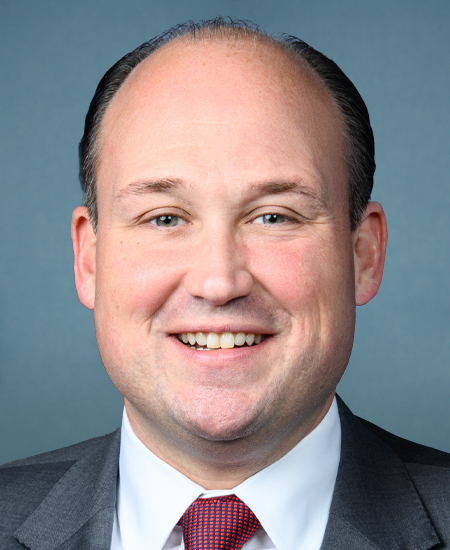
Rep. Nicholas A. Langworthy
Sponsored bills
Maddy summaryThis bill (HR 6694) designates the U.S. Postal Service facility at 130 North Winton Road in Rochester, New York, as the "Lieutenant James N. Lyons Post Office." It updates all official federal references to the location to reflect this new name. The change is purely ceremonial and affects how the post office is identified in government documents and records.
Miracle on Ice Congressional Gold Medal Act This act provides for the award of Congressional Gold Medals to the members of the 1980 U.S. Olympic men's ice hockey team in recognition of the team's achievement at the 1980 Winter Olympic Games.
Maddy summaryThis bill establishes new requirements for pharmacy benefit managers (PBMs) working with Medicare Part D prescription drug plans and Medicaid programs. It mandates that PBMs pay pharmacies a specific reimbursement amount based on drug acquisition costs plus a fixed fee, pass through manufacturer rebates directly to beneficiaries at the point of sale, and prohibits steering practices that direct patients to specific pharmacies. The bill applies to Medicare Part D plans and Medicaid managed care organizations beginning January 1, 2027, affecting how PBMs interact with pharmacies and handle drug rebates. Violations could result in criminal penalties of up to $1 million or 10 years in prison for willful noncompliance. The bill aims to increase transparency and fairness in pharmacy drug pricing for Medicare and Medicaid beneficiaries.
Maddy summaryHR 6475, the Preventing Child Trafficking Act of 2025, requires the Department of Justice's Office for Victims of Crime and the Administration for Children and Families' Office on Trafficking in Persons to implement the 2023 Government Accountability Office's recommendations for preventing child trafficking and supporting survivors. The bill mandates these agencies to collaborate using established best practices, develop measurable performance goals for child trafficking programs, and base these targets on existing grantee data. It directly affects federal agencies managing anti-trafficking programs and the children and survivors served by those programs. The bill requires a report to Congress within 180 days detailing how these implementation steps were carried out.
Maddy summaryHR 6466, the Forced Abortion Prevention and Accountability Act, prohibits non-consensual administration of abortion drugs (like mifepristone or misoprostol) to pregnant women without their informed consent. It criminalizes this act with penalties up to 25 years in prison and allows victims to sue for triple damages, psychological/physical injury compensation, and attorney fees. The bill directly affects pregnant women who might face coerced procedures and medical providers or others who administer such drugs without consent. Key provisions include criminal penalties for the act itself, enhanced penalties for serious injury or death, and a civil remedy framework for victims seeking compensation.
Maddy summaryThe Rx ACCESS Act improves prescription drug access for TRICARE beneficiaries, including military service members, retirees, and their families, by establishing fair reimbursement standards for pharmacies and expanding medication choice. It requires pharmacies to be reimbursed at actual drug costs (or the national average drug cost for certain medications) plus a standard dispensing fee, while banning hidden fees like point-of-sale charges. Starting October 1, 2026, beneficiaries can choose how they receive non-generic medications for ongoing health conditions. The law also mandates annual audits to verify reimbursement fairness and ensure pharmacy networks provide accessible care, especially in rural and underserved areas.
Give Kids a Chance Act of 2025 This bill expands the Food and Drug Administration’s (FDA’s) authority with respect to research on rare pediatric diseases, including by permitting the FDA to take enforcement action against drug sponsors that fail to satisfy pediatric study requirements and by reauthorizing programs that support pediatric research. Specifically, the bill modifies requirements relating to molecularly targeted pediatric cancer investigations to permit research on new drugs in combination with active ingredients that have already been approved, provided certain conditions are met; permits the FDA to take enforcement action against drug sponsors that fail to comply with pediatric study requirements, if such sponsors demonstrated a lack of due diligence in satisfying the requirement; renews the FDA’s authority to award priority review vouchers to sponsors of new products intended to treat rare pediatric diseases through September 30, 2029; and reauthorizes through FY2027 certain funding for the National Institutes of Health to support priority pediatric research. The bill also provides statutory authority for the FDA’s interpretation of the orphan drug exclusivity period. The bill specifies, consistent with FDA regulations, that the seven-year market exclusivity period for drugs for rare diseases or conditions (i.e., orphan drugs) prohibits the approval of the same drug for the same approved use or indication with respect to the disease or condition. (In Catalyst Pharmaceuticals, Inc. v. Becerra , a court rejected the FDA’s interpretation and held that orphan drug exclusivity extends to all uses or indications for the disease or condition.)
Maddy summaryHCONRES 58 is a symbolic congressional resolution denouncing socialism in all its forms. It does not create new laws or affect any policies, as it is a non-binding statement of opinion. The resolution cites historical events and quotes from Founding Fathers to argue that socialism leads to authoritarianism and economic harm, referencing examples like the Soviet Union and Venezuela. It formally "denounces" socialism and opposes implementing socialist policies in the U.S., but has no legal effect on citizens or government actions. This is a procedural resolution, not a policy measure.
Maddy summaryThe ROTOR Act narrows the definition of "sensitive government mission" for aircraft operations, excluding training flights and flights by officials below Cabinet rank. It requires regular reporting to Congress about exceptions to ADS-B Out requirements, establishes deadlines for requiring ADS-B In equipment on most aircraft, and mandates safety reviews for airports with military operations. The bill also improves coordination between the FAA and Department of Defense on airspace management and safety information sharing. These changes increase transparency around aircraft operations that don't broadcast their location while enhancing safety oversight. The bill directly affects Federal agencies operating aircraft, the FAA, and aircraft operators required to equip with ADS-B technology.