

Safeguard American Voter Eligibility Act or the SAVE America Act This bill requires individuals to provide documentary proof of U.S. citizenship when registering to vote, and requires photo identification to vote, in federal elections. Specifically, the bill prohibits states from accepting and processing an application to register to vote in a federal election unless the applicant presents documentary proof of U.S. citizenship. The bill specifies what documents are considered acceptable proof of U.S. citizenship, such as identification that complies with the REAL ID Act of 2005 that indicates U.S. citizenship. Further, the bill (1) prohibits states from registering an individual to vote in a federal election unless, at the time the individual applies to register to vote, the individual provides documentary proof of U.S. citizenship; and (2) requires states to establish an alternative process to demonstrate U.S. citizenship. Each state must take affirmative steps on an ongoing basis to ensure that only U.S. citizens are registered to vote, which shall include establishing a program to identify individuals who are not U.S. citizens using information supplied by certain sources. Additionally, states must remove noncitizens from their official lists of eligible voters. The bill (1) provides for a private right of action for certain violations, and (2) establishes criminal penalties for certain offenses. Individuals voting in federal elections must present an eligible photo identification document. An individual who votes by absentee ballot must submit a copy of their identification document with both the request for, and the submission of, the absentee ballot.
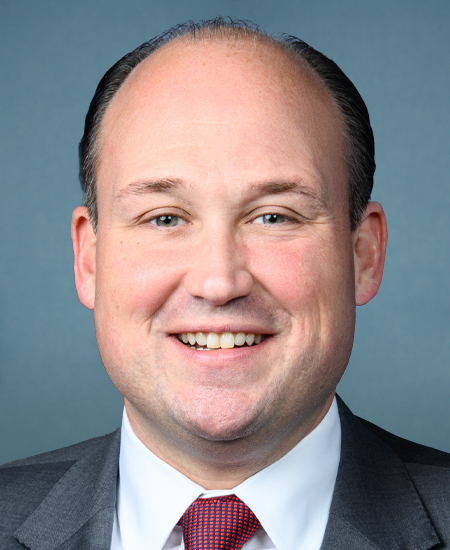
Rep. Nicholas A. Langworthy
Sponsored bills
Maddy summaryThis bill requires most employers (those with 50+ employees for 20+ weeks annually) to display a clear notice about veterans' benefits in visible workplace areas. The notice, developed by the Labor and Veterans Affairs Departments, includes the Veterans Crisis Line, how to apply for benefits, and state-specific veteran resources. Employers must post the notice starting one year after the bill's enactment, with the notice updated twice yearly and made available online. A 180-day information campaign will also inform employers about the requirement.
Maddy summaryHR 1295, the Reorganizing Government Act of 2025, amends federal law to streamline executive branch operations. It requires all executive departments (like the Departments of Defense or Education) to eliminate unnecessary programs, reduce federal employee numbers, and cut burdensome regulations that increase compliance costs. The bill updates deadlines for reorganization plans from 1984 to 2026 and explicitly mandates that all government operations must serve the public interest. These changes apply broadly across the federal government, focusing on efficiency and cost reduction.
Maddy summaryHR 7145 defines "essential health systems" as hospitals serving large numbers of Medicaid and low-income patients, specifically targeting non-Federal, nonprofit, or government-run hospitals that meet one of three criteria for at least two of the past three years (e.g., high Medicaid patient percentage, high uncompensated care, or top 16th percentile in state rankings for low-income care). The bill requires MACPAC to annually publish an "essential health system index" ranking qualifying hospitals nationally, by state, and within local areas, using data from Medicare reporting. Hospitals designated as essential health systems receive a five-year designation, renewable if they maintain eligibility. This framework aims to identify facilities providing critical community care for vulnerable populations through standardized metrics.
Maddy summaryThis bill would increase the base pay for Federal Bureau of Prisons correctional officers by 35 percent, replacing their current base rate for all pay calculations (including retirement and locality adjustments). It applies to officers whose duties involve inmate custody, control, or direct custodial contact, including certain supervisory staff and lower-grade Bureau of Prisons employees with similar duties. The pay increase is capped at the Executive Schedule level V rate and would expire after five years unless a Department of Justice Inspector General review finds progress in reducing non-custodial staff use for custodial duties and excessive overtime. The review, required 180 days before expiration, would assess impacts on recruitment, retention, and institutional safety.
Maddy summaryHR 909, the Crime Victims Fund Stabilization Act of 2025, modifies how funds from the False Claims Act are deposited into the Crime Victims Fund. It specifies that from 2025 through 2029, certain False Claims Act proceeds (specifically those for qui tam plaintiff payments and government damage reimbursements) cannot be deposited into the fund. This change directly affects the composition of the Crime Victims Fund by excluding these specific revenue streams during the specified period. The bill does not create new benefits or alter victim services; it only adjusts fund allocation rules for existing False Claims Act revenues.
Maddy summaryHRES 984 is a symbolic resolution designating January 9, 2026, as "National Law Enforcement Appreciation Day." It directly honors all federal, state, local, and tribal law enforcement officers across the United States for their service and sacrifices. The resolution expresses the House's support and gratitude, encourages public observance through ceremonies, and recognizes officers who have made the ultimate sacrifice. As a non-binding resolution, it does not create new laws or policies but serves as a formal expression of appreciation.
Maddy summaryThe Reliable Power Act requires the Electric Reliability Organization (ERO) to conduct annual assessments of the U.S. power grid's ability to maintain reliable electricity supply, including analyzing generation resources, transmission needs, and risks of shortages during extreme weather. If the ERO identifies a risk of insufficient generation, it notifies the Federal Energy Regulatory Commission (FERC), which then alerts federal agencies like the Environmental Protection Agency (EPA) and Department of Energy (DOE) developing regulations affecting power generation. These agencies must submit proposed regulations for FERC review before finalizing them, and FERC can recommend changes to prevent reliability risks, with agencies required to respond to FERC’s comments. The bill directly affects federal agencies creating energy-related rules and aims to prevent power shortages by integrating grid reliability into the rulemaking process.
Maddy summaryHRES 951 is a procedural resolution that sets the rules for the House of Representatives to consider six specific bills without procedural delays. It waives objections to these bills, limits debate to one hour per bill (equally divided between parties), and outlines the amendment process for each. This resolution does not change the content of the underlying bills but streamlines their legislative path for debate and voting.
Essential Caregivers Act of 2025 This bill prohibits certain health care facilities from limiting the access of essential caregivers to residents of those facilities, including during designated emergency periods. Specifically, the bill generally prohibits Medicare skilled nursing facilities, Medicaid nursing facilities, Medicaid intermediate care facilities, and associated inpatient rehabilitation facilities from restricting the access of essential caregivers to residents of the facilities, including during emergency periods in which visitation rights are otherwise restricted. During emergency periods, facilities may restrict access for an initial period of up to seven days and for one additional maximum seven-day period (if the additional period is approved by the state health department). Facilities may restrict access for a total of 7 days (or 14 days with the approval of the state health department) during an emergency period. Essential caregivers must agree to comply with any safety protocols set by the facility, which may be no more stringent for caregivers compared to those for staff. Caregivers who fail to comply with these requirements may be denied access, subject to an appeals process.