

Maddy summaryThis bill appropriates $14.3 billion in supplemental security funding to Israel following the October 7, 2023 attacks. The funding includes $4 billion for Iron Dome and David's Sling defense systems, $1.35 billion for the Iron Beam defense system development, and $3.5 billion for foreign military financing. The bill requires regular reporting to Congress on security assistance provided to Israel and designates all funds as "emergency requirements" under federal budget law. It also modifies existing laws to facilitate the transfer of defense articles and services to Israel, aiming to strengthen Israel's defense capabilities against rocket threats.
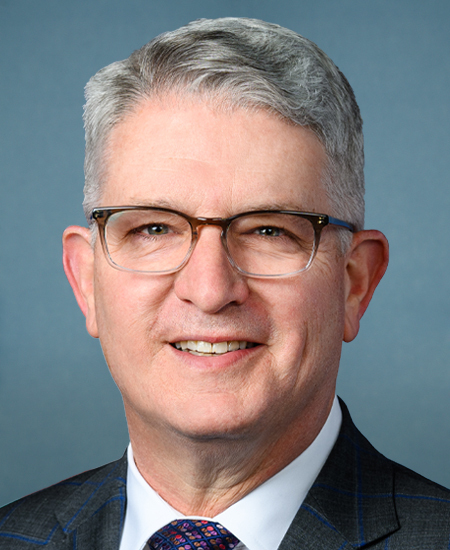
Rep. Brandon Williams
Sponsored bills
Maddy summaryThis bill would authorize the U.S. government to confiscate Russian sovereign assets held in U.S. jurisdiction and use those funds to support Ukraine's reconstruction and humanitarian needs following Russia's invasion. It prohibits releasing these blocked assets until Russia fully compensates Ukraine or agrees to an international compensation mechanism. The bill establishes a "Ukraine Support Fund" to hold confiscated assets and requires regular congressional reporting on how these funds are allocated for Ukraine's recovery. It also includes provisions for international coordination with allies on sanctions and asset management related to Russia's invasion of Ukraine.
Maddy summaryThe SHIP Act imposes sanctions on foreign entities that knowingly handle Iranian petroleum, targeting those involved in port operations, transportation, refining, or ship-to-ship transfers of Iranian oil. Starting 90 days after enactment, the President must block assets, deny visas, and impose penalties on individuals or companies engaging in these activities, including family members or owners of sanctioned entities. It requires annual reports tracking Iran's oil exports, revenues, and key players like shipping companies and ports. The sanctions terminate if the President certifies Iran has stopped supporting terrorism and dismantled weapons programs.
Maddy summaryThis bill requires the Inspector General of five specific federal agencies (State, Defense, Homeland Security, FBI, and CIA) to report within 90 days on any employees with financial, organizational, or communication ties to Hamas - including social media posts supporting Hamas. It also mandates a broader 180-day report from the Comptroller General on the prevalence of such ties across these agencies, including recommendations for future legislation. The bill directly affects all employees (including military personnel) in those agencies who have any connection to Hamas as defined by the legislation. It focuses on transparency and investigation, not immediate action against employees, and does not change current hiring or employment policies.
Maddy summaryThe GROWTH Act of 2023 expands funding for nursing workforce training by making community colleges and their healthcare partnerships eligible for grants under the Nurse Education, Practice, Quality, and Retention program. It directly affects community colleges with existing nursing programs and partnerships between these colleges and healthcare facilities like Federally Qualified Health Centers. The bill requires the Secretary of Health and Human Services to prioritize up to 50% of annual funding for these community colleges or their partnerships. This changes how funds are distributed, ensuring a significant portion supports workforce development at the community college level.
Maddy summaryThis resolution (HRES 839) condemns antisemitism at U.S. colleges and universities and urges campus leaders to publicly oppose hate speech targeting Jewish students, faculty, and staff. It encourages university presidents, administrators, and faculty to speak out against speech that promotes violence or discrimination based on religion, national origin, or ancestry. The resolution specifically calls on institutions to support Jewish student organizations and ensure Jewish members can study and work without fear. As a non-binding resolution, it does not create new laws but expresses congressional support for addressing antisemitism on campuses.
Maddy summaryHRES 798 is a House resolution condemning support for Hamas, Hezbollah, and other terrorist organizations at colleges and universities. It states such support may create a hostile environment for Jewish students, faculty, and staff, citing incidents like blaming Israel for the October 7 Hamas attack. The resolution urges the Secretary of Education to direct the Office for Civil Rights to investigate and take action where appropriate. This non-binding resolution expresses the House's position but does not create new law or policy changes.
Maddy summaryHR 6201, the Iranian Sanctions Enforcement Act of 2023, creates the Iran Sanctions Enforcement Fund to cover costs related to seizing and forfeiting property from Iran or its designated proxies (like Hezbollah or the Revolutionary Guard Corps) that violate U.S. sanctions. The fund, initially $150 million, pays for investigative costs, property management, informant rewards, and equipment for federal, state, and local agencies involved in enforcement. It also establishes an Export Enforcement Coordination Center within Homeland Security to improve interagency cooperation on enforcing export controls targeting Iran. The bill requires annual reports on fund usage and mandates repayment of the initial $150 million by 2034, unless waived for national security reasons.
Maddy summaryHRES 830 is a non-binding House resolution condemning the Chinese Communist Party for its role in the U.S. fentanyl crisis. It urges the Biden administration to take six specific actions: impose sanctions on Chinese entities supplying fentanyl precursors, designate Chinese financial institutions evading U.S. sanctions, sanction Chinese officials linked to fentanyl trafficking, develop a plan to counter precursor shipments, and add China to a U.S. drug transit country list. The resolution focuses on holding China accountable for inaction on fentanyl precursor production in provinces like Hebei and suspended U.S.-China counternarcotics cooperation. It does not create new law but serves as a policy recommendation to the executive branch.
Maddy summaryHRES 773 is a resolution to expel Representative George Santos from the U.S. House of Representatives due to criminal charges and misconduct. It cites his false claims about his background, federal indictments for wire fraud, money laundering, and stealing over $44,000 from campaign donors, as well as falsifying financial records. The resolution invokes Article I, Section 5 of the Constitution, which allows the House to expel members for "disorderly behavior" or misconduct. This action directly affects Santos, removing him from his seat and ending his service as the representative for New York’s 3rd Congressional District. The resolution does not alter any laws but addresses his eligibility to serve based on his legal violations.