

Maddy summaryThis bill designates the United States Postal Service facility at 298 Route 292 in Holmes, New York, as the "Sheriff Adrian 'Butch' Anderson Post Office Building." It updates all federal references (including laws, maps, and documents) to use this new name for the location. The bill has no policy changes or financial impact - it solely commemorates Sheriff Adrian "Butch" Anderson through a building designation.
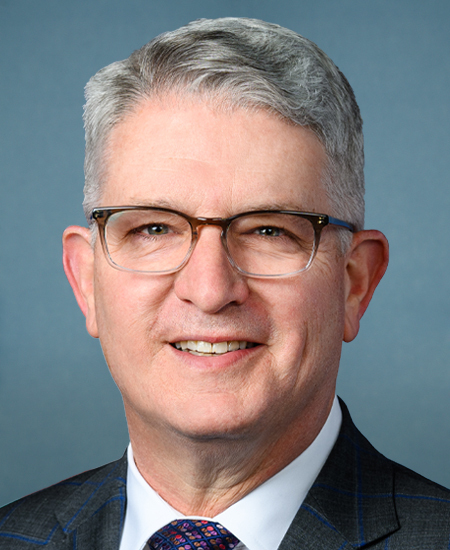
Rep. Brandon Williams
Sponsored bills
Maddy summaryHR 2988 requires the Department of Energy (DOE) and NASA to formally coordinate their research and development efforts through memoranda of understanding. The bill directs them to collaborate on specific areas like nuclear propulsion systems, quantum computing, environmental science, and data analytics, while ensuring competitive awards follow merit-based processes. It mandates that DOE and NASA share data and infrastructure where practical, and report to Congress within two years on their coordination progress and achievements. This legislation primarily affects DOE and NASA, facilitating joint projects without creating new funding but streamlining existing agency collaboration.
Maddy summaryThis bill requires the Department of Energy (DOE) and Department of Agriculture (USDA) to coordinate joint research projects on shared priorities like biofuels, AI for farming, energy-water systems, and carbon storage. It mandates a formal agreement between the departments to fund collaborative projects through competitive grants open to universities, labs, and industry. The departments must report to Congress within two years on their coordination efforts, research achievements, and future opportunities. This affects how DOE and USDA manage their research partnerships, not direct public policy or regulations.
Maddy summaryThis bill prohibits federal funding for housing undocumented immigrants on public lands managed by specific federal agencies. It blocks the use of federal money to provide temporary or permanent shelter (including encampments) for "specified aliens" - defined as individuals not legally admitted to the U.S. - on lands under the National Park Service, Bureau of Land Management, Fish and Wildlife Service, or Forest Service. The restriction applies to all housing arrangements, including leases or contracts, and directly affects how these agencies manage public lands. The policy change prevents federal agencies from using taxpayer funds to support shelter for non-admitted immigrants on federally managed properties.
Maddy summaryThis bill (HR 6551, the HEAL Act) updates transportation benefits for veterans receiving care at Department of Veterans Affairs facilities. It raises the mileage reimbursement rate for veterans traveling to appointments to match the rate set by the General Services Administration (replacing the fixed 41.5 cents per mile), bans deductibles for travel costs, and expands eligible providers for transportation assistance. Specifically, it allows veterans service organizations, approved personal care providers, and local government agencies (including volunteers) to offer transportation services under VA programs. These changes directly affect veterans using VA healthcare services and aim to reduce out-of-pocket costs for transportation.
Maddy summaryThe Immigration Visa Efficiency and Security Act of 2023 caps family-based immigrant visas for any single country at 15% (2% for dependent areas) of total visas annually, addressing longstanding visa backlogs for certain nations. It establishes new requirements for H-1B employers, including posting job openings on a Department of Labor website, meeting specific wage requirements (minimum $90,000 or prevailing wage), and preventing discrimination against workers. The bill also creates enhanced procedures for investigating H-1B violations, increases penalties for noncompliance, prohibits certain visas for nationals of "foreign adversary countries," and establishes a new pathway for employment-based immigrants to adjust their status with specific job requirements during the process.
Maddy summaryHRES 793 is a resolution passed by the U.S. House of Representatives calling on Hamas to immediately release all 199 hostages taken during Hamas' October 7, 2023 attack on Israel. The resolution condemns Hamas for the attack, the taking of hostages, and threats against hostages, while stating that holding hostages violates international humanitarian law under the Geneva Conventions. It demands the immediate release of all hostages and expresses sympathy for victims and their families. As a symbolic resolution, it does not create legal obligations but formally expresses the House's position.
Maddy summaryHRES 683 is a non-binding resolution expressing the House's support for diplomatic efforts to encourage Mexico to fulfill annual water delivery commitments under the 1944 U.S.-Mexico treaty. The treaty requires Mexico to deliver an average of 350,000 acre-feet of water annually (over a 5-year cycle) to the U.S., but Mexico has historically delayed deliveries until the cycle ends. The resolution specifically acknowledges water shortages faced by South Texas farmers and urges Mexico to meet its annual obligations, while supporting negotiations for more reliable water agreements. It does not create new legal requirements but formally encourages diplomatic action to address the delivery delays.
Maddy summaryHR 6300, the Veterans Education is Timeless Act of 2023, removes expiration dates for all Department of Veterans Affairs (VA) education benefits. It directly affects veterans and their dependents who use programs like the Post-9/11 GI Bill, Survivors' Benefits, and others, allowing them to access education benefits at any time without a deadline. The bill amends multiple sections of Title 38 to state that benefits "shall be afforded... at any time and are not subject to any delimiting date." It also requires the VA to refund veterans for contributions if they apply for a refund, and applies retroactively to all eligible individuals.
Maddy summaryThis bill amends federal transit grant rules to encourage housing near transit by adding incentives for projects that support "pro-housing policies." It defines such policies as local actions removing regulatory barriers to housing construction, including reducing parking minimums, creating faster approval processes for multi-family housing, and eliminating height restrictions. Transit project applicants can earn an extra point in their grant rating if they submit evidence of these policies in areas near transit, with the Department of Transportation consulting the Housing Secretary to assess how the policies will increase housing supply. The bill directly affects state and local governments implementing these policies and transit project applicants seeking federal capital investment grants.