

Maddy summaryThe LEO Fair Retirement Act of 2023 would allow federal law enforcement officers to include unpaid overtime hours toward their retirement benefits. Currently, these officers work significant overtime that isn't compensated due to pay caps, meaning they don't receive full credit for those hours in retirement calculations. The bill would amend retirement systems to include this unpaid overtime in retirement calculations, but officers would need to make a lump-sum payment to cover the difference between what they would have contributed to retirement if paid for the overtime versus what they actually contributed. This applies to specific federal law enforcement roles including criminal investigators, federal air marshals, special agents in the Diplomatic Security Service, probation officers, and pretrial services officers. The changes would take effect one year after the bill's enactment.
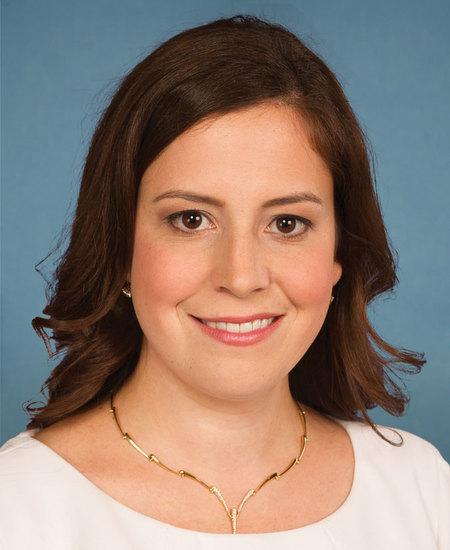
Rep. Elise M. Stefanik
Sponsored bills
No Retaining Every Gun In a System That Restricts Your Rights Act This bill modifies the retention requirements for firearm transaction records of federal firearms licensees (FFLs) that go out of business. Current law generally requires FFLs that go out of business to deliver their firearm transaction records to the Bureau of Alcohol, Tobacco, Firearms and Explosives (ATF). This bill removes the requirement for FFLs that go out of business to deliver their firearm transaction records to the ATF. Further, the bill requires the ATF to destroy all out-of-business records it has collected from FFLs.
Maddy summaryHRES 179 is a procedural resolution that assigns specific members to House standing committees and sets their committee rankings. It elects Mr. Bost to the Committee on Agriculture (to rank immediately after Mr. Bacon) and appoints Mr. Fleischmann and Mr. Zinke to the Committee on Science, Space, and Technology (with Mr. Fleischmann ranking after Mr. Obernolte and Mr. Zinke after Ms. Tenney). This resolution directly affects the committee membership and seniority of the named representatives. As a routine internal House matter, it does not create new policy but organizes committee structure for the 118th Congress.
Maddy summaryThis bill makes it a federal crime to defraud veterans of their benefits, including benefits for dependents or survivors. It targets individuals who create schemes to steal or improperly obtain veterans' benefits, with penalties of up to five years in prison or fines. The law directly affects veterans, their families, and anyone seeking to exploit the benefits system. Key provisions define "veterans' benefits" broadly under federal law and establish criminal penalties for fraud attempts.
This bill authorizes the Department of Agriculture to waive the matching funds requirement for grants under the specialty crop research initiative. Currently, entities that receive grants under the initiative must provide nonfederal matching funds (including funds from an agricultural promotion, research, and information program) equal to not less than the amount of the grant.
Maddy summaryThe Stop Higher Education Espionage and Theft Act of 2023 establishes a process for designating foreign actors as "foreign intelligence threats to higher education" if they've engaged in activities like espionage, theft of trade secrets, or visa fraud. The Director of the FBI can designate such actors after finding they've committed specific security-related violations, which would lead to revocation of their visas, removal from the U.S., and inadmissibility. Institutions of higher education must now report gifts or contracts from foreign sources, including designated threats, with specific disclosure requirements about the identity and value of such transactions. The bill also adds new deportation provisions for designated foreign actors and requires annual reports assessing the impact of foreign activities on academic research and security. This legislation aims to address national security concerns related to foreign actors in academic settings while providing mechanisms for review and appeal.
Maddy summaryHR 210, the "Stamp Out Invasive Species Act," creates a special semipostal stamp sold at post offices. When purchased, the stamp includes an extra 25% charge on the standard postage rate, with all proceeds going to combat invasive species. The funds will be split equally between the Department of the Interior and the Department of Agriculture for their existing programs, distributed twice yearly over a two-year period starting after the bill's enactment. This mechanism directly involves the public (via stamp purchases) and federal agencies managing invasive species efforts.
Maddy summaryThis bill amends the Fair Labor Standards Act to exclude time spent attending voluntary, outside-of-work-hour training or education programs from employees' paid work hours. It directly affects workers who participate in such programs and their employers, clarifying that this time does not count toward overtime calculations. Key provisions require the training to occur outside regular work hours, be truly voluntary (with no negative impact on employment), and not involve any productive work for the employer. The change creates a clear policy exception for non-paid training attendance, shifting how employers track hours for these specific activities.
Maddy summaryHR 1088, the Shirley Chisholm Congressional Gold Medal Act, authorizes a posthumous Congressional Gold Medal to honor Congresswoman Shirley Chisholm, the first African-American woman elected to Congress (1968) and the first Black candidate for a major party's presidential nomination (1972). The bill directs the Treasury Secretary to design and strike a gold medal featuring Chisholm's image, which will be presented by Congress and then permanently displayed at the Smithsonian Institution. Duplicate bronze medals may be sold to the public to cover production costs, with proceeds deposited into the U.S. Mint fund. This bill commemorates Chisholm's legacy and achievements without creating new laws or affecting any current policies.
Maddy summaryThis bill authorizes a single Congressional Gold Medal to honor all U.S. Army Dustoff crews who served during the Vietnam War (1962-1973). It recognizes their critical role in evacuating nearly 900,000 wounded personnel, including U.S., South Vietnamese, and allied forces, under extreme combat conditions. The medal, designed with input from the Secretary of Defense, will be presented to the U.S. Army Medical Department Museum for permanent display. Duplicate bronze medals may be sold to cover costs, but the primary action is the commemorative recognition of these crews' service.