

Maddy summaryThis bill updates legal terminology in District of Columbia court codes to replace outdated and potentially stigmatizing terms. It specifically replaces "substantially retarded persons" and similar phrases with "persons with moderate intellectual disabilities" in three sections covering U.S. District Court, Superior Court, and Family Court jurisdiction. The change directly affects how DC courts formally reference individuals in legal contexts, aligning terminology with current standards. It is a purely procedural update to court codes with no new policy or funding provisions. The bill does not alter eligibility, rights, or court procedures - only the language used in the legal text.
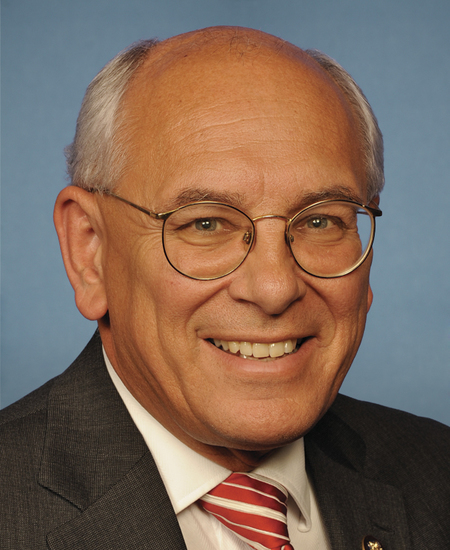
Rep. Paul Tonko
Sponsored bills
Maddy summaryThe Truth in Tuition Act of 2023 requires colleges and universities to provide students with clear, long-term cost information before enrollment. Specifically, institutions must offer either a multi-year tuition and fee schedule or a single-year schedule plus a nonbinding estimate of total net costs (after financial aid) for the full program duration, assuming stable family income. If using the single-year option, schools must also share historical data on how accurate their past estimates were. This applies to all undergraduate and graduate programs and takes effect 120 days after enactment. The law aims to make tuition costs more transparent for students and families.
Maddy summaryThe PHASE Act of 2023 directs the National Institute of Standards and Technology (NIST) to identify innovative traffic control technologies that improve safety for pedestrians and cyclists without causing distraction. It requires the Transportation Secretary to conduct a study analyzing urban areas with rising pedestrian fatalities and test physical safety measures like crosswalk technology, better lighting, and accessible sidewalks. The bill also creates a $5 million annual grant program for cities, tribes, and municipalities to fund specific pedestrian safety infrastructure, including marked crosswalks, adaptive lighting, accessible curb ramps, and upgraded traffic signals. These grants must comply with federal regulations and the Americans with Disabilities Act. The law directly affects local governments seeking funding and aims to protect pedestrians and vulnerable road users through concrete infrastructure improvements.
Maddy summaryHR 5983, the Clean Water Act of 2023, redefines "protected water resources" under federal law to explicitly include all interstate and intrastate waters (such as intermittent and ephemeral streams), wetlands, and their tributaries. This directly affects federal agencies like the EPA, states managing water quality, and developers or landowners needing permits for activities near these waters. The bill eliminates the Supreme Court’s narrow "navigable waters" definition from Sackett v. EPA (2023), restoring protections for tens of millions of acres of wetlands and millions of miles of small streams. Key mechanisms require the EPA to annually review and adjust exclusions from protections based on scientific evidence, ensuring water bodies critical to drinking water, flood control, and ecosystems remain safeguarded.
Maddy summaryThis bill would require employers with 5 or more employees to provide 56 hours of paid leave annually for employees experiencing pregnancy loss, failed fertility procedures (including IVF), failed adoption or surrogacy arrangements, or fertility-impacting diagnoses. Employees could also use this leave to care for a spouse or domestic partner facing these circumstances. Employers would need to provide clear notice of this policy and cannot discriminate against employees who use this leave. The bill applies to private sector employers, government employees, and others covered under the defined terms, with enforcement mechanisms to protect employees' rights.
Maddy summaryHRES 771 is a non-binding resolution expressing the U.S. House of Representatives' support for Israel following Hamas' October 7, 2023, attack. It condemns Hamas' actions, affirms Israel's right to self-defense, and calls for the immediate release of hostages. The resolution also urges enforcement of existing laws restricting aid to terrorists and sanctions against Iran for supporting Hamas. It does not create new policies or allocate funds, as it is a symbolic statement of congressional support.
Maddy summaryHRES 768 is a symbolic House Resolution expressing congressional support for Israel following Hamas' October 7, 2023 attacks. It condemns Hamas' actions, reaffirms Israel's right to self-defense, and calls for the immediate release of hostages. The resolution references the U.S. commitment to Israel's security through existing military aid programs, including the 2016 U.S.-Israel Memorandum of Understanding, and emphasizes enforcement of laws like the Taylor Force Act to prevent U.S. aid from reaching terrorist groups. As a symbolic resolution, it does not create new policy but serves as a statement of congressional support for Israel.
This resolution expresses support for the goals and ideals of National Ostomy Awareness Day. (Ostomy is a type of surgery that creates an opening in the abdomen that allows for the removal of bodily waste when an individual has lost normal functions of the digestive or urinary systems due to birth defects, colorectal cancer, bladder cancer, Crohn's disease, ulcerative colitis, or other medical conditions.)
Maddy summaryThis bill authorizes a one-time $40,000 payment to former Air America employees who served at least five years during 1950-1976, or to their survivors (widows/widowers, dependents, or children). Additional $8,000 payments are provided for each full year of service beyond five years. The total funding is capped at $60 million, with claims due within two years of regulations being finalized. It does not create ongoing benefits or change Air America’s legal status, and payments are issued as a single lump sum.
Maddy summaryThe Safe Schools Improvement Act (HR 6031) requires public elementary and secondary schools to implement comprehensive anti-bullying policies that specifically prohibit harassment based on protected characteristics like race, gender identity, disability, religion, and sexual orientation. It mandates schools to collect and publicly report annual data on bullying incidents while establishing clear grievance procedures for students and parents. The bill also requires states to submit biennial reports on school compliance and supports evidence-based interventions, such as restorative practices, to reduce exclusionary discipline. This legislation directly affects all public K-12 schools and students in the U.S., aiming to create safer learning environments through standardized policy requirements and data transparency.