

Maddy summaryHR 1147, the Whole Milk for Healthy Kids Act of 2023, allows schools participating in the National School Lunch Program to offer whole milk as an option during lunch. It amends the school lunch law to explicitly permit schools to serve flavored and unflavored whole milk alongside reduced-fat, low-fat, and fat-free milk choices for students. The bill also requires the Secretary of Agriculture to adjust meal regulations to account for saturated fat from whole milk, ensuring it doesn't count against meal fat limits. This change directly affects participating schools and the students who receive school lunches, expanding their milk beverage options.
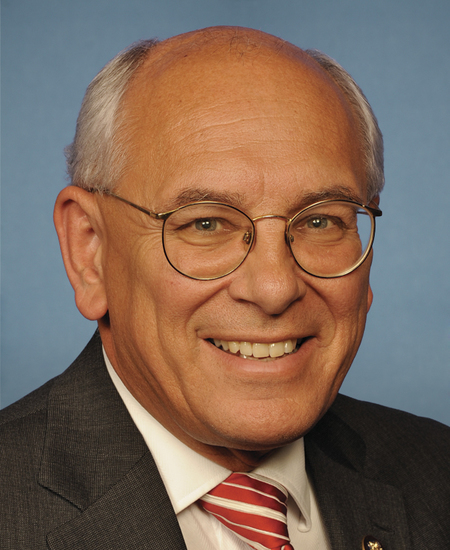
Rep. Paul Tonko
Sponsored bills
Maddy summaryThis bill prohibits using bots to bypass online retailers' posted purchase limits or inventory controls, making it illegal to create, sell, or distribute products obtained through such circumvention. It directly affects online retailers implementing purchase limits, consumers seeking fair access to products, and sellers of goods acquired via prohibited bot activity. Key mechanisms include FTC enforcement against violations (treated as unfair/deceptive practices) and allowing state attorneys general to sue for consumer harm, with exceptions for legitimate security research. The law targets bot-driven scalping tactics during high-demand sales without specifying particular products or timing.
Maddy summaryThis bill clarifies when accidental radiation exposure during nuclear medicine procedures must be reported. It requires the Nuclear Regulatory Commission to revise regulations to specify that unintended irradiation from extravasation (leakage of radioactive material) must be reported if it exceeds 0.5 Sv (50 rem) to either 5 cubic centimeters of tissue or 10 square centimeters of skin. This directly affects hospitals and clinics performing nuclear medicine treatments using radioactive materials. The change sets clear, measurable thresholds for mandatory reporting, replacing ambiguous prior standards. The revised rule takes effect 18 months after the bill's enactment.
Maddy summaryThe 988 Lifeline Location Improvement Act of 2023 establishes a federal advisory committee to study how location information is transmitted for 988 calls. The committee, composed of representatives from telecom providers, mental health organizations, crisis centers, and government agencies, will examine privacy concerns, technical standards, and funding needs for improving location data accuracy during 988 Suicide and Crisis Lifeline calls. It must submit a report within one year to Congress and the FCC with recommendations for potential policy changes. This bill does not enact new requirements but directs a study to address challenges in connecting callers to local crisis services. The committee will terminate 30 days after submitting its report.
Maddy summaryThe Menopause Research and Equity Act of 2023 requires the National Institutes of Health (NIH) to evaluate existing and ongoing research on menopause, perimenopause, and mid-life women’s health, identifying gaps in knowledge and funding over the past five years. The NIH must then develop a strategic plan with health professionals (including specialists like gynecologists and endocrinologists) to address these gaps and guide future research on treatments for menopause symptoms. The bill also mandates new NIH research on causes, symptoms, and treatments for menopause-related health issues, including a study on hormonal treatments. All activities must be funded using existing NIH resources, with no new appropriations authorized. This aims to improve scientific understanding of women’s mid-life health needs.
Maddy summaryThe Brittany Clardy Missing and Murdered Black Women and Girls Act establishes a new Office within the Department of Justice to address the disproportionate rates of missing and murdered Black women and girls in the U.S. The Office will collect and analyze data on these cases - including case resolution times, Amber Alert usage, and trafficking links - and create a public dashboard for tracking. It also creates a grant program for community organizations to provide culturally appropriate prevention services, law enforcement training, and victim support. The Office must submit biennial reports to Congress with findings and recommendations to improve the criminal justice response to these cases. This bill directly affects Black women and girls facing violence, law enforcement agencies, and community organizations providing related services.
Maddy summaryHR 6416, the "Russian War Crimes in Ukraine Tax Act," imposes a 100% tax on interest and dividends earned from frozen Russian and Belarusian sovereign assets held abroad. This tax revenue is directed into a new Ukraine Reconstruction Trust Fund, which must be used for Ukraine's reconstruction, humanitarian aid, economic development, and transparent governance. The bill requires U.S. financial institutions to withhold this tax from qualifying income and overrides international treaty obligations to ensure implementation. It also mandates annual reports on fund usage to Congress, specifying that all revenues from the tax must support Ukraine's recovery efforts as defined in the legislation.
Maddy summaryThis bill reauthorizes and extends funding for programs addressing substance use disorders and opioid addiction, including residential treatment for pregnant and postpartum women, first responder training, and community recovery initiatives. It increases funding levels for these programs, adds xylazine to Schedule III of controlled substances, and requires a study on remote monitoring for patients prescribed opioids. The bill also expands Medicaid coverage requirements for medication-assisted treatment and mandates reporting on mental health condition data alongside substance use disorder data, directly affecting individuals with substance use disorders, healthcare providers, and state and tribal governments.
Maddy summaryHR 6720 creates a grant program administered by the U.S. Department of Agriculture to provide stabilization payments to farmworkers, meat processing workers, and grocery workers affected by natural or other disasters designated by the Secretary. Eligible entities - such as labor unions or membership organizations representing these worker groups - can apply for funding to support affected workers. The program is authorized to spend up to $50 million, with the Secretary required to report on its outcomes within four years. This bill directly affects workers in specific food industry sectors during disaster events, offering financial stabilization through grants administered by the Agricultural Marketing Service.
Maddy summaryThis bill reauthorizes and extends federal funding for research and support services related to preterm birth through 2028, replacing the previous 2019-2023 funding period. Key provisions include adding chronic condition screening and treatment to maternal health education services, mandating an interagency working group on prematurity within 18 months, and requiring a National Academies study on preterm birth costs, risk factors, and program gaps. The study must assess neonatal care expenses, societal impacts, and effective prevention strategies, with a final report due within 24 months. These changes directly affect preterm infants, their families, healthcare providers, and federal agencies managing maternal health programs.