

Maddy summaryHR 8859, the Deafblind DATA Act, requires the Census Bureau to create and publish a new annual table starting in 2026 showing the number of people in the U.S. who reported both hearing and vision loss in the American Community Survey. This table will display data by state, including sex, race, age, and economic factors like employment and income, without revealing personal details. The bill directly addresses the lack of a centralized count for deafblind individuals, who currently aren't accurately represented in census data. By cross-referencing existing survey responses, the Act aims to provide a clearer national picture to better understand and serve this population's needs.
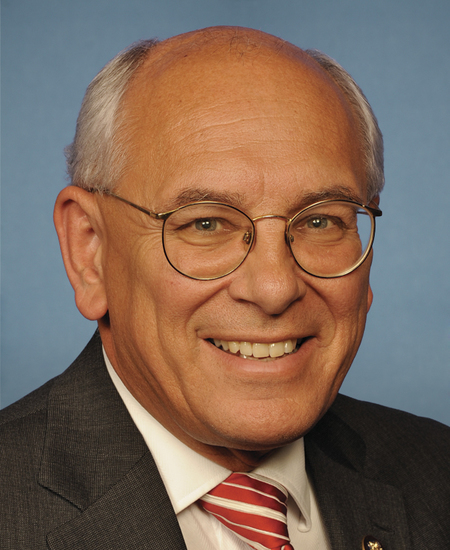
Rep. Paul Tonko
Sponsored bills
Maddy summaryThis bill creates a federal framework for "extreme risk protection orders" (ERPOs) that temporarily remove firearms from individuals who pose a risk of harming themselves or others. Family members or law enforcement officers can petition a federal court for a temporary order (up to 14 days) based on probable cause, followed by a hearing within 72 hours to determine if a longer-term order (up to 180 days) is warranted. The bill requires clear and convincing evidence of risk at the hearing and mandates respondents to surrender firearms to law enforcement within 48 hours. It also includes provisions for reporting, training law enforcement on ERPOs, and a federal grant program to support state ERPO implementation, without preempting state laws.
Maddy summaryThis bill (HR 8827) renames a specific U.S. Postal Service facility in Rochester, New York, at 216 Cumberland Street as the "Minister Franklin Florence Memorial Post Office." It directly affects USPS records, maps, and official documents by updating all references to this location to the new name. The bill contains no policy changes or funding provisions; it solely serves to honor Minister Franklin Florence through a ceremonial naming. This is a standard procedural bill with no impact on postal services or operations.
Maddy summaryHR 8830, the High Court Gift Ban Act, sets strict limits on gifts federal judges may accept. It prohibits judges from receiving gifts valued over $50 from a single source in a year, unless the total from that source stays under $100 annually. Key exceptions include gifts paid for by the judge, gifts from relatives, honorary degrees from educational institutions, and public opportunities available to all federal employees. The bill also outlines enforcement mechanisms, requiring the Judicial Conference to refer violations to the Attorney General for civil or criminal penalties. This directly affects all federal judges, including Supreme Court justices and lower court judges, by restricting gifts from sources that may have business before them.
Maddy summaryThis resolution, introduced around World Refugee Day, expresses congressional support for U.S. efforts to protect refugees and displaced persons globally and within the United States. It highlights that over 117 million people are displaced worldwide, references the U.S. resettling 60,000 refugees in fiscal year 2024, and calls on federal agencies to maintain the Refugee Admissions Program, uphold asylum protections, and support host countries. The resolution does not create new laws but reaffirms existing commitments to refugee resettlement, safety, and integration through current programs.
Maddy summaryThis bill creates a federal program to help states and tribes fund energy efficiency and emissions reduction projects for manufacturers. It provides $100 million annually (2025-2029) to states with approved energy plans and tribes, enabling them to offer manufacturers free energy studies, technical assistance, and grants to implement upgrades like advanced manufacturing tech, renewable systems, and water/energy-saving measures. Small manufacturers (under 500 employees) and tribal businesses in Indian Country receive priority, with strict rules limiting funds - capping per-facility support at $100,000 or 5% of state funds, and requiring 50% for studies/implementation. The program supplements existing funding, tracks program results, and mandates public reporting on energy savings and emissions reductions.
Maddy summaryThis bill amends federal jury selection laws to explicitly prohibit discrimination based on sexual orientation and gender identity. It updates definitions in Title 28 of the U.S. Code by adding "sexual orientation and gender identity" to the protected characteristics under "sex" and defining key terms like "gender identity" and "sexual orientation." The changes directly affect federal jury pools by requiring courts to consider these factors when selecting jurors and preventing discrimination in the process. The law clarifies that discrimination based on these characteristics - including associations with others who share them - is prohibited during jury selection. This is a concrete policy change to expand anti-discrimination protections in federal jury service.
Maddy summaryHR 8721, the Weatherization Enhancement and Readiness Act of 2024, increases the average cost limit for weatherization work per dwelling unit from $6,500 to $12,000 under the Energy Conservation and Production Act. It creates a new "Weatherization Readiness Program" (Section 414F) that provides grants to states and tribal organizations to fix structural, plumbing, roofing, and electrical issues in low-income homes *before* weatherization work begins, reducing delays. The bill clarifies that readiness measures do not count as "previous weatherization" and removes a savings-to-investment ratio requirement. It authorizes $50 million annually (2025-2029) for this program, targeting homes occupied by low-income residents to improve energy efficiency and safety.
Maddy summaryHR 5012 (SHINE for Autumn Act of 2023) authorizes federal funding to improve stillbirth research and data collection. It provides $5 million annually for states to collect standardized stillbirth data (including risk factors) while protecting privacy, $1 million annually for developing public educational materials and data collection guidelines, and $3 million annually for medical fellowships training pathologists in perinatal autopsy and stillbirth research. The bill directly affects state health departments, medical professionals (like obstetricians and pathologists), and families who experience stillbirth by improving data quality for future research. It requires federal reports on guidelines and program effectiveness within five years but does not provide direct medical care or financial assistance to families.
Maddy summaryHR 537 authorizes a Congressional Gold Medal to honor 60 diplomats who saved Jewish lives during the Holocaust by issuing visas and passports against their governments' orders, risking expulsion and personal danger. The medal will be presented to the next of kin of these diplomats, alongside representatives from their home countries, and permanently displayed at the United States Holocaust Memorial Museum. The bill also permits the sale of bronze duplicates to cover production costs, with proceeds going to the U.S. Mint. This legislation recognizes the diplomats' humanitarian actions without creating new government programs or altering existing laws.