

Maddy summaryHR 5401, the 9/11 Memorial and Museum Act, provides a one-time federal grant of $5 million to $10 million to the National September 11 Memorial & Museum (operated by the World Trade Center Foundation). The grant funds the museum's operations, security, and maintenance, with specific requirements including free admission for veterans, first responders, and victims' families, dedicated weekly free public hours, and annual financial audits. The museum must also report annually to Congress on how the funds were used. This bill directly affects the museum's financial operations and access policies, not broader legislative changes.
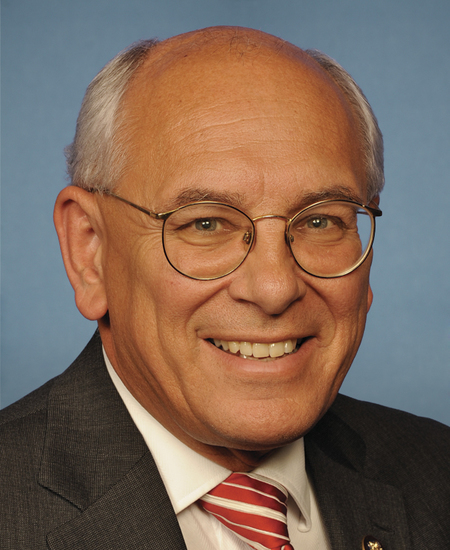
Rep. Paul Tonko
Sponsored bills
Maddy summaryHRES 1618 is a non-binding resolution designating November 20-December 20, 2024, as "National Survivors of Homicide Victims Awareness Month." It expresses support for raising awareness about survivors of homicide victims and encourages communities to provide them with support services and resources. The resolution calls for promoting survivor-centered initiatives, addressing trauma through behavioral health services, and fostering community engagement to honor victims and support families affected by homicide.
Maddy summaryThe Combating Loneliness Act (HR 10448) creates federal programs to address loneliness among vulnerable populations including older adults, veterans, people with disabilities, LGBTQI+ youth, and rural communities. It authorizes $200 million annually for community "third-spaces" like libraries and senior centers, $170 million for social infrastructure such as parks and recreation spaces, and $130 million for school-based mental health services. The bill also includes mental health provider student loan forgiveness, Medicare coverage for community health worker services, and a new HHS working group to standardize loneliness measurements. These provisions aim to build community connections and improve mental health outcomes through targeted funding and policy changes for individuals experiencing loneliness.
Maddy summaryHR 9774, the Health Care Affordability Act of 2024, would expand premium tax credits under the Affordable Care Act for households earning between 150% and 400% of the federal poverty level. It modifies the sliding scale calculation to reduce the percentage of monthly insurance premiums these households must pay, with the lowest out-of-pocket costs for those near 400% of poverty. This directly affects individuals and families purchasing health insurance through marketplace plans who qualify for these tax credits. The changes apply to tax years beginning after December 31, 2025.
Maddy summaryThe STAR Plus Scholarship Act creates a federal program to fund scholarships for students pursuing careers in mental health and substance use disorder treatment. It requires scholarship recipients to work full-time in designated mental health professional shortage areas for one year for each year of scholarship funding received. The program authorizes $75 million annually (2025-2029) to cover tuition and educational expenses for students enrolled in approved programs at accredited institutions. This directly affects students in behavioral health fields and aims to address workforce shortages in underserved communities by linking scholarship support to service requirements.
Maddy summary# Comprehensive Summary of Proposed Clean Air Act Amendments (Title VII) This document outlines a comprehensive legislative proposal for climate change mitigation through a new Title VII of the Clean Air Act. It establishes a comprehensive framework for emissions trading, worker transition support, and climate action. ## Key Components ### 1. Emissions Trading Program (Part B) - Establishes an emissions trading system for greenhouse gases - Creates "emission allowances" that can be bought, sold, exchanged, and banked - Sets up an auction system for allowances (section 720) - Includes provisions for international reserve allowances to prevent carbon leakage (section 751) ### 2. Support for Affected Communities and Workers (Title II) - Establishes the Office of Energy and Economic Transition (section 203) - Creates the Worker and Community Assistance Fund (section 103) - Provides assistance to: * Adversely affected communities (section 206) * Adversely affected workers (section 208) * Community-Based Transition Hubs (section 207) ### 3. Special Funds Established - **Worker and Community Assistance Fund** (section 103): For worker retraining and community economic development - **Cleaner Air Community Fund** (section 104): For community environmental projects - **Negative Emissions Activities Fund** (section 105): For carbon capture and sequestration projects - **Energy Innovation Fund** (section 106): For clean energy research and development ### 4. Key Provisions #### International Reserve Allowance Program (Section 751) - Requires importers of certain goods to submit international reserve allowances - Establishes pricing equivalent to previous auction prices - Includes exemptions for: * Goods meeting output-based benchmarks * Goods from least developed countries * Goods from countries with minimal emissions impact #### Clean Energy Rebate Program (Section 102) - Provides rebates to eligible households for clean energy adoption - Targets households with income below 200% of the poverty line - Administered through direct deposit or electronic benefit transfer #### Negative Emissions Activities (Part D) - Establishes a program for carbon capture and sequestration - Provides payments to landowners for implementing carbon sequestration practices - Includes verification requirements and technical assistance #### Worker Assistance Programs - **Wage adjustment assistance**: Provides income support for workers during transition - **Health insurance continuation**: Covers 80% of health insurance premiums for 36 months - **Educational benefits**: Similar to veterans' education benefits - **Employment services**: Job training and placement assistance ### 5. Oversight and Implementation - Creates an Interagency Energy and Economic Transition Task Force (section 204) - Establishes a Stakeholder Advisory Committee (section 205) - Requires regular reporting to Congress on the status of programs - Includes provisions for preventing market manipulation in emissions trading This legislation represents a comprehensive approach to climate change mitigation that integrates emissions trading with social support mechanisms for workers and communities affected by the transition to a low-carbon economy. It includes both domestic regulatory mechanisms and international provisions to address carbon leakage concerns.
Maddy summaryHR 8796, the "Stop Comstock Act," removes outdated restrictions from federal law that previously banned the distribution of materials related to contraception and abortion as "obscene" or "indecent." The bill amends Title 18 and the Tariff Act by deleting references to "indecent," "immoral," "unlawful abortion," and "procuring abortion" from provisions governing obscene materials. It clarifies that the law only prohibits "obscene materials" in commerce, eliminating broad restrictions on reproductive health information. This directly affects internet platforms, healthcare providers, and individuals sharing reproductive health resources by removing legal barriers to their distribution.
Maddy summaryThis bill requires Medicare Advantage plans to implement electronic prior authorization systems by 2027 and publish detailed data on their approval and denial rates for medical services by 2026. It directly affects Medicare Advantage plans (private insurers offering Medicare coverage) and their enrollees (seniors 65+), mandating transparency about prior authorization decisions, processing times, and appeal outcomes. Key provisions include requiring plans to report annual statistics on request approvals/denials, average processing times, and use of technology, with this data published publicly by the Centers for Medicare & Medicaid Services. The bill also sets timelines for plan responses to prior authorization requests and mandates reports to Congress on implementation and impacts.
Maddy summaryThe Ensuring Excellence in Mental Health Act (HR 8543) establishes a permanent Medicaid payment system for Certified Community Behavioral Health Clinics (CCBHCs) and adds their services to Medicare coverage. It creates a new Medicaid payment system that calculates payments based on clinic costs with annual inflation adjustments, and sets Medicare reimbursement at 80% of the lesser of actual charges or determined amounts. The bill also creates a new grant program providing $552.5 million annually from 2024-2028 to support CCBHC operations, with specific certification requirements including 24/7 crisis services, sliding scale fees, and care coordination across providers. The legislation requires clinics to meet new certification standards and establishes a data collection system to track clinic performance.
Maddy summaryThis bill corrects payment calculations for Medicare Advantage (MA) plans in service areas where wage index increases exceeded 20% in prior years, addressing an underestimation in growth projections. It requires the Medicare Secretary to adjust 2025 and prior year (back to 2024) payment growth rates for affected plans to reflect actual local wage trends. The adjustment applies specifically to MA local plans in service areas with significant average wage index increases. This ensures payments better match actual cost growth in those regions, with changes implemented immediately for 2025 rates.