

Maddy summaryThe TRUST in Congress Act requires current and new Members of Congress, along with their spouses and dependent children, to place certain investments - such as stocks, commodities, and derivatives - into a blind trust within 90 to 180 days of taking office. It excludes U.S. Treasury securities and widely held mutual funds from this requirement and exempts investments tied to a spouse’s or dependent child’s primary job. Members must certify the trust’s setup to the House Clerk or Senate Secretary within 15 days, with these records posted publicly online. The act also prohibits dissolving such trusts until 180 days after a member leaves office.
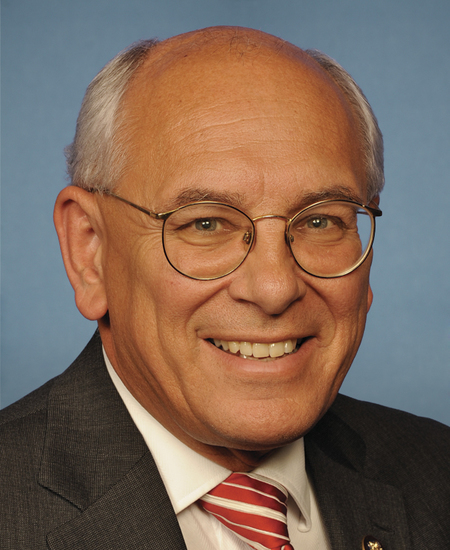
Rep. Paul Tonko
Sponsored bills
Maddy summaryThe LNG Public Interest Determination Act of 2025 requires the Secretary of Energy to approve natural gas exports only if they meet a public interest standard. This standard mandates three specific assessments: climate impact (including effects on global warming and clean energy investment), economic impact on U.S. consumers (with focus on low-income households and businesses), and environmental justice (assessing burdens on vulnerable communities). The Secretary must complete these assessments within one year of receiving environmental data and make a public finding. The bill also requires public participation in the process and treats export approvals as major federal actions under environmental law.
Maddy summaryThe End Oil and Gas Tax Subsidies Act of 2025 would eliminate several tax benefits currently available to oil and gas companies, including credits for enhanced oil recovery, deductions for intangible drilling costs, and percentage depletion allowances. It would also prohibit major integrated oil companies (defined as those meeting specific production and revenue thresholds) from using last-in, first-out accounting for inventory purposes. These changes would take effect for taxable years beginning after December 31, 2024, directly affecting oil and gas producers who currently claim these tax benefits. The legislation removes specific tax advantages that have been available to the oil and gas industry, potentially increasing their tax burden.
Maddy summaryThis resolution expresses the House's support for Korean American Day, commemorating January 13, 1903 - the arrival of the first large wave of Korean immigrants to the U.S. It urges all Americans to observe the day to recognize Korean Americans' contributions to U.S. society, including their economic, cultural, and military service. The resolution honors the 122nd anniversary of this historical arrival, acknowledging the resilience of early Korean immigrants and their descendants. As a symbolic gesture, it does not create new laws or affect any specific group directly.
Maddy summaryThe Proxy Voting for New Parents Resolution (HRES 23) would allow U.S. House Members who have given birth or whose spouse has given birth to appoint another Member as a proxy to cast their vote or record their presence in the House and committees for up to 12 weeks after childbirth. To use this, the new parent must submit a signed letter to the Clerk detailing the birth or medical condition and naming the proxy; the proxy must vote exactly as instructed and announce the vote as "by proxy." The proxy vote does not count toward quorum, and the new parent can revoke the proxy at any time by submitting a new letter or casting their own vote. This resolution applies to all House Members, including Delegates and the Resident Commissioner, though they cannot cast votes for the House itself.
This resolution honors the life, achievements, legacy, and distinguished public service of former President Jimmy Carter. The resolution also (1) acknowledges President Carter's contributions to the state of Georgia, the United States, and the world; and (2) establishes his legacy as one of the great leaders and statesmen of the United States.
Maddy summaryThis bill increases healthcare affordability for low- and middle-income people by expanding eligibility for premium tax credits under the Affordable Care Act. It removes the previous 400% of poverty level cap for subsidy eligibility and replaces it with a new sliding scale based on income tiers, ranging from 0% to 8.5% of household income for coverage costs. The scale adjusts linearly across income levels, with households earning 300-400% of poverty paying 6.0%-8.5% of income (up from the prior fixed 400% cap), while lower-income households pay progressively less. These changes apply to tax years beginning after December 31, 2025, directly affecting individuals purchasing health insurance through marketplace plans.
Maddy summaryHR 212, the Capitol Remembrance Act, requires the Architect of the Capitol to create a permanent exhibit in the U.S. Capitol within two years of the bill's enactment. The exhibit must include preserved Capitol property damaged during the January 6, 2021, attack, photographic records of the event, and a plaque honoring Capitol Police, other law enforcement, and Capitol staff who were injured or died protecting the building. It also allows for the inclusion of relevant artwork depicting the attack. This bill directly affects Capitol visitors and staff by establishing a permanent memorial to the events of January 6.
Maddy summaryHR 82, the Social Security Fairness Act of 2023, repeals two provisions that reduce Social Security benefits for certain government workers. It eliminates the Government Pension Offset (GPO), which cuts spousal or survivor benefits for people with pensions from jobs not covered by Social Security (like federal or state government roles), and the Windfall Elimination Provision (WEP), which lowers retirement benefits for those with similar pensions. The law takes effect for benefits paid after December 2023, requiring the Social Security Administration to adjust benefit calculations to remove these reductions. This change directly affects public-sector employees who previously had their Social Security benefits reduced due to their government pensions.
Maddy summaryThis bill extends funding for the Gabriella Miller Kids First Pediatric Research Program at the National Institutes of Health (NIH) through 2028, replacing the previous 2014-2023 authorization. It directs NIH to administer pediatric research funds through its Division of Program Coordination (instead of the "Common Fund") and requires NIH to coordinate pediatric cancer and disease research while prioritizing projects that avoid duplicating existing NIH work. The bill also mandates a report to Congress within five years detailing funded pediatric research projects and their advancements. This directly affects NIH's pediatric research funding structure and oversight, focusing on cancer and other childhood diseases.