

Maddy summaryThis bill authorizes a ceremonial gold medal to honor former President Jimmy Carter, recognizing his service as the 39th U.S. President and his post-presidential work. It directs the Treasury to strike a gold medal bearing his name and image, to be presented posthumously to the Carter Center in Atlanta (where he and his wife Rosalynn founded the organization). Bronze duplicates may be sold to cover costs, with proceeds going to the U.S. Mint fund. The bill does not create new laws or affect any policies, as it is purely a commemorative gesture.
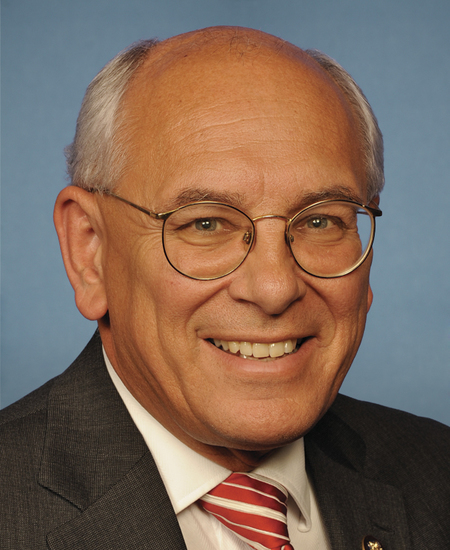
Rep. Paul Tonko
Sponsored bills
Maddy summaryThe Food Deserts Act (HR 484) creates a federal grant program to help establish grocery stores in underserved communities by providing capitalization grants to states. States would use these grants to build revolving funds that make low-interest loans to grocery stores meeting specific criteria, such as offering unprocessed foods, affordable pricing, and local hiring. The program prioritizes stores that source from local farms, provide nutrition education, and commit to keeping healthy foods in stock, while requiring applicants to contribute 20% of loan costs from non-federal funds. It authorizes $150 million for fiscal year 2026 to support these loans, which must be repaid over up to 30 years to replenish the revolving fund for future use.
Goldie's Act This bill expands enforcement provisions under the Animal Welfare Act (AWA). Specifically, the bill directs the Department of Agriculture (USDA) to document and record detailed descriptions of violations of the act observed during inspections and investigations. USDA must provide a copy of all records documenting violations to state, local, and municipal animal control or law enforcement officials within 24 hours of such inspections or investigations. Inspections must be held at least once a year of each research facility, the premises of each animal dealer, and each exhibitor of animals. If violations are found during inspections, then USDA must conduct any necessary follow-up inspections until all the violations are corrected. Inspectors must confiscate or destroy in a humane manner animals found to be suffering physical or psychological harm as a result of failure to comply with the AWA. Violators are subject to civil penalties as outlined in the bill.
Maddy summaryHR 1321, the "Ending DOGE Conflicts Act," requires special government employees (like officials overseeing federal contracts) who own, control, or lead companies doing business with the government to file financial disclosure reports with the Office of Government Ethics. These employees must now comply with the same financial disclosure rules as other government officials under Title 5 of the U.S. Code. Until their initial report is certified as compliant by the Office of Government Ethics, these employees are prohibited from performing any official duties related to federal contracting. The bill directly affects high-level government officials with direct financial ties to federal contractors.
Maddy summaryThe Office of Gun Violence Prevention Act of 2025 would create a new office within the Department of Justice to coordinate federal efforts on reducing gun violence. The office, led by a Director appointed by the Attorney General, would integrate existing DOJ programs, evaluate data gaps, and develop evidence-based recommendations for Congress and the President. It would also establish an advisory council including survivors of gun violence, public health officials, and community representatives to guide its work. The office would produce annual reports detailing gun violence trends and policy proposals, while collaborating with agencies like Health and Human Services and the FBI.
Maddy summaryThis bill proposes a constitutional amendment stating that only "natural persons" (living humans) have rights protected by the U.S. Constitution, explicitly denying constitutional rights to corporations, LLCs, and other artificial entities. It would require governments to regulate campaign contributions and spending to prevent money from influencing elections, banning the view that spending to influence elections constitutes protected speech under the First Amendment. The amendment would not affect the constitutional right to a free press. This change would directly impact how corporations and other non-human entities can legally challenge laws or regulations in court.
Maddy summaryHR 1189, the National Plan for Epilepsy Act, creates a coordinated federal strategy to address epilepsy through a National Plan for Epilepsy. The plan requires the Secretary of Health and Human Services to establish an annual assessment, maintain a diverse Advisory Council (including people with epilepsy, caregivers, and experts), and coordinate research and care across federal agencies. Key provisions include annual progress reports to Congress, data sharing between agencies, and recommendations to improve diagnosis, treatment access, and reduce epilepsy-related disparities. The plan expires December 31, 2035, and directly affects the estimated 3.4 million people in the U.S. living with epilepsy and their caregivers.
Maddy summaryThe PREEMIE Reauthorization Act of 2025 extends federal research funding for preterm birth prevention and care through fiscal years 2025-2029, replacing the prior 2019-2023 period. It requires the HHS Secretary to establish an interagency working group within 18 months and mandates a National Academies study on preterm birth costs, risk factors, and prevention strategies. The study must assess neonatal intensive care costs, long-term family expenses, and opportunities for early detection and support. It also analyzes targeted research for at-risk pregnancies, state program best practices, and precision medicine approaches starting in pregnancy. This bill directly affects preterm infants, their families, and federal health agencies through these research and coordination mechanisms.
Maddy summaryThis bill restricts access to Treasury payment systems (including the Bureau of the Fiscal Service) to only Treasury employees with a "fully successful" performance rating and at least one year of civil service, or contractors/outsiders with security clearances, required privacy/cybersecurity training, ethics agreements, and no conflicts of interest. It treats non-government users accessing these systems as government employees for ethics rules and defines specific actions (like stopping payments) as "personal and substantial participation" in government matters. The Treasury Inspector General must investigate any unauthorized access within 30 days and report to Congress, detailing the breach, security risks, and any halted payments. The bill directly affects Treasury staff, contractors, and any external entities accessing federal payment systems.
Maddy summaryThis proposed bill (HR 220) would expand VA healthcare benefits to cover infertility treatments like in vitro fertilization (IVF) and fertility preservation services for veterans with infertility or at risk of infertility (e.g., due to medical treatments), and their partners. It limits VA coverage to three successful IVF cycles or ten attempts, requires consent from veterans, partners, and donors, and allows use of donated eggs or embryos. Partners would receive travel reimbursement as if they were veterans, and temporary rules during implementation will immediately allow partners to access care without marriage requirements. The bill clarifies VA isn’t required to cover maternity care beyond existing rules and defers full implementation until VA issues final regulations within one year of enactment.