This resolution honors the essential staff of the U.S. Capitol complex, recognizes and thanks them for their invaluable contributions, and commits to better protecting them.
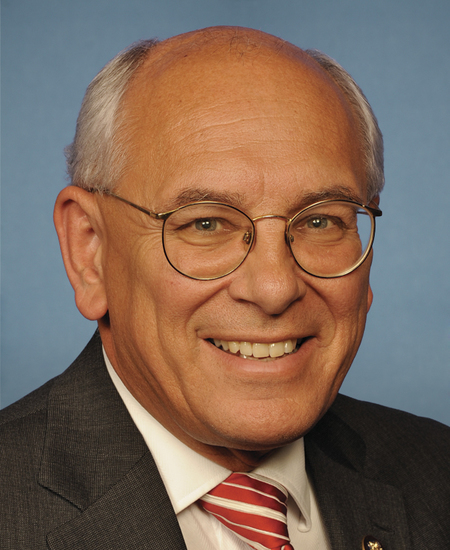
Rep. Paul Tonko
Sponsored bills
TRICARE Reserve Select Improvement Act This bill expands TRICARE Reserve Select eligibility to include members of the Selected Reserve who are enrolled or eligible to enroll in the Federal Employees Health Benefits Program.
Stop Militarizing Law Enforcement Act This bill restricts the Department of Defense (DOD) from transferring certain surplus military property to federal, state, or local law enforcement agencies. Specifically, DOD may not transfer to such agencies specified property such as controlled firearms, ammunition, grenade launchers, explosives, certain vehicles or trucks, armored or weaponized drones, certain controlled aircraft, silencers, or long-range acoustic devices. DOD may waive this limitation and transfer certain vehicles or trucks if DOD determines that the transfer is necessary for disaster or rescue purposes or for another purpose where life and public safety are at risk. As a condition for a transfer of allowable property, DOD must require the federal or state agency that receives the property to return the property if the agency is investigated by the Department of Justice for civil liberties violations or is otherwise found to have engaged in widespread abuses of civil liberties. DOD must also periodically submit certain transfer-related information and certifications to Congress. Furthermore, as a condition for transfer, the recipient must receive the approval of its local governing body, provide specified notice to the local community, and submit specified information and certifications to DOD. A federal or state agency that receives controlled property under such a transfer may never take ownership of the property. The bill also eliminates the requirement for DOD to give preference to transfers of property that will be used in counter-drug, counterterrorism, disaster-related emergency preparedness, or border security activities.

Abortion is Health Care Everywhere Act of 2021 This bill authorizes the use of certain foreign assistance funds to provide comprehensive reproductive health care services in developing countries, including abortion services, training, and equipment.
Energy Storage Tax Incentive and Deployment Act of 2021 This bill allows tax credits for (1) energy storage technologies, and (2) battery storage technology. The bill expands the tax credit for investments in energy property to include equipment that (1) receives, stores, and delivers energy using batteries, compressed air, pumped hydropower, hydrogen storage (including electrolysis), thermal energy storage, regenerative fuel cells, flywheels, capacitors, superconducting magnets, or other technologies identified by the Internal Revenue Service; and (2) has a capacity of at least five kilowatt hours. The bill also expands the tax credit for residential energy efficient property to include expenditures for battery storage technology that (1) is installed on or in connection with a dwelling unit located in the United States and used as a residence by the taxpayer, and (2) has a capacity of at least three kilowatt hours.
Prevent Interruptions in Physical Therapy Act of 2021 This bill allows a physical therapist to receive payment under Medicare for services provided to the physical therapist's patients by another physical therapist through a qualifying temporary arrangement, regardless of the geographic area or population served. Currently, physical therapists may only receive payment with respect to such arrangements for services provided in medically underserved, rural, or health professional shortage areas.
George Floyd Justice in Policing Act of 2021 This bill addresses a wide range of policies and issues regarding policing practices and law enforcement accountability. It increases accountability for law enforcement misconduct, restricts the use of certain policing practices, enhances transparency and data collection, and establishes best practices and training requirements. The bill enhances existing enforcement mechanisms to remedy violations by law enforcement. Among other things, it does the following: lowers the criminal intent standard—from willful to knowing or reckless—to convict a law enforcement officer for misconduct in a federal prosecution, limits qualified immunity as a defense to liability in a private civil action against a law enforcement officer, and grants administrative subpoena power to the Department of Justice (DOJ) in pattern-or-practice investigations. It establishes a framework to prevent and remedy racial profiling by law enforcement at the federal, state, and local levels. It also limits the unnecessary use of force and restricts the use of no-knock warrants, chokeholds, and carotid holds. The bill creates a national registry—the National Police Misconduct Registry—to compile data on complaints and records of police misconduct. It also establishes new reporting requirements, including on the use of force, officer misconduct, and routine policing practices (e.g., stops and searches). Finally, it directs DOJ to create uniform accreditation standards for law enforcement agencies and requires law enforcement officers to complete training on racial profiling, implicit bias, and the duty to intervene when another officer uses excessive force.
Capitol Remembrance Act This bill requires the Architect of the Capitol (AOC) to design and install in a prominent location in the U.S. Capitol a permanent exhibit that depicts the January 6, 2021, attack on the Capitol. To the extent possible, the AOC must preserve property that was damaged during the attack and include it in the exhibit. The AOC must also include (1) existing photographic records relating to the attack; and (2) a plaque to honor the U.S. Capitol Police and other law enforcement agencies that protected the Capitol, the individuals who died or sustained injuries to protect the Capitol, and the staff who helped restore the Capitol complex after the attack.
National Women's Hall of Fame Commemorative Coin Act of 2021 This bill directs the Department of the Treasury to mint and issue $5 gold coins, $1 silver coins, half-dollar clad coins, and proof silver $1 coins in recognition and celebration of the National Women's Hall of Fame in Seneca Falls, New York. All minted coins shall include a specified surcharge, which shall be paid to the National Women's Hall of Fame Foundation to establish an endowment fund to provide for the long-term financing of the hall's operations.
LGBTQ Business Equal Credit Enforcement and Investment Act This bill requires financial institutions to report certain credit application data to the Consumer Financial Protection Bureau for the purposes of enforcing fair lending laws. Specifically, financial institutions must report this data regarding lesbian-, gay-, bisexual-, transgender-, or queer-owned businesses. Currently, this data is reported regarding women-owned, minority-owned, and small businesses.