

Maddy summaryHR 4184 repeals legal protections for gun manufacturers and sellers under the Protection of Lawful Commerce in Arms Act. It allows victims of gun violence to use gun trace data from the ATF's Firearms Trace System in civil court cases. This data, previously protected from discovery, can now be subpoenaed, admitted as evidence, and relied upon in lawsuits against gun sellers or manufacturers. The bill directly affects victims seeking legal recourse and gun industry defendants in civil litigation.
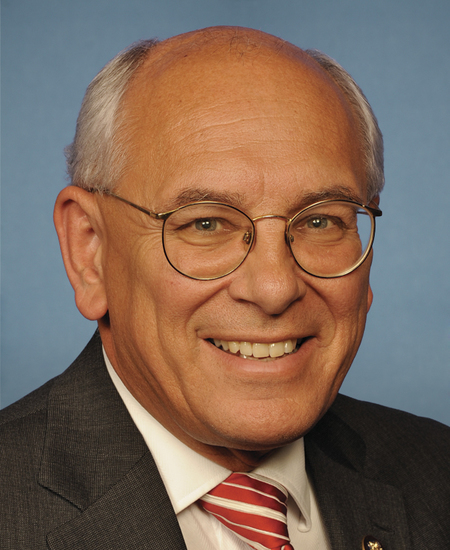
Rep. Paul Tonko
Sponsored bills
Maddy summaryThe Computer Science for All Act of 2023 would provide $250 million in federal grants to states, school districts, and eligible tribal schools to expand computer science education. The bill requires grant recipients to ensure all high school students have access to computer science within five years and to create a progression of computer science education from pre-kindergarten through middle school. It specifically targets reducing disparities by requiring schools to address gaps for underrepresented groups including minorities, girls, and students from low-income families. Grants would fund teacher training, learning materials, and programs supporting students traditionally underrepresented in tech fields, with schools required to track and report student demographics to monitor progress.
Maddy summaryHR 4166, the Support UNFPA Funding Act, authorizes annual U.S. funding for the United Nations Population Fund (UNFPA) over five years. It directly supports UNFPA’s global programs serving women and girls in over 150 countries, particularly focusing on reducing preventable maternal deaths, expanding access to contraception, ending gender-based violence, and addressing harmful practices like female genital mutilation and child marriage. The bill specifically directs funding toward UNFPA’s core work in developing nations, humanitarian crises (such as in Ukraine and Yemen), and rebuilding health systems post-pandemic, without altering UNFPA’s existing operations or policies.
Maddy summaryThe American Dream and Promise Act of 2023 would create two pathways to permanent residency for certain immigrants. The "Dream Act" portion would provide conditional permanent resident status to individuals who entered the U.S. as children, have lived continuously in the U.S. since January 1, 2021, and meet educational requirements (such as completing high school, earning a degree, or enrolling in education programs). The "American Promise Act" portion would provide permanent residency to individuals eligible for Temporary Protected Status (TPS) or Deferred Enforced Departure (DED) as of specific dates (January 1, 2017, or January 20, 2021). The bill includes provisions for background checks, fee exemptions for low-income applicants, and processes for removing conditional status after meeting specific criteria like completing higher education or earning income.
Maddy summaryHJRES 72 proposes a constitutional amendment to remove the exception in the Thirteenth Amendment that allows slavery and involuntary servitude as punishment for a crime. If ratified, this amendment would ban the use of forced labor in prisons as a criminal penalty, directly affecting how the U.S. criminal justice system handles sentencing. The resolution clarifies it does not interfere with voluntary work programs in correctional facilities, existing employment protections for incarcerated people, or community service alternatives. This change aims to eliminate a historical loophole that has disproportionately impacted Black Americans since the 1860s.
Maddy summaryHR 4122, the Henrietta Lacks Congressional Gold Medal Act, authorizes a posthumous Congressional Gold Medal to honor Henrietta Lacks for her contribution to medical science through the HeLa cell line. The bill directs the Treasury to strike the medal recognizing how her cells enabled major medical advances, including the polio vaccine and cancer treatments, without altering any laws or policies. The medal will be displayed at the Smithsonian Institution to commemorate her legacy in scientific research and bioethics. This is a purely commemorative measure with no direct effect on current legislation or affected individuals.
Maddy summaryThis bill requires federal research agencies to develop guidelines addressing financial instability for graduate and postdoctoral researchers at institutions receiving federal funding. It mandates agencies to consider increasing stipends (adjusted for location and cost of living), improving access to healthcare, housing, transportation, and childcare, and reducing food insecurity. The bill also directs data collection on researcher financial struggles (disaggregated by demographics), funds a National Academies study on these issues, and requires a GAO report on agency implementation within three years. These provisions directly affect thousands of graduate students and postdocs conducting federally funded research across U.S. universities.
Maddy summaryHRES 485 is a non-binding resolution expressing the U.S. House of Representatives' support for designating June 9 as "Batten Disease Awareness Day." It does not create new laws or policies, but formally recognizes Batten disease - a rare, fatal neurological disorder affecting children - as a condition requiring public awareness. The resolution describes Batten disease as a genetic condition causing progressive vision loss, seizures, motor skill decline, and early death, with no known cure. It directly affects families and advocacy groups for this rare disease by promoting public recognition on a specific date. This is a symbolic gesture with no direct impact on healthcare, funding, or regulations.
Maddy summaryThis bill requires federal agencies collecting demographic survey data to begin including questions on sexual orientation, gender identity, and variations in sex characteristics (intersex traits) within 360 days of enactment. Agencies must review existing surveys to identify gaps, develop privacy-protective methods for collecting this data (including anonymization and data destruction protocols), and incorporate it into relevant reports within three years. The law applies to all federal surveys that collect standard demographic data (like race, ethnicity, and age), such as the census or health surveys, but does not compel individuals to disclose their status. It emphasizes maintaining confidentiality, allows limited agency waivers if standards can't be met, and mandates a congressional report on implementation within two years.
Pets Belong With Families Act This bill prohibits public housing agencies from imposing breed restrictions on pets owned by residents of public housing units. The bill continues to allow public housing agencies to prohibit ownership of dangerous animals in public housing, but prohibits classification as dangerous by breed and requires that any such classification be based on specific behaviors or actions of the animal.