

Secure E-Waste Export and Recycling Act This bill prohibits the export or reexport of electronic waste, such as computers, televisions, and consumer electronics, subject to certain exemptions (e.g., items that meet specific criteria designed to ensure they do not become the source of counterfeit products).
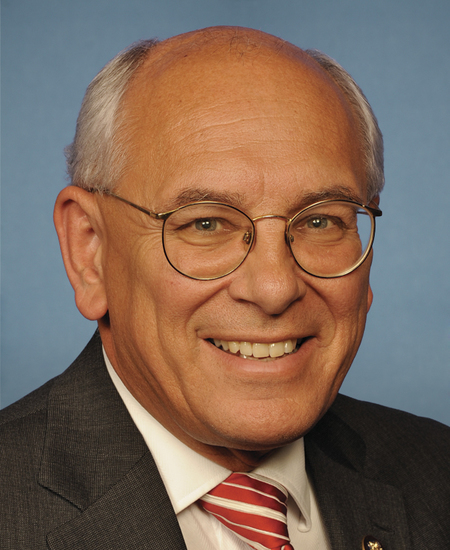
Rep. Paul Tonko
Sponsored bills
Maddy summaryThis bill requires all U.S. flags displayed on federal property or purchased by federal agencies to be 100% made in the United States, meaning all materials and manufacturing must occur domestically. It directly affects federal agencies (including military departments, legislative/judicial branches, and U.S.-owned corporations) and their procurement of flags for display on government property. Key provisions include a 90-day implementation for new flag purchases and a 2-year phase-in for display requirements, with a separate mandate for the FTC to study and report on country-of-origin labeling enforcement for flags within one year. The bill does not apply to private entities or flags displayed off federal property.
Maddy summaryHR 4121, the Right to Contraception Act, establishes a federal statutory right for individuals to access contraceptives and contraception services without government restriction or coercion, directly affecting all people seeking reproductive care and health care providers. The bill prohibits state or federal laws that limit access to contraceptives (defined broadly to include devices, drugs, and fertility methods), prevent individuals from obtaining or using them, or allow providers to refuse services based on personal beliefs. It preempts conflicting state laws, requires any restrictions to be justified by "clear and convincing evidence" of advancing access with no less restrictive alternative, and allows private lawsuits to challenge violations. The Act applies nationwide to all health care providers and individuals, protecting access regardless of factors like race, income, or location.
Updated Drug Labeling for Patient Safety Act This bill allows generic drug manufacturers to revise labels with updated safety information that differs from the referenced brand-name drug.
Maddy summaryHR 4052, the National Infrastructure Bank Act of 2023, would establish a federally chartered National Infrastructure Bank to address the estimated $2.6 trillion infrastructure financing gap identified by the American Society of Civil Engineers. The bank would provide loans, loan guarantees, and blended financing for infrastructure projects in transportation, energy, environmental systems, broadband, and community development, with a total loan limit of $5 trillion. Projects must demonstrate public benefits including economic growth, job creation, environmental improvements, and community development, with priority given to disadvantaged communities and projects meeting specific criteria. The bank would be capitalized with up to $500 billion through the purchase of Treasury securities and other means, operating under a 25-member Board of Directors with oversight mechanisms to ensure accountability.
Maddy summaryThis bill increases annual funding for the Substance Use Disorder Treatment Workforce Loan Repayment Program from $25 million to $40 million per year, covering fiscal years 2024 through 2028. It directly affects healthcare professionals working in substance use disorder treatment who have federal student loans, helping them repay those loans through federal reimbursement. The key provision is the funding increase, extending the program's support for this workforce without altering eligibility or new requirements. This change provides more consistent financial support for treatment providers, aiming to address staffing needs in a critical healthcare area.
Maddy summaryHR 4053, the Studying Suboxone Act, directs the U.S. Department of Health and Human Services (HHS) to review and update scientific evaluations of buprenorphine-naloxone medications (used to treat opioid addiction) and recommend updated scheduling under federal law. The Attorney General must then review HHS's findings, consider legal factors, and decide whether to adjust the medication's legal classification. This bill specifically affects the scheduling status of these medications, which impacts how they can be prescribed and distributed under federal drug laws. The process aims to ensure the scheduling aligns with current medical evidence, without changing treatment access or prescribing rules directly.
Maddy summaryThis bill updates federal grant programs to include all FDA-approved opioid overdose reversal agents (like naloxone), not just specific products. It requires the Health and Human Services Secretary to revise existing grant program materials by December 2023 to ensure references cover any approved agent. The change directly affects states and tribes receiving State Opioid Response Grants and Tribal Opioid Response Grants under the 21st Century Cures Act, as well as regional/national prevention grants under the Public Health Service Act. This allows grantees greater flexibility to use the most effective, currently available reversal agents in their opioid response efforts.
Maddy summaryHR 3946, the FASD Respect Act, establishes a new federal program within the Department of Health and Human Services (HHS) to address fetal alcohol spectrum disorders (FASD). The bill creates FASD Centers for Excellence to build state, tribal, and national capacity for prevention, identification, and support services - directly affecting individuals with FASD, their families, and healthcare providers. Key provisions include developing standardized diagnostic guidelines, expanding screening and training for medical professionals, creating a national resource directory for FASD services, and promoting culturally informed interventions. The program requires HHS to report to Congress on progress within four years. This legislation restructures existing HHS authority to focus comprehensively on FASD across the lifespan, replacing older terminology with consistent "FASD" references.
Maddy summaryHR 4172, the Hate Crimes Commission Act of 2023, establishes a 12-member United States Commission on Hate Crimes to investigate trends and improve responses to hate crimes. The commission, appointed by Senate and House leaders plus the Attorney General and Secretary of Health and Human Services, will examine hate crime increases since 2015, factors driving them, and strategies to reduce underreporting to the FBI’s National Incident-Based Reporting System. It will also assess successful bias prevention efforts and online hate crime prevalence. Within one year of its formation, the commission must submit a report to Congress and the President with recommendations for federal agencies and community-based prevention programs. This bill directly affects local law enforcement agencies through reporting requirements and federal agencies through proposed policy changes.