

Maddy summaryThe Veteran Suicide Prevention Act requires the Department of Veterans Affairs (VA) to conduct a comprehensive review of all veterans who died by suicide during the five years before the bill's enactment. The review must analyze demographics, medication history (including black box warnings and psychotropic drugs), prescribing patterns, combat trauma, and facility-specific suicide rates. The VA must submit a public report to Congress within 30 days of completing the review, detailing findings and recommendations to improve veteran safety. This applies to all veterans who received VA care during the relevant five-year period. The law aims to identify systemic patterns and inform future suicide prevention efforts.
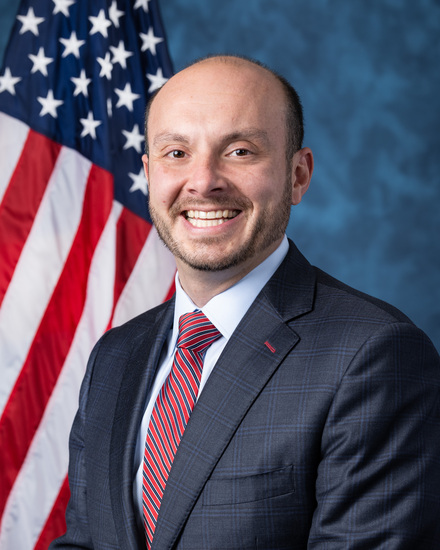
Rep. Andrew R. Garbarino
Sponsored bills
Maddy summaryHR 7178, the U.S.-Israel Anti-Killer Drone Act of 2026, requires enhanced U.S.-Israel cooperation to counter Iranian unmanned systems. The bill directs the U.S. and Israel to jointly develop, test, and deploy counter-drone technologies through their existing Operations Technology-Working Group, including sharing threat intelligence and conducting joint training. It increases annual funding for this cooperation from $55 million to $100 million and mandates detailed annual reports to Congress on progress, threat assessments, and the adequacy of current counter-drone capabilities. The bill directly affects U.S. and Israeli military forces by accelerating joint efforts to address threats from Iran-origin drones targeting U.S. allies and military assets in the Middle East.
Maddy summaryHR 3307, the Eastern Mediterranean Gateway Act, directs the U.S. government to prioritize diplomatic and security cooperation with Egypt, Greece, Cyprus, and Israel to support their role as a strategic gateway for the India-Middle East-Europe Economic Corridor (IMEC). The bill requires the Secretary of State to institutionalize strategic dialogues with these countries, prioritize energy and defense cooperation in the region, and submit annual reports on implementation and multilateral initiatives. It also mandates studies on expanding U.S. bilateral programs (like those with Israel) to include Eastern Mediterranean partners and analyzing the Cyprus security center as a model. The bill does not create new funding but guides existing U.S. policy and coordination efforts.
Maddy summaryHR 7137, the Shutdown Fairness Act, requires federal agencies to pay covered employees (including most federal workers and military personnel) and covered contractors their regular pay during government shutdowns. It appropriates funds from the Treasury to cover standard employee compensation and contractor payments for work performed during a lapse in regular appropriations, ensuring pay continues without delay (within 7 days if a shutdown is ongoing at enactment) and aligns with regular pay schedules. The bill applies only to individuals employed or with accepted offers before the shutdown began and mandates that these payments be charged to future appropriations. It does not change agency obligations under existing contracts or authorize new spending beyond the specified shutdown period.
Maddy summaryHR 7100 establishes a Department of Justice Task Force on Anti-Sikh Hate and Discrimination to address systemic bias against Sikhs. The Task Force must draft a formal definition of anti-Sikh hate for DOJ use, develop educational programs for law enforcement and schools, and produce annual reports on hate crimes and trends. It requires quarterly collaboration with Sikh organizations and translation of materials into Punjabi. The bill directly affects Sikhs in the U.S. (who face disproportionate targeting as noted in FBI data) and mandates federal agencies to improve hate crime data collection and response. This is a policy-focused measure to standardize definitions, enhance reporting, and support community safety through DOJ action.
Maddy summaryThe Build HUBS Act extends and improves the Transportation Infrastructure Finance and Innovation (TIFIA) and Railroad Rehabilitation and Improvement Financing (RRIF) programs to support housing near transit. It creates new definitions for "attainable housing projects" (affordable to households earning up to 120% of area median income, with most units affordable to those earning up to 80% of area median income) and allows an "investment-creditworthiness assessment alternative" instead of requiring investment-grade ratings for financing. The bill requires at least 75% of TIFIA funding for attainable housing projects to go toward residential components, sets a lower interest rate (half the Treasury Rate) for these projects, and exempts certain land acquisition activities from environmental review requirements under the National Environmental Policy Act.
Maddy summaryThe NFIP Extension Act of 2026 extends the National Flood Insurance Program (NFIP) through September 30, 2026, by updating two key deadlines in the law: the funding authorization (Section 1309(a)) and the program's expiration date (Section 1319). This directly affects homeowners, renters, and businesses in flood-prone areas who rely on NFIP policies for coverage. The bill changes the existing 2023 expiration dates to 2026, preventing program shutdown and ensuring continued access to federally backed flood insurance. If passed after September 30, 2025, the changes apply retroactively as if enacted on that date.
Maddy summaryThis bill would increase the base pay for Federal Bureau of Prisons correctional officers by 35 percent, replacing their current base rate for all pay calculations (including retirement and locality adjustments). It applies to officers whose duties involve inmate custody, control, or direct custodial contact, including certain supervisory staff and lower-grade Bureau of Prisons employees with similar duties. The pay increase is capped at the Executive Schedule level V rate and would expire after five years unless a Department of Justice Inspector General review finds progress in reducing non-custodial staff use for custodial duties and excessive overtime. The review, required 180 days before expiration, would assess impacts on recruitment, retention, and institutional safety.
Maddy summaryHR 5017, the Greyhound Protection Act of 2025, prohibits commercial greyhound racing, live lure training, open field coursing, and related betting across state lines. It bans activities like using live animals as bait, conducting interstate simulcast betting, and transporting greyhounds for racing purposes. The law amends the Animal Welfare Act to make these actions unlawful, with penalties including fines and up to 7 years in prison per violation. It applies to conduct occurring on or after October 1, 2027, and does not override existing state laws banning these activities. The bill directly affects greyhound racing industry participants and the animals involved in these practices.
Maddy summaryHR 909, the Crime Victims Fund Stabilization Act of 2025, modifies how funds from the False Claims Act are deposited into the Crime Victims Fund. It specifies that from 2025 through 2029, certain False Claims Act proceeds (specifically those for qui tam plaintiff payments and government damage reimbursements) cannot be deposited into the fund. This change directly affects the composition of the Crime Victims Fund by excluding these specific revenue streams during the specified period. The bill does not create new benefits or alter victim services; it only adjusts fund allocation rules for existing False Claims Act revenues.