

Maddy summaryH.J. Res. 26 is a congressional disapproval resolution blocking the District of Columbia Council's approval of its Revised Criminal Code Act of 2022 (D.C. Act 24-789). It directly affects the District of Columbia by preventing the new criminal code from taking effect, as Congress disapproved the Council's action under the Home Rule Act. The resolution formally rejects the Council's enactment of the code, which was transmitted to Congress on January 27, 2023. This procedural action stops the District from implementing the revised criminal code without further congressional action.
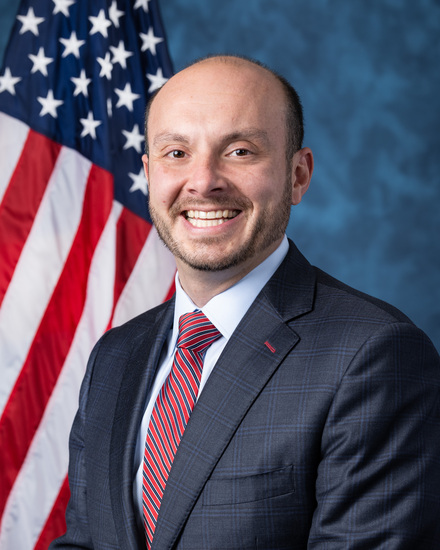
Rep. Andrew R. Garbarino
Sponsored bills
Maddy summaryThis bill expands the U.S. Postal Service's (USPS) subpoena authority for investigations into specific violations. It allows the Postmaster General to issue subpoenas requiring production of records and testimony related to "covered offenses," including postal law violations, mail-related crimes under Title 18, certain federal laws, and mail-related drug offenses under the Controlled Substances Act. Subpoenas can demand records (like documents or evidence) and testimony from custodians about those records' authenticity, though they cannot require testimony in investigations under section 3005(a). The bill also restricts approval of subpoenas to the General Counsel, a Deputy General Counsel, or the Chief Postal Inspector.
Maddy summaryThis bill authorizes a Congressional Gold Medal to honor the "Hello Girls" - female telephone operators who served in the Army Signal Corps during World War I. They provided critical battlefield communications in France (connecting 26 million calls), wore military uniforms, and faced combat risks, but were denied veteran benefits for 60 years due to being classified as civilian contractors. The medal recognizes their pioneering service, devotion, and the decades-long struggle to gain military recognition. The award follows similar recognition for other WWII women veterans and aims to correct the historical injustice they faced.
Maddy summaryThe PHIT Act of 2023 allows individuals and families to deduct certain fitness expenses as medical costs on their federal taxes. It covers gym memberships, fitness classes, and specific equipment used exclusively for exercise (like home workout gear), with a yearly limit of $1,000 ($2,000 for joint returns). Expenses for activities like golf, hunting, or non-exercise-focused facilities (e.g., private clubs) are excluded, and equipment must be used solely for physical activity. This directly affects taxpayers who pay for qualifying fitness programs, making these costs partially tax-deductible under revised IRS rules.
Maddy summaryThis bill amends the World Trade Center Health Program to expand eligibility to include certain Department of Defense and Federal agency workers who responded to the September 11 attacks at the Pentagon and Shanksville, Pennsylvania. It establishes a 500-person enrollment cap for these responders, allows a broader range of licensed health care providers to conduct program evaluations, and creates two new funding mechanisms totaling $2.04 billion for the program through 2033. The bill also clarifies enrollment counts by excluding deceased individuals from program statistics and adjusts funding calculations to ensure continued support for affected responders and survivors. These changes directly affect 9/11 responders who worked at the Pentagon and Shanksville sites and their families participating in the health program.
Maddy summaryHR 1491, the Small Business Energy Loan Enhancement Act, increases the maximum loan amount for energy-related small business loans under the Small Business Investment Act of 1958 from $5.5 million to $10 million. This directly affects small businesses seeking financing for energy efficiency or renewable energy projects by doubling their potential loan access. The bill requires the Small Business Administration to submit annual reports to Congress detailing which industries and geographic areas received these enhanced loans. These changes aim to expand access to capital for qualifying energy projects without altering eligibility criteria.
Maddy summaryThis bill, titled misleadingly as the "Customs Business Fairness Act," is actually a narrow amendment to bankruptcy law, not customs policy. It modifies Section 507(d) of the Bankruptcy Code to exclude "subparagraph (F)" from certain debt treatment rules, affecting businesses filing for bankruptcy under Title 11 after the law's enactment. The amendment applies only to bankruptcy cases commenced after the bill becomes law, not to cases filed before it was enacted. This is a procedural change with no direct impact on customs operations or import/export regulations.
Maddy summaryHRES 198 is a non-binding House resolution recognizing the Girl Scouts of the United States of America on its 111th anniversary. It celebrates the organization’s role in providing girls with safe, inclusive spaces for leadership development, skill-building, and community engagement through programs like STEM education, outdoor activities, and civic initiatives. The resolution specifically acknowledges Girl Scouts’ 111-year legacy, congratulates Gold Award recipients, and encourages continued support for their mission. As a ceremonial resolution, it does not create new policies, allocate funds, or directly affect any individuals or organizations.
Maddy summaryThe TABS Act of 2023 would rename the Consumer Financial Protection Bureau (CFPB) to the Consumer Financial Empowerment Agency (CFEA) throughout U.S. federal law. This bill would change the agency's name in the Consumer Financial Protection Act of 2010 and over 25 other federal statutes, including the Dodd-Frank Act and Truth in Lending Act. The bill does not alter the agency's responsibilities, authority, or budget structure - only its name. This is a procedural change affecting all federal documents, regulations, and references to the agency.
Maddy summaryThis bill prohibits federal funding for any state, local, tribal, or private entity operating heroin injection centers that violate the federal drug law (21 U.S.C. 856, the "Crack House Statute"). It directly affects organizations running such centers by blocking all federal financial support for their operations. The key mechanism is a clear funding restriction: no federal money can be provided to entities operating centers deemed unlawful under existing federal drug law. The bill does not create new criminal penalties but prevents government funding for facilities violating current law.