

Maddy summaryThis resolution designates the week of September 25-29, 2023, as "National Clean Energy Week" to recognize the growing role of clean energy in the U.S. economy. It expresses support for clean energy jobs and innovation, noting the sector employed about 8.1 million people in 2022. The resolution encourages federal, state, and local investment in affordable clean energy technologies and promotes "commonsense solutions" for energy needs. As a symbolic gesture, it has no legal force or funding implications - it simply urges recognition of clean energy's economic and environmental contributions.
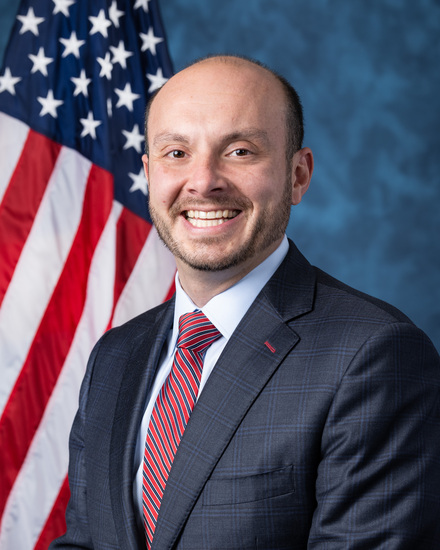
Rep. Andrew R. Garbarino
Sponsored bills
Maddy summaryThe NFIP Extension Act of 2023 (HR 5828) extends the National Flood Insurance Program (NFIP) by postponing key deadlines. It changes the financing deadline from September 30, 2023, to March 31, 2024, and delays the program's expiration date to the same new date. This prevents a funding gap, ensuring flood insurance policies remain active and the program continues operating without interruption for policyholders and communities covered under NFIP. The extension applies retroactively if enacted after September 30, 2023.
Maddy summaryHR 5837, the Protecting America's Property Rights Act, requires Fannie Mae and Freddie Mac to only purchase conventional mortgages for one- to four-family homes if the mortgage is secured by real property with title insurance from a licensed company in the property's state. It also mandates that both entities must get prior approval from the Federal Housing Finance Agency Director and Treasury Secretary before launching new programs, with semi-annual congressional reports on these programs. The bill updates the definition of "conforming mortgage" to include this title insurance requirement. These changes directly affect Fannie Mae and Freddie Mac's mortgage operations and indirectly impact homeowners, lenders, and title insurance companies operating in the states where properties are located.
Maddy summaryHJRES 11 proposes a constitutional amendment that would limit Members of Congress to serving a maximum of three terms in the House of Representatives and two terms in the Senate. If passed and ratified, it would prevent any member who has already served the maximum terms from running for re-election, including time spent filling vacancies (for more than one year in the House or three years in the Senate). This amendment directly affects current and future members of Congress by changing eligibility rules for re-election. The proposal is currently a joint resolution in the House, requiring ratification by three-fourths of state legislatures to become part of the Constitution.
Maddy summaryHR 5820, the Technology for Energy Security Act, extends a federal tax credit for businesses installing qualified fuel cell technology. It amends the tax code to change the expiration date for this credit from January 1, 2025, to January 1, 2033. This extension provides businesses with a longer timeframe to claim the credit for eligible fuel cell property investments. The bill directly affects companies deploying fuel cell energy systems by making the tax incentive available for an additional decade.
Maddy summaryHR 5641, the Pay Our Troops Act, ensures military personnel and their support staff continue receiving pay during fiscal year 2024 if Congress fails to pass regular budget appropriations. It appropriates existing Treasury funds to cover pay and allowances for active-duty troops, reserve components, and civilian employees or contractors supporting military operations. The bill automatically terminates on January 1, 2025, or earlier if Congress enacts a regular budget or continuing resolution. This provision directly affects service members, Department of Defense staff, and Coast Guard personnel (when not under the Navy) during budget implementation gaps.
Maddy summaryThis bill requires the Department of Veterans Affairs (VA) to review all veteran suicides occurring between 2018-2023 (the five years before enactment) for veterans who received VA care. The review must analyze demographics, medications (including those with strong safety warnings like "black box" labels), prescribing patterns, mental health diagnoses, and facility-level data. The VA must complete the review within 18 months and publicly submit a detailed report to Congress and the public within 30 days of completion. This law directly affects veterans' families, VA healthcare providers, and policymakers by mandating transparency around suicide risk factors and prescribing practices.
Maddy summaryHR 5772, the "No Work, No Pay Act," directly affects Members of Congress by imposing fines during government shutdowns. If a shutdown occurs, each member faces a daily fine calculated as their daily pay rate multiplied by the number of shutdown days, enforced by the House Sergeant-at-Arms or Senate Sergeant-at-Arms and Doorkeeper. Unpaid fines are deducted from members' net salaries after 30 days, and members cannot use campaign or official funds to cover these fines. The bill defines a government shutdown as a lapse in appropriations due to failure to pass a funding bill or continuing resolution.
Maddy summaryThe Alice Cogswell and Anne Sullivan Macy Act amends the Individuals with Disabilities Education Act to better serve children and youth who are deaf, hard of hearing, deafdisabled, blind, visually impaired, or deafblind. It requires states to identify and provide appropriate services to these students regardless of how they're classified in disability categories, ensures access to language instruction in the student's primary language (including American Sign Language), and mandates improved data collection about these students. The bill establishes the Anne Sullivan Macy Center on Visual Disability and Educational Excellence to support research, training, and program development for blind and visually impaired students. These changes aim to improve educational outcomes by addressing the unique language, communication, and learning needs of students with sensory disabilities through concrete policy changes to IDEA.
Maddy summaryHR 5264, the Local Law Enforcement Protection Act, requires states and local governments to certify they do not have laws providing less legal protection ("qualified immunity") to police officers than established in the *Saucier v. Katz* Supreme Court case (2001) in order to receive certain federal grants. It directly affects states and local governments applying for Community Development Block Grants (under the 1974 Housing Act) or specific rural development loans. The key provision mandates this certification be submitted with each grant application, linking eligibility to adherence with the federal standard on officer immunity.