

This resolution expresses unwavering support for Israel and a readiness to consider urgent requests for additional assistance to Israel to defend its people and sovereignty. The resolution also states that (1) Israel is entitled to act in self-defense against Hamas, the Palestinian Islamic Jihad, and associated forces, as well as their state sponsors; and (2) the cross-border attacks and kidnappings against Israel constitute acts of international terrorism and aggression.
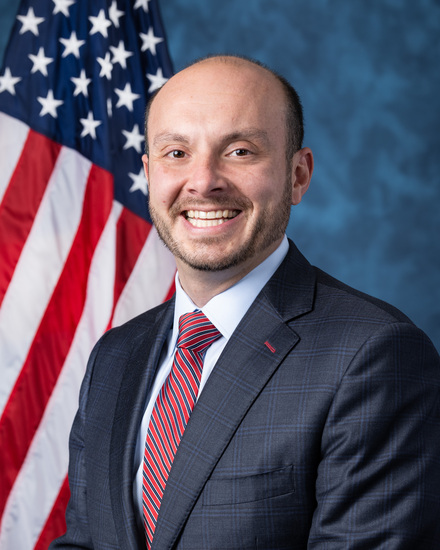
Rep. Andrew R. Garbarino
Sponsored bills
Maddy summaryHRES 768 is a symbolic House Resolution expressing congressional support for Israel following Hamas' October 7, 2023 attacks. It condemns Hamas' actions, reaffirms Israel's right to self-defense, and calls for the immediate release of hostages. The resolution references the U.S. commitment to Israel's security through existing military aid programs, including the 2016 U.S.-Israel Memorandum of Understanding, and emphasizes enforcement of laws like the Taylor Force Act to prevent U.S. aid from reaching terrorist groups. As a symbolic resolution, it does not create new policy but serves as a statement of congressional support for Israel.
Maddy summaryHRES 764 is a symbolic House resolution expressing support for recognizing Christopher Columbus and his historical impact on the Italian-American community. It formally designates the second Monday in October as "Columbus Day" for observance. The resolution does not create new laws or alter existing policies but affirms a longstanding tradition of honoring Columbus's legacy and the contributions of Italian-Americans to U.S. society. This is a non-binding expression of congressional support, not a legislative change.
Maddy summaryHRES 765 is a non-binding resolution urging all Americans to observe October 2023 as Italian and Italian-American Heritage Month. It recognizes the historical contributions of Italian and Italian-American people to U.S. society, including in fields like military leadership, medicine, arts, and science. The resolution asks the public to acknowledge this heritage through appropriate events and activities during October 2023. It directly affects the general public by encouraging community observances, but does not create new laws or obligations.
Maddy summaryThis bill removes a previous exclusion that prevented temporary federal employees (including U.S. Postal Service staff and Members of Congress) from counting service after January 1, 1988, toward their retirement benefits. It allows these workers to have their post-1988 temporary service counted toward retirement eligibility if they pay a deposit to the retirement system. The change applies to anyone employed by the federal government on or after the bill's enactment date. The Office of Personnel Management must notify affected employees and create rules to implement this change.
Maddy summaryHR 5939, the Small Business Succession Planning Act, creates a new program within the Small Business Administration (SBA) to help small businesses develop succession plans. The SBA will provide a public toolkit, train advisors, and offer counseling to help business owners plan for transitions due to retirement or death. Small businesses that establish and successfully execute a certified succession plan receive a $250 tax credit for each step, with repayment required if the business is later acquired by a non-small business entity within three years. The bill directly affects small business owners (as defined by SBA rules), particularly those from disadvantaged backgrounds, by providing concrete financial incentives and resources to ensure business continuity.
Maddy summaryHR 5954 designates the Finger Lakes region in 14 New York counties (Cayuga, Chemung, Cortland, Livingston, Monroe, Onondaga, Ontario, Schuyler, Seneca, Steuben, Tioga, Tompkins, Wayne, and Yates) as a National Heritage Area. It establishes the Finger Lakes Tourism Alliance as the local managing entity and requires a management plan for the area within three years. Federal funding for the area would end 15 years after the bill's enactment, as specified in the National Heritage Area System.
'Operation Swords of Iron' Iron Dome Supplemental Appropriations Act This bill provides $2 billion in appropriations for the Department of Defense to provide to the government of Israel for the procurement of the Iron Dome defense system to counter short-range rocket threats. The funds must be provided to address emergent requirements in support of Operation Swords of Iron.
Maddy summaryHRES 758 is a symbolic resolution designating the first Wednesday in October as National Energy Appreciation Day. It expresses the House's support for recognizing energy workers - across oil, gas, coal, nuclear, hydro, and renewable sectors - who power the U.S. economy and improve quality of life. The resolution cites statistics on energy's role in job creation (7.8 million U.S. jobs), poverty reduction, and national security, but does not create new laws or funding. As a non-binding resolution, it solely aims to raise awareness of the energy industry's contributions. (HRES 758, introduced October 3, 2023)
Maddy summaryHR 2577 establishes the DHS Suicide Prevention and Resiliency for Law Enforcement Act, requiring all Department of Homeland Security (DHS) law enforcement components - including U.S. Customs and Border Protection, Immigration and Customs Enforcement, the Secret Service, TSA, and others - to implement new mental health programs. The law creates a central "Law Enforcement Mental Health and Wellness Program" under the Chief Medical Officer to coordinate suicide prevention, reduce stigma, and provide confidential support, including peer-to-peer networks, annual training for officers, and resources for families. Key mechanisms include mandatory annual confidential surveys of personnel, data collection on suicides (while protecting privacy), and requiring DHS components to improve mental health programs by removing barriers to seeking help and ensuring no adverse actions for officers who access counseling. The bill mandates annual congressional briefings on implementation through 2027.