

Maddy summaryHR 6441, the Ranching Without Red Tape Act of 2023, simplifies minor improvements for ranchers on federal grazing lands managed by the U.S. Forest Service (USFS) and Bureau of Land Management (BLM). It requires the agencies to issue regulations within one year allowing permittees to make small fixes - like repairing fences, wells, or water pipelines - without lengthy approvals. Specifically, ranchers must notify the local manager 30 days in advance; if no response is given within that period, the work can proceed. The bill also mandates that agencies respond to improvement requests within 30 days and expedite approved projects using existing administrative tools. This directly affects ranchers holding grazing permits on USFS and BLM lands.
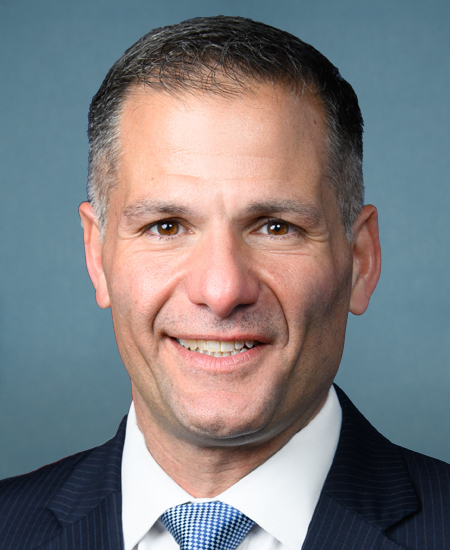
Rep. Marcus J. Molinaro
Sponsored bills
Maddy summaryThis bill amends the National Agricultural Research, Extension, and Teaching Policy Act of 1977 to expand workforce development in food and agricultural sciences. It authorizes $60 million annually (2025-2030) for grants supporting paid, work-based learning programs at colleges, including junior/community colleges and vocational institutions, to train professionals for agricultural careers. The bill also updates funding mechanisms for teaching enhancement projects and creates a new NRCS hiring authority allowing direct appointments for technical roles without standard civil service rules. It directly affects educational institutions offering agricultural programs and the Natural Resources Conservation Service.
Maddy summaryThis bill modifies how disability benefits are treated for homeless disabled veterans seeking housing assistance. It excludes certain disability payments (under Chapter 11 or 15 of Title 38, U.S. Code) from income calculations when determining eligibility for HUD-assisted housing programs, including the supported housing program under Section 8(o)(19) and housing on Department property. Specifically, it ensures these benefits are not counted toward income for housing eligibility, though they still count for "adjusted income" definitions. The bill directly affects disabled veterans applying for HUD housing assistance who receive these specific disability benefits. It makes a concrete change to income calculation rules without altering benefit amounts or creating new funding.
Maddy summaryHRES 1548 is a non-binding resolution supporting the designation of October 2024 as "National Learning Disabilities Awareness Month." It highlights that specific learning disabilities affect 34% of students receiving special education services and notes significant academic challenges, with over 95% of affected 4th and 8th graders not proficient in reading or math in 2022. The resolution calls on schools to continue providing appropriate support for students with learning disabilities but does not create new laws or funding. It aims to raise public awareness about learning disabilities, not to change educational policies.
Maddy summaryHRES 1537 is a non-binding House resolution condemning Hamas' October 7, 2023, attacks on Israel, which killed over 1,200 people and took 251 hostages, including 7 Americans still held captive. It calls on Hamas to immediately surrender, cease attacks, and release all hostages unconditionally, while reaffirming Israel's right to self-defense. The resolution also urges international organizations to condemn Hamas' actions and address the global surge in antisemitism following the attacks. As a symbolic statement, it does not create new laws or alter policy but expresses congressional position. The bill specifically references the ongoing captivity of seven U.S. citizens: Edan Alexander, Itay Chen, Sagui Dekel-Chen, Gadi Haggai, Judith Weinstein Haggai, Omer Neutra, and Keith Siegel.
Maddy summaryHR 9950, the "Miracle on Ice Congressional Gold Medal Act," authorizes three gold medals to be awarded to the members of the 1980 U.S. Olympic men's ice hockey team for their historic victory over the Soviet Union during the Winter Olympics. The medals, designed by the Treasury Secretary, will be presented by Congress to honor the team's achievement, which revitalized American morale during the Cold War. One medal will be displayed at the Lake Placid Olympic Center, one at the USA Hockey Hall of Fame in Eveleth, Minnesota, and one at the U.S. Olympic Museum in Colorado Springs. The bill also permits the sale of bronze duplicates to cover production costs. This is a ceremonial honor, not a policy change, directly recognizing the team members and their legacy.
Maddy summaryThis bill terminates all federal funding for FEMA's Shelter and Services Program effective upon enactment. It prohibits new appropriations for this program or any similar successor program. Any remaining funds from the program as of the enactment date will be transferred to support disaster relief efforts under the Robert T. Stafford Disaster Relief Act. The change directly affects FEMA's budget operations but redirects existing resources to broader disaster assistance.
Maddy summaryThis bill directs the Secret Service to use identical standards for determining protection levels for Presidents, Vice Presidents, and major presidential/vice presidential candidates. It requires the Secret Service Director to conduct a review within 180 days of enactment, reporting findings and recommendations to Congress on protection protocols for current and former leaders. The bill standardizes existing practices without increasing security resources, applying the same criteria currently used for sitting officials to candidates. It references the definition of "major candidates" from existing law (18 U.S.C. § 3056), ensuring consistency with current Secret Service procedures.
Maddy summaryHR 9889 provides $14 billion in emergency funding to assist farmers and ranchers recovering from 2023 natural disasters like droughts, wildfires, floods, and hurricanes. It directly affects agricultural producers who suffered crop, livestock, or dairy losses, including $1.5 billion specifically for livestock-related expenses. The bill establishes payment limits (up to 90% of losses for insured producers, 70% for uninsured) and requires beneficiaries to purchase crop insurance or NAP coverage for the next two crop years. Payments cover revenue losses for crops, trees, vines, and livestock relocation costs, with administrative costs capped at 1% of the total appropriation.
Maddy summaryThe Hydrogen for Industry Act of 2024 establishes a federal grant program to fund commercial-scale demonstration projects using hydrogen in heavy manufacturing sectors like steel, cement, ammonia production, and chemical synthesis. It allocates $1.2 billion (2025-2029) for competitive grants up to $400 million per project, requiring 50% cost sharing from applicants and prioritizing projects that reduce emissions, use ≥50% hydrogen blends, and benefit disadvantaged communities. Projects must complete pilot testing, monitor hydrogen leaks, and demonstrate emissions reductions at industrial facilities. The bill also mandates a federal study on hydrogen safety, costs, and environmental impacts for industrial use.