

Maddy summaryThe Latonya Reeves Freedom Act of 2023 strengthens the Americans with Disabilities Act's requirement that individuals with disabilities receive long-term services and supports in community settings rather than institutions. It defines "community-based" services to include specific housing options where individuals with disabilities can live independently with maximum control over their lives, including access to integrated housing, employment, and community participation. The bill requires states to develop transition plans to move people from institutional settings to community-based services within 12 years, with measurable annual targets for reducing institutionalization. It establishes enforcement mechanisms through the Department of Justice and Department of Health and Human Services to ensure compliance with these requirements.
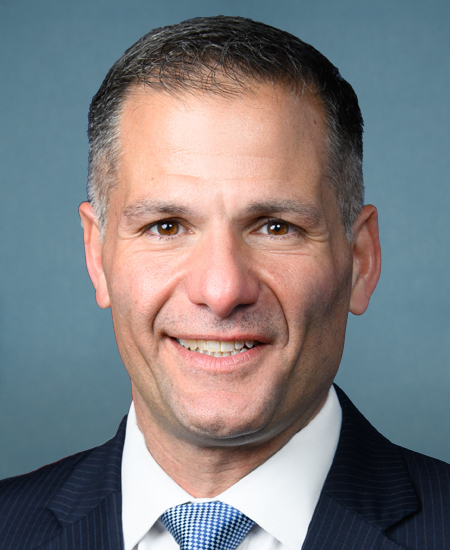
Rep. Marcus J. Molinaro
Sponsored bills
Maddy summaryThis bill establishes a federal grant program to help states fund child care for the minor children of police officers during their irregular work schedules. It provides competitive grants to states, with 20% reserved for jurisdictions employing fewer than 200 officers, to support law enforcement agencies in creating or expanding child care services. States must match federal funds (10-33% over three years) and use grant money for startup costs, provider training, sick child care, extended hours, or facility construction. The program runs through 2028, requiring annual audits and two federal studies to assess its effectiveness.
Maddy summaryHJRES 27 is a congressional resolution seeking to block a federal rule that redefined which waterways fall under the Clean Water Act's protections. It targets a rule submitted by the Army Corps of Engineers, Department of Defense, and Environmental Protection Agency (EPA) on January 18, 2023, which aimed to revise the "Waters of the United States" definition. The resolution would formally disapprove this rule under a specific federal procedure (Chapter 8 of Title 5), preventing it from taking effect. This would directly affect how federal agencies regulate pollution and development near water bodies, including wetlands and smaller streams.
Maddy summaryHR 2665 delays Medicaid payment reductions for safety net hospitals by two years, changing the effective date from 2024 to 2026 under Section 1923(f)(7)(A) of the Social Security Act. This bill directly affects hospitals that serve high numbers of low-income and uninsured patients, providing them with additional time before facing reduced federal Medicaid payments. The key mechanism is a technical amendment to existing law, postponing an already scheduled payment adjustment without altering funding levels or eligibility. As a procedural bill, it does not create new programs or change hospital requirements.
Maddy summaryHR 2642, the PEER Mental Health Act of 2023, provides federal grants to train school staff, students, parents, and caregivers to recognize mental health symptoms in children and adolescents, refer them to services, and apply basic mental health first aid during crises. The bill requires 25% of grant funds to support schools in rural areas and mandates rigorous program evaluation for grant recipients. It authorizes $24.96 million annually from 2024 to 2028 to cover training costs and community resource education. This legislation directly affects schools, particularly rural schools, by expanding mental health awareness and response capabilities for students and their families.
Maddy summaryHR 2602, the Small Business Child Care Investment Act, reclassifies eligible nonprofit child care centers as "small business concerns" under federal loan programs. This allows organizations meeting specific criteria - like state licensing, 501(c)(3) tax status, and non-discrimination policies - to access SBA Section 7(a) loans and Title V financing. The bill requires loan guarantees for amounts over $500,000 but eliminates denial of loans solely due to religious activity (per First Amendment protections). It mandates annual SBA reports tracking loan numbers and amounts provided to these child care providers. The law directly affects nonprofit child care centers serving children from birth to school age.
Maddy summaryThis bill requires the Census Bureau to create a new separate category in the Current Population Survey for "Postsecondary Nondegree Awardees" within one year of enactment. It directly affects individuals who hold a high school diploma plus a recognized non-degree credential (like a trade certificate), but not an associate or bachelor's degree, by changing how their educational attainment is tracked. The key mechanism is mandating this specific data category to better measure vocational education outcomes. This change impacts how workforce data is collected and reported, not the vocational programs themselves.
This resolution recognizes law enforcement agencies and officers for their tireless work to protect us and make our communities safer. It also condemns calls to defund, disband, dismantle, or abolish the police.
Securing Access to Lower Taxes by ensuring Deductibility Act or the SALT Deductibility Act This bill repeals the temporary restrictions in taxable years 2018 through 2025 on the deductibility of state and local taxes.
Maddy summaryThis bill allows Medicaid coverage for incarcerated individuals during the 30 days preceding their release from public institutions. It directly affects people transitioning from prisons or jails back into communities by extending health coverage during this critical period. The key mechanism amends the Social Security Act to remove a Medicaid exclusion for this 30-day window. Additionally, it requires an 18-month report analyzing correctional healthcare standards, current discharge practices, and the potential impact of this coverage extension on post-release health access.