

Healthy Air Travel Act This bill directs the Federal Aviation Administration to establish an interagency task force to develop and implement a strategy to identify and advance research on communicable diseases in air travel. The task force must consult with representatives from the aviation industry, health experts, and labor stakeholders in developing the strategy. Under the bill, the term communicable disease refers to certain diseases that have the potential to cause a future epidemic or pandemic of infectious disease that would constitute a public health emergency of international concern as declared, after the date of the bill's enactment, by the Secretary of Health and Human Services.
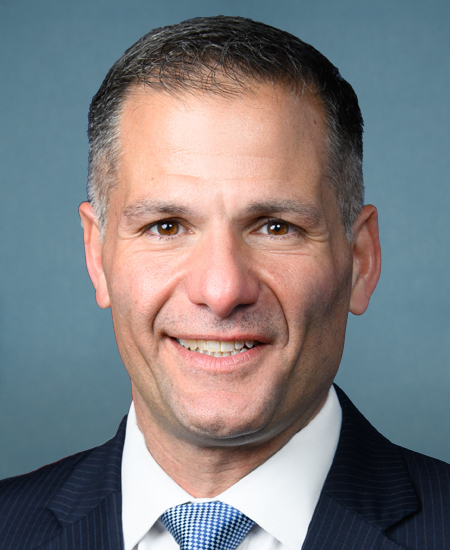
Rep. Marcus J. Molinaro
Sponsored bills
Maddy summaryThis bill creates a new Department of Homeland Security (DHS) joint task force specifically focused on stopping opioid trafficking at the border, particularly fentanyl and synthetic opioids. It allows DHS to partner directly with private sector organizations (like pharmaceutical or logistics companies) to temporarily assign their employees to the task force, with the private companies covering all costs - without requiring standard federal advisory committee processes. The bill also requires DHS to collaborate with other federal, state, local, tribal, and international agencies on this effort and to report annually on resource gaps and how well the task force is coordinating with others. The primary effect is to enhance DHS's border security operations targeting opioid smuggling through new private-sector partnerships and interagency coordination.
Aviation Investment and Recruitment Act of 2023 or the AIR Act of 2023 This bill reauthorizes through FY2028 aviation workforce development programs for pilots and mechanics.
Veterans Jobs Opportunity Act This bill allows a new business-related tax credit for the start-up expenses of a veteran-owned small business in an underserved community. The allowable amount of such credit is 15% of start-up expenditures that do not exceed $50,000. To be eligible for the credit, the small business must (1) be owned and controlled by one or more veterans or their spouses, and (2) have its principal place of business in an underserved community. An underserved community is any area located within (1) a HUBZone (as defined by the Small Business Act), (2) an empowerment zone or an enterprise community, (3) an area of low income or moderate income (as recognized by the Federal Financial Institutions Examination Council), or (4) a county with persistent poverty (as classified by the Economic Research Service of the Department of Agriculture).
Maddy summaryThe AIR PUMP Act requires airlines to provide nursing crew members (like flight attendants and pilots) with reasonable break time to express breast milk for up to one year after their child's birth, as well as a private, non-bathroom space for this purpose. It specifically excludes breaks during critical flight phases and ensures accommodations won't compromise safety, security, or require significant costs (e.g., aircraft modifications). The bill includes anti-retaliation protections for employees who request accommodations or file complaints, and enforces these requirements through the Department of Labor using existing Fair Labor Standards Act mechanisms. This directly affects airline employees who are nursing parents and their employers, aligning airline workplace policies with federal breastfeeding protections.
Simplify Automatic Filing Extensions Act or the SAFE Act This bill eliminates the penalty for failure to pay income tax for individual taxpayers who timely pay 125% of their income tax liability for the immediately preceding taxable year.
Coastal State Climate Preparedness Act of 2023 This bill directs the Department of Commerce to establish a coastal climate change adaptation preparedness and response program. Under the program, Commerce must (1) assist coastal states with voluntarily developing coastal climate change adaptation plans, and (2) provide financial and technical assistance as well as training for coastal states to implement the adaptation plans.
Maddy summaryThis bill requires that AM radio receivers be included as standard equipment in all new motor vehicles (such as cars and trucks) sold in the United States, with a rule to be issued by the Department of Transportation within one year. The rule must ensure AM radio is easily accessible on the dashboard and allows manufacturers to use digital AM radio technology instead of traditional AM. During the one-year period between the bill's enactment and the rule's effective date, manufacturers must clearly label vehicles without AM radio. The bill also directs a study to evaluate whether an alternative system could deliver emergency alerts as reliably as AM radio across the country, especially during crises.
Healthcare Extension and Accessibility for Developmentally disabled and Underserved Population Act of 2023 or the HEADs UP Act of 2023 This bill authorizes the Department of Health and Human Services (HHS) to award grants to support health centers that provide services for individuals with developmental disabilities, including dental care. Grant recipients must provide specialized treatment to individuals with developmental disabilities as necessary. The bill also provides statutory authority for HHS to designate individuals with developmental disabilities as health-professional shortage population groups for the purposes of the National Health Service Corps (NHSC). The NHSC provides scholarships and student loan repayment awards to eligible providers who agree to work with designated populations or in areas that face shortages of primary care, dental care, and mental health care providers.
Maddy summaryThe Keeping All Students Safe Act prohibits the use of "unlawful" seclusion and restraint in schools, including physical restraint that's life-threatening, contraindicated for a student's disability, or not properly trained for. It requires schools to use less restrictive interventions first, mandates training for school personnel in crisis intervention, and establishes reporting requirements for restraint incidents, including immediate parent notification and annual public reporting. The bill prohibits using physical restraint as a planned intervention in student education plans and requires states to submit compliance plans with data on restraint incidents disaggregated by race, disability status, and other factors. It applies to public schools and programs receiving federal funding, but does not affect private schools not receiving federal funds or home schools.