

Maddy summaryThis bill removes geographic restrictions on Medicare telehealth services, allowing rural beneficiaries to receive care at home or remotely starting January 1, 2025. It specifically expands access for critical access hospitals and rural health clinics by standardizing payments for telehealth services and permitting audio-only visits for certain providers like doctors and clinics with established patient relationships. The bill also extends Medicare flexibilities for Federally Qualified Health Centers (FQHCs) and rural health clinics beyond 2024. These changes aim to improve healthcare access in underserved rural communities by removing prior barriers to telehealth.
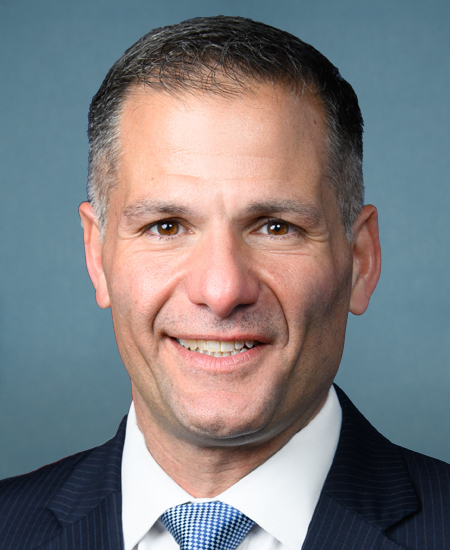
Rep. Marcus J. Molinaro
Sponsored bills
Maddy summaryHR 1610 would modernize Medicare coverage for chiropractic care by removing the current restriction that limited beneficiaries to one chiropractic service per visit. It expands coverage to include all services provided by licensed chiropractors within their state-authorized scope, aligning Medicare with VA, military, and private insurance practices. The bill requires chiropractors to complete a Secretary-approved educational webinar to cover non-spinal services, while still allowing payment for spinal manipulation treatments without this requirement. This directly affects Medicare beneficiaries seeking chiropractic care and chiropractors seeking Medicare reimbursement for their services.
Maddy summaryHR 1407, the Financing Lead Out of Water Act, modifies tax rules to help communities replace lead water pipes. It clarifies that using tax-exempt bonds to replace privately-owned sections of lead service lines connected to public water systems does not count as "private business use" under federal tax law. This change allows public water systems to more easily finance lead pipe replacements through tax-exempt bonds, which are typically restricted from funding private business activities. The bill directly affects public water systems and local governments managing drinking water infrastructure, making it simpler to secure funding for compliance with federal lead regulations.
Maddy summaryHR 549, the Metastatic Breast Cancer Access to Care Act, removes waiting periods for disability and Medicare coverage for people diagnosed with metastatic breast cancer. Specifically, it amends Social Security Act sections to allow immediate eligibility for disability insurance benefits (eliminating the standard waiting period) and immediate Medicare coverage (waiving the 24-month waiting period) for these patients. The bill directly affects individuals with metastatic breast cancer who would otherwise face delays in accessing critical benefits. These changes apply to applications filed or benefits beginning after the bill's enactment date. The law makes no other policy changes beyond these specific eligibility adjustments.
Maddy summaryHR 2687 amends the Alaska Native Claims Settlement Act to clarify that distributions from Alaska Native Settlement Trusts count toward income eligibility for federal programs. It directly affects Alaska Native individuals or their descendants who receive trust benefits and need to qualify for programs like Supplemental Security Income (SSI) for the aged, blind, or disabled. The key change specifies that trust interest or distributions are now explicitly included when determining eligibility under the Social Security Act. This adjustment ensures these benefits are properly considered in federal program eligibility calculations, without altering the trust's structure or creating new benefits.
Maddy summaryThis bill establishes a commission to study whether the Weitzman National Museum of American Jewish History in Philadelphia should be transferred to the Smithsonian Institution. The commission, composed of 8 members appointed by congressional leaders with expertise in Jewish American history and museum administration, will examine the museum's collections, financial status, governance, and feasibility of transfer within two years. The commission must submit a report detailing findings, a fundraising plan, and legislative recommendations for any potential transfer. The bill does not transfer the museum but creates a process to evaluate the possibility.
Maddy summaryHR 7438 directs the U.S. Treasury to mint commemorative coins for the 2026 FIFA World Cup, including 100,000 $5 gold coins, 500,000 $1 silver coins, and 750,000 half-dollar coins. The coins will be sold to the public at face value plus surcharges ($35, $10, and $5 per coin, respectively), with all surcharge revenue paid to FWC2026 US, Inc. for U.S. soccer programs. These funds must support soccer initiatives, particularly in underserved communities and youth development, as specified in the bill. The coins are legal tender but will only be issued during 2026, with no net cost to the U.S. government.
Maddy summaryThe Grant Transparency Act of 2023 requires federal agencies to clearly disclose how they evaluate competitive grant applications in their funding notices. Specifically, agencies must describe their rating systems, explain any weighted scoring methods (including how much each criterion is weighted), and detail other merit-based evaluation approaches. The law also mandates standardized reporting of basic application data, including the number of applications received and the city/state locations of all submitting organizations. This applies only to future notices of funding opportunity issued after the law takes effect (120 days post-enactment), does not create new funding, and does not override existing legal requirements for specific grant programs.
Maddy summaryHR 8689, the Amtrak Executive Bonus Disclosure Act, requires Amtrak to publicly disclose performance-based bonuses paid to its top executives. It mandates that Amtrak brief relevant congressional committees 30 days before awarding such bonuses and publish the bonus amount, along with the calculation criteria, in the Federal Register within 30 days of payment. The law directly affects 12 specific Amtrak executive roles, including the CEO, CFO, and other senior leadership positions defined in the bill. This policy change focuses on transparency around taxpayer-funded executive compensation, without altering bonus eligibility or amounts.
Maddy summaryThis bill reauthorizes federal conservation funding for the Delaware River Basin through 2030, extending the program's expiration date from 2023. It adds Maryland as a basin state (making it a 5-State basin) and modifies cost-sharing rules to provide 90% federal funding for projects serving small, rural, or disadvantaged communities, with a possible 100% federal share if financial hardship is proven. The bill directly affects the five basin states (Pennsylvania, New Jersey, Delaware, Maryland, and New York) and communities within them, particularly those facing economic challenges. The key change is ensuring greater federal financial support for conservation projects in underserved areas while maintaining program continuity through 2030.