

Maddy summaryThis bill exempts human trafficking survivors from paying federal income tax on restitution or civil damages awarded under federal trafficking laws. Specifically, it removes taxable status for payments received under Sections 1593 (criminal restitution) and 1595 (civil damages) of Title 18, U.S. Code. The provision directly affects survivors who receive court-ordered compensation for trafficking crimes, ensuring they retain the full amount of their award. This change prevents survivors from facing unexpected tax burdens on funds meant to aid their recovery. The tax exemption applies to payments made after the bill's enactment date.
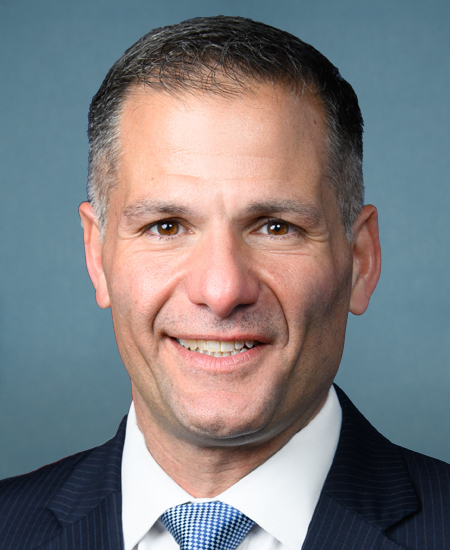
Rep. Marcus J. Molinaro
Sponsored bills
Maddy summaryThis resolution (HRES 839) condemns antisemitism at U.S. colleges and universities and urges campus leaders to publicly oppose hate speech targeting Jewish students, faculty, and staff. It encourages university presidents, administrators, and faculty to speak out against speech that promotes violence or discrimination based on religion, national origin, or ancestry. The resolution specifically calls on institutions to support Jewish student organizations and ensure Jewish members can study and work without fear. As a non-binding resolution, it does not create new laws but expresses congressional support for addressing antisemitism on campuses.
Maddy summaryHRES 798 is a House resolution condemning support for Hamas, Hezbollah, and other terrorist organizations at colleges and universities. It states such support may create a hostile environment for Jewish students, faculty, and staff, citing incidents like blaming Israel for the October 7 Hamas attack. The resolution urges the Secretary of Education to direct the Office for Civil Rights to investigate and take action where appropriate. This non-binding resolution expresses the House's position but does not create new law or policy changes.
Maddy summaryHR 6173 establishes a pilot program to address technology-based abuse against victims of domestic violence, dating violence, sexual assault, and stalking. It authorizes up to 15 grants of $2 million each to partnerships between tech-focused schools, domestic violence centers, and local governments to provide victims with devices and tech safety support. The bill also creates a separate $20 million grant program over five years to fund training materials for organizations helping victims navigate tech abuse. These programs directly affect victims facing digital stalking or harassment by abusers, aiming to improve safety through targeted resources and education.
Maddy summaryThis bill excludes veterans' disability and dependency payments from income calculations for HUD housing assistance programs. It directly affects veterans and their families receiving disability compensation under Title 38, U.S. Code, by ensuring these benefits don't reduce their eligibility or housing assistance amounts. Specifically, it prevents HUD from counting these payments when determining eligibility, benefit amounts, or rent calculations for assisted housing. The policy change applies solely to HUD-administered housing programs, not other federal benefits.
Maddy summaryThis bill states that Hamas committed war crimes during its October 7, 2023, attack on Israel (including killing civilians and taking hostages) and directs U.S. agencies to collect evidence for potential prosecutions. It requires the President to submit a 90-day report detailing how U.S. departments coordinate evidence collection, share information with allies, and prepare for court requests related to these incidents. The report must cover agency roles, types of evidence gathered, and international cooperation efforts. This applies directly to U.S. government departments handling foreign policy, intelligence, and legal matters.
Maddy summaryThis bill amends the National Quantum Initiative Act to direct the National Institute of Standards and Technology (NIST) to strengthen domestic quantum supply chains. It requires NIST to establish new partnerships with public and private sector entities to accelerate the development of domestic quantum technologies and reduce supply chain risks. The bill also mandates NIST to identify key quantum technologies essential for U.S. competitiveness in quantum science and engineering. These changes affect NIST's existing programs and its collaboration with industry partners working on quantum technologies.
Maddy summaryHR 6201, the Iranian Sanctions Enforcement Act of 2023, creates the Iran Sanctions Enforcement Fund to cover costs related to seizing and forfeiting property from Iran or its designated proxies (like Hezbollah or the Revolutionary Guard Corps) that violate U.S. sanctions. The fund, initially $150 million, pays for investigative costs, property management, informant rewards, and equipment for federal, state, and local agencies involved in enforcement. It also establishes an Export Enforcement Coordination Center within Homeland Security to improve interagency cooperation on enforcing export controls targeting Iran. The bill requires annual reports on fund usage and mandates repayment of the initial $150 million by 2034, unless waived for national security reasons.
Maddy summaryHRES 773 is a resolution to expel Representative George Santos from the U.S. House of Representatives due to criminal charges and misconduct. It cites his false claims about his background, federal indictments for wire fraud, money laundering, and stealing over $44,000 from campaign donors, as well as falsifying financial records. The resolution invokes Article I, Section 5 of the Constitution, which allows the House to expel members for "disorderly behavior" or misconduct. This action directly affects Santos, removing him from his seat and ending his service as the representative for New York’s 3rd Congressional District. The resolution does not alter any laws but addresses his eligibility to serve based on his legal violations.
Maddy summaryThis bill updates legal terminology in District of Columbia court codes to replace outdated and potentially stigmatizing terms. It specifically replaces "substantially retarded persons" and similar phrases with "persons with moderate intellectual disabilities" in three sections covering U.S. District Court, Superior Court, and Family Court jurisdiction. The change directly affects how DC courts formally reference individuals in legal contexts, aligning terminology with current standards. It is a purely procedural update to court codes with no new policy or funding provisions. The bill does not alter eligibility, rights, or court procedures - only the language used in the legal text.