

Maddy summaryHR 3269, the Law Enforcement Innovate to De-Escalate Act, exempts specific less-than-lethal projectile devices from federal firearm taxes and National Firearms Act restrictions. The bill defines these devices as those firing projectiles at under 500 feet per second and designed not to cause death or serious injury. This directly affects law enforcement agencies using such devices and manufacturers producing them, by removing tax burdens and registration requirements. The key change is creating a clear legal exemption for these devices under federal law, streamlining their use for de-escalation purposes.
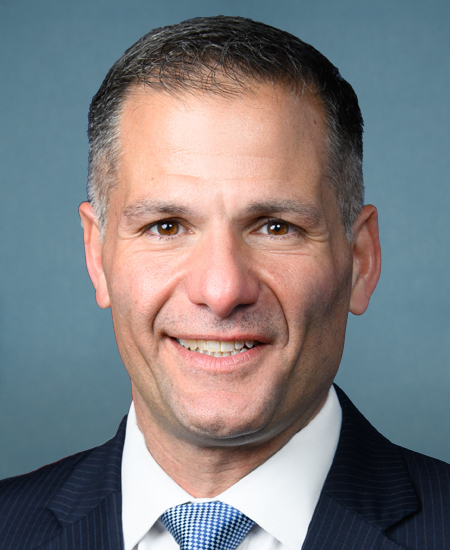
Rep. Marcus J. Molinaro
Sponsored bills
Maddy summaryThis bill directs the Secretaries of the Interior and Agriculture to identify at least 10 existing long-distance bike trails (80+ miles, natural surfaces) and 10 new development areas for such trails on federal lands within 18 months. It requires public comment on trail identification, ensures new trails don’t conflict with existing uses like hiking or wilderness designations, and mandates maps, signage, and a public report within two years. The law specifically applies to mountain biking on federal recreational lands managed by these departments. It focuses on facilitating existing and planned trails without altering current land use rules or funding new construction.
Maddy summaryThe STAR Plus Scholarship Act creates a federal program to fund scholarships for students pursuing careers in mental health and substance use disorder treatment. It requires scholarship recipients to work full-time in designated mental health professional shortage areas for one year for each year of scholarship funding received. The program authorizes $75 million annually (2025-2029) to cover tuition and educational expenses for students enrolled in approved programs at accredited institutions. This directly affects students in behavioral health fields and aims to address workforce shortages in underserved communities by linking scholarship support to service requirements.
Maddy summaryHR 9269, the IVF Access and Affordability Act, creates a non-refundable federal tax credit for individuals paying out-of-pocket costs for fertility treatments like IVF. It allows a $20,000 credit per person ($40,000 for joint filers) for "assisted reproductive technology" expenses, subject to income limits ($200,000 AGI for singles, $400,000 for joint filers). The credit cannot be claimed for expenses covered by insurance or previously deducted, and unused credit can be carried forward for up to five years. This directly affects individuals or families undergoing fertility treatments who pay costs not covered by insurance and meet income thresholds.
Maddy summaryThe PROVE IT Act of 2024 directs the U.S. Energy Secretary to study and publicly report on the greenhouse gas emissions intensity of key U.S. manufactured products (like steel, aluminum, lithium batteries, and critical minerals) compared to those produced in "covered countries" (including the EU, China, and major trading partners). It requires a transparent methodology for calculating emissions data, identifies gaps in existing data, and establishes a public online database showing U.S. emissions advantages for these products. The bill also mandates an annual report on foreign countries using forced labor or human rights abuses in the production of critical minerals or rare earths. Importantly, it clarifies the study does not create new taxes, fees, or mandatory reporting requirements.
Maddy summaryHR 8738, the Rural Health Preceptor Tax Fairness Act, provides a $1,000 annual tax credit to eligible health professionals who mentor qualified health students in rural areas. It directly affects licensed providers (including doctors, nurses, psychologists, dentists, and social workers) who supervise students in designated rural health shortage areas or covered rural regions. The credit applies when the fourth week of supervision ends during the tax year, with a maximum $1,000 limit per professional annually. Qualified students must be enrolled in health degree or licensure programs at accredited institutions. The bill aims to incentivize rural clinical training by reducing tax burdens for providers.
Maddy summaryThis bill provides $125 million annually (2025-2028) to fund state grants creating medical-legal partnerships that connect seniors to legal services through healthcare settings. It directly benefits vulnerable seniors facing legal issues affecting health, such as housing disputes or benefits access, by embedding lawyers in clinics, senior centers, or hospitals serving older patients. Key mechanisms include funding for partnerships in rural areas, federally qualified health centers, and medical-legal hotlines, with states required to report referral success rates and program effectiveness. The bill also explicitly authorizes these partnerships as part of adult protective services under existing law.
Maddy summaryThe Ensuring Excellence in Mental Health Act (HR 8543) establishes a permanent Medicaid payment system for Certified Community Behavioral Health Clinics (CCBHCs) and adds their services to Medicare coverage. It creates a new Medicaid payment system that calculates payments based on clinic costs with annual inflation adjustments, and sets Medicare reimbursement at 80% of the lesser of actual charges or determined amounts. The bill also creates a new grant program providing $552.5 million annually from 2024-2028 to support CCBHC operations, with specific certification requirements including 24/7 crisis services, sliding scale fees, and care coordination across providers. The legislation requires clinics to meet new certification standards and establishes a data collection system to track clinic performance.
Maddy summaryThis bill corrects payment calculations for Medicare Advantage (MA) plans in service areas where wage index increases exceeded 20% in prior years, addressing an underestimation in growth projections. It requires the Medicare Secretary to adjust 2025 and prior year (back to 2024) payment growth rates for affected plans to reflect actual local wage trends. The adjustment applies specifically to MA local plans in service areas with significant average wage index increases. This ensures payments better match actual cost growth in those regions, with changes implemented immediately for 2025 rates.
Maddy summaryThe Essential Caregivers Act of 2024 requires nursing homes and similar facilities to allow residents to designate essential caregivers who provide emotional support or assistance with daily activities. During emergencies when regular visitation is restricted, facilities must permit at least one essential caregiver access to residents daily and cannot deny access without following specific procedures. Facilities may deny access for a maximum of 7 days during emergencies (or 14 days with state approval), and must provide a written explanation and appeal process if access is denied. The bill establishes a 48-hour appeal process for residents and caregivers to challenge denials, with facilities required to prove violations during appeals. This law applies to Medicare skilled nursing facilities, Medicaid nursing facilities, intermediate care facilities, and certain inpatient rehabilitation facilities.