Increasing Access to Osteoporosis Testing for Medicare Beneficiaries Act of 2021 This bill specifies that certain Medicare payment rules applicable to imaging services shall apply to dual-energy x-ray absorptiometry services used in bone mass scans beginning in 2022. The Centers for Medicare & Medicaid Services must establish national minimum payment amounts for such services.
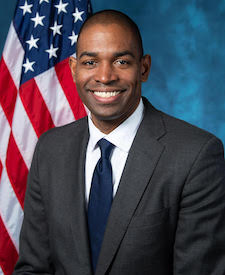
Rep. Antonio Delgado
Sponsored bills
Reporting Instances of Non-authorized Grift Act of 2021 or the RING Act of 2021 This bill requires creditors to establish a hotline for assisting consumers who are 50 years of age or older to resolve billing errors and mitigate fraud.
No Congressionally Obligated Recurring Revenue Used as Pensions To Incarcerated Officials Now Act This bill makes a Member of Congress who has been convicted of a crime related to public corruption ineligible to receive certain retirement payments between the date of sentencing and the date of final conviction. Such retirement payments are those made under the Civil Service Retirement System or the Federal Employees' Retirement System based on the individual's service as a Member. Under current law, a Member must forgo receipt of these payments only after a final conviction (i.e., after the exhaustion of all appeals under the judicial process). The bill eliminates these payments to a Member from the date of sentencing for the conviction.
Air America Act of 2021 This bill establishes the service of Air America employees as qualifying service for purposes of the Civil Service Retirement System. (Air America was a government-owned airline that provided air transport for certain covert operations in Southeast Asia, including Laos and Vietnam, between 1950 and 1976.) The bill applies to U.S. citizens who were employees of Air America or another affiliated company, as specified, between January 1, 1950 and December 31, 1976. Benefit applications must be filed within two years of the date of enactment of this bill.
Substance Use Disorder Workforce Act This bill increases the number of residency positions eligible for graduate medical education payments under Medicare for hospitals that have addiction or pain medicine programs, with an aggregate increase of 1,000 positions over a five-year period.
This resolution expresses support for the designation of National Lyme and Tick-Borne Disease and Conditions Awareness Month.
Student Agriculture Protection Act of 2021 This bill modifies the requirements for calculating taxable income to exclude from the gross income of a student agriculturist up to $5,000 of the gain from the sale or exchange of personal property (including livestock, crops, and agricultural mechanics or shop products) produced or raised by the student agriculturist. A student agriculturist is an individual who is under 22 years of age and is enrolled in (1) an FFA (Future Farmers of America) chapter or a program established by the National FFA Organization; (2) a 4H Club or other program established by 4H; or (3) a student agriculture program that is under the direction or guidance of an agricultural educator, advisor, or club leader.
Energy Resource Governance Initiative Act of 2021 This bill establishes the Energy Resource Governance Initiative within the Department of State to promote responsible and sustainable mining practices through international collaboration. The initiative must seek to foster integrated and resilient supply chains, responsible critical mineral sourcing, and mineral-sector good governance. It must also seek to minimize potential adverse impacts of increasing renewable energy demand on mineral-rich countries.
Ghost Army Congressional Gold Medal Act This bill directs the Speaker of the House of Representatives and the President pro tempore of the Senate to award a Congressional Gold Medal to the 23rd Headquarters Special Troops and the 3133d Signal Service Company, known as the Ghost Army , collectively, in recognition of its service during World War II.
Rural STEM Education Research Act This bill specifies federal scientific research and development efforts towards STEM (science, technology, engineering, and mathematics, including computer science) workforce development and rural STEM education. (Sec. 3) The bill amends the objectives of the Manufacturing Extension Partnership program to include the provision to secondary schools of information about the job skills needed in manufacturing companies, and the promotion and expansion of certification systems offered through local high schools. The activities of a manufacturing extension center are expanded to include local high schools in the facilitation of collaborations and partnerships between manufacturing companies and schools to help those entities better understand the specific needs of manufacturers and to help manufacturers better understand the skill sets that students learn in school programs. The National Institute of Standards and Technology (NIST) must award prizes to stimulate research and development of creative technologies in order to deploy affordable and reliable broadband connectivity to underserved rural communities. NIST may award not more than a total of $5 million in prizes. (Sec. 4) The Office of Science and Technology Policy must establish a broadband research and development working group to address national research challenges and opportunities for improving broadband access and adoption across the United States. (Sec. 5) The National Science Foundation (NSF) shall enter into an agreement with the National Academy of Sciences under which the National Academy of Sciences agrees to evaluate aspects of STEM education and workforce development in rural areas. (Sec. 6) The Government Accountability Office shall conduct a study on the engagement of rural populations in federal STEM programs. (Sec. 7) Experimental Program to Stimulate Competitive Research (EPSCoR) programs shall consider modifications to award structures to increase the capacity of rural communities to provide quality STEM education and STEM workforce development programming to students and teachers. (Sec. 8) The NSF must award grants to institutions of higher education or nonprofit organizations for (1) research and development to advance innovative approaches to support and sustain high-quality STEM teaching in rural schools, (2) research and development of programming to identify the barriers rural students face in accessing high-quality STEM education, (3) development of innovative solutions to improve the participation and advancement of rural students in grades Pre-K through 12 in STEM studies, and (4) research on online STEM education courses for rural communities. The NSF may establish a pilot program of regional cohorts in rural areas to provide peer support, mentoring, and hands-on research experiences for rural STEM educators of students in grades Pre-K through 12 in order to build an ecosystem of cooperation among educators, researchers, academia, and local industry.