

Maddy summaryHR 3112, the Better CARE for Animals Act of 2025, strengthens enforcement of the federal Animal Welfare Act by requiring dealers and exhibitors to hold valid licenses for animal sales or transport (Section 4). It expands enforcement authority by allowing the Attorney General to sue violators for up to $10,000 per day, seize animals, and seek injunctions (Section 20), while clarifying that courts can address violations of related rules and regulations. The bill directly affects animal dealers, exhibitors, the USDA, and the Department of Justice, creating clearer pathways for holding violators accountable. Key provisions include updating definitions, broadening inspection powers to cover all regulations, and directing penalty funds toward temporary animal care costs during legal proceedings.
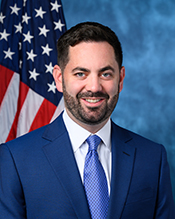
Rep. Michael Lawler
Sponsored bills
Maddy summaryThis bill amends a provision of the 2023 federal law governing SNAP (Supplemental Nutrition Assistance Program) to ensure victims of EBT skimming receive full replacement of stolen benefits. It requires that replaced benefits equal the exact amount stolen from a household, directly affecting SNAP recipients who have been victims of benefit theft. The key change replaces the previous wording to specify the replacement amount must match the stolen value, removing ambiguity. This policy change ensures affected households receive the full benefit amount they lost due to criminal activity, without requiring them to prove additional hardship.
Maddy summaryThis bill prohibits U.S. federal executive agencies from renewing or entering contracts for specific consumer products containing PFOS or PFOA (types of harmful PFAS chemicals) after its effective date. Covered items include nonstick cookware, cooking utensils, and furniture/carpet treated with stain-resistant coatings. Agencies must prioritize purchasing PFAS-free alternatives when available and practical for these items. The law applies to all contracts entered into six months after enactment.
Maddy summaryThis bill designates the U.S. Postal Service facility at 216 Cumberland Street in Rochester, New York, as the "Minister Franklin Florence Memorial Post Office." It updates all official references in federal laws, maps, regulations, and documents to reflect this new name. The bill does not create new policies, funding, or services - it solely changes the facility's official designation for commemorative purposes. It directly affects how the location is identified in government records but has no broader policy impact.
Maddy summaryThis bill designates the POW/MIA Memorial and Museum under construction in Jacksonville, Florida, as the official "National POW/MIA Memorial and Museum." It requires the museum to submit a detailed report to Congress within 90 days, including a five-year budget, organizational structure, bylaws, and accreditation details. The designation may be withdrawn if the museum is not operational within five years of the bill's enactment or if the required report is late. The museum honors prisoners of war and those missing in action since World War II through educational exhibits and reflective spaces for the public.
Canadian Snowbird Act This bill authorizes the Department of Homeland Security to admit into the United States qualifying Canadian citizens as long-term nonimmigrant visitors. A qualifying Canadian citizen is an individual who (1) is at least 50 years old, (2) maintains a Canadian residence, (3) owns a U.S. residence or has rented a U.S. accommodation for the duration of the individual's stay, (4) is not inadmissible or deportable, (5) will not engage in employment or labor for hire in the United States other than for a non-U.S.-based person or entity by whom the Canadian citizen was employed in Canada or for whom the Canadian citizen performed services in Canada, and (6) will not seek certain forms of assistance or benefits. A qualified individual may be admitted for up to 240 days during any single 365-day period. The spouse of such an individual may be admitted under the same terms, except that the spouse is not required to separately satisfy the requirement for owning or renting a residence in the United States. An individual admitted into the United States under this bill shall have nonresident alien tax status.
Maddy summaryHR 3078 requires the U.S. Department of Energy to develop new technologies that detect fentanyl vapor or particles. The bill mandates coordination between the Energy Secretary, Attorney General, Homeland Security Secretary, and Postmaster General to test these technologies. Specifically, the program focuses on rapid screening for fentanyl in mail, prisons, U.S. borders, and other related settings. This creates a new federal research initiative with defined use cases for fentanyl detection technology.
Maddy summaryThis bill requires the Consumer Product Safety Commission (CPSC) to adopt specific existing safety standards for lithium-ion batteries used in e-bikes, scooters, and other personal micromobility devices within 180 days of enactment. It mandates that these standards apply only to consumer products as defined by federal law, directly affecting manufacturers of such devices. The bill also establishes a process for the CPSC to review future revisions to these voluntary standards and requires a report to Congress within five years detailing battery-related fire or explosion incidents involving these products. The law aims to standardize safety requirements without creating new rules, relying instead on established industry guidelines.
Maddy summaryThis bill requires most private health insurance plans to cover diagnostic and supplemental breast exams with no out-of-pocket costs (like deductibles or copays) for enrolled patients. It specifically covers exams used to evaluate abnormalities found in screenings (diagnostic) or for high-risk screening without abnormalities (supplemental), based on medical guidelines. Plans can still require prior authorization for these exams, and state laws offering stronger protections remain in effect. The rule takes effect for plan years starting January 1, 2026.
Maddy summaryHR 3043 prohibits U.S. federal funding for biomedical research involving vertebrate animals conducted in or by entities located in China (including Hong Kong), Iran, North Korea, or Russia. It directly affects research institutions receiving grants or contracts from the Department of Health and Human Services (HHS) that would conduct such animal testing in those four countries. The bill bans HHS from directly conducting this research or funding it through grants, contracts, or other federal support. It also requires HHS to submit detailed reports to Congress within 60 days when adding new countries to the restricted list, as determined with input from State and Defense departments. This is a funding restriction, not a ban on all international research.