

Maddy summaryThis bill requires private firearm transfers between individuals to go through a licensed dealer who must conduct a background check. It applies to most private sales but includes exceptions for transfers between family members (like parents and children), law enforcement, emergencies preventing harm, and temporary loans at shooting ranges or for hunting. Dealers must provide background check notices in both English and Spanish. The law aims to prevent prohibited individuals from obtaining firearms through private transactions while maintaining existing state authority on firearm laws.
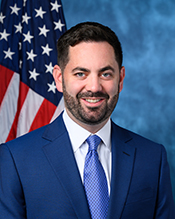
Rep. Michael Lawler
Sponsored bills
Maddy summaryHR 3867, the Bankruptcy Administration Improvement Act of 2025, increases compensation for chapter 7 bankruptcy trustees from $60 to $120 per case, directly affecting these trustees who administer consumer bankruptcy cases. The bill adjusts fee distributions to fund this increase, ensuring the bankruptcy system remains self-supporting without taxpayer costs. It also extends terms for certain bankruptcy judge positions from 5 to 10 years to address caseload demands. The bill does not change filing fees or alter courts' authority to waive fees for indigent filers.
Maddy summaryHR 3892, the Flow Act, clarifies that replacing privately-owned lead service lines connected to public water systems does not count as "private business use" under federal tax law. This change directly affects public water systems and issuers of tax-exempt bonds by allowing them to use bond proceeds for lead pipe replacement without disqualifying the bonds from tax-exempt status. The bill specifies that funds used to replace lead service lines to comply with federal lead regulations (as defined in the Safe Drinking Water Act) qualify for this tax treatment. The provision applies to bonds issued after December 31, 2025, facilitating future financing for lead pipe removal projects.
Maddy summaryThe Runaway and Homeless Youth and Trafficking Prevention Act of 2025 amends federal law to provide funding for programs serving runaway, homeless, and at-risk youth, primarily aged 15-22 with some services extending to youth up to age 26. It establishes basic center grants for temporary shelter (up to 30 days) and transitional living programs that provide housing, counseling, and services tailored to youth's age, gender, and developmental needs. The bill requires programs to collect data on vulnerable populations including LGBTQ youth, youth of color, and those in the child welfare system, and mandates trauma-informed services for youth victims of trafficking. It authorizes $200 million annually for these programs, with specific funding allocations to support prevention services, street outreach, and coordination with education and child welfare systems.
Maddy summaryHR 3876, the LIHEAP Staffing Support Act, amends the Low-Income Home Energy Assistance Act to establish staffing requirements for the program. It requires the Secretary to employ at least 20 full-time staff dedicated to administering LIHEAP, limits contractors to no more than 40% of these staff, and mandates increasing staffing to at least 30 during declared emergencies (as defined under existing law). These provisions directly affect the administrative capacity of the LIHEAP program, which provides energy assistance to low-income households. The bill focuses on ensuring consistent staffing levels to support program delivery, with specific rules for emergency periods lasting up to 180 days.
Maddy summaryThis bill requires all new Amtrak trains (purchased after enactment) to install baby changing tables in at least one restroom per train car, including in ADA-compliant restrooms. It mandates clear signage identifying these tables and defines a baby changing table as an elevated structure supporting children up to 30 pounds. The law directly affects parents traveling with infants on Amtrak, making diaper changes more accessible during train journeys. The requirement applies only to Amtrak-owned trains acquired after the bill becomes law.
Maddy summaryHRES 481 is a symbolic resolution condemning recent antisemitic attacks in the U.S., specifically referencing the June 1, 2025, Boulder, Colorado, assault on a Jewish community gathering and other incidents like the May 2025 Washington, D.C., embassy shooting. It formally recognizes a pattern of violence targeting Jewish individuals and institutions, including attacks during religious events. The resolution calls on law enforcement to thoroughly investigate and prosecute such incidents and urges elected officials to publicly oppose antisemitism and politically motivated violence. As a non-binding resolution, it does not create new laws or allocate funding but serves to affirm congressional stance against antisemitism.
Maddy summaryHR 3843, the Baseload Reliability Protection Act, prohibits the retirement or fuel-source conversion of certain large, reliable power plants (over 25 megawatts, not relying on intermittent renewables like solar/wind without storage) in areas designated as high or elevated risk for electricity shortages. It directly affects power plant operators in these high-risk regions, requiring them to maintain existing facilities unless they qualify for an exemption. Exemptions can be granted if operators demonstrate financial hardship, safety risks, or prove they’ll replace the plant with a comparable reliable unit, with potential federal grants or loans from the Department of Energy to cover operational costs. The bill explicitly blocks consideration of greenhouse gas emissions in exemption decisions and mandates standardized risk assessment criteria for identifying high-risk areas.
Maddy summaryThis bill requires drug labels to clearly state if a medication contains major food allergens (like peanuts, dairy, or shellfish) or gluten from grains (such as wheat, barley, or rye). It applies to human drugs sold in the U.S. and mandates manufacturers to identify these specific ingredients on labels. The requirement takes effect within two years of the bill's passage, giving companies time to update packaging. This directly affects drug manufacturers and helps people with allergies make safer choices by providing clear ingredient information.
Maddy summaryThe VET PFAS Act (HR 3639) provides VA health care coverage for veterans and their family members exposed to PFAS chemicals at military bases, without requiring proof linking illness to exposure. Veterans who served at contaminated bases and family members who resided there (or were in utero while the veteran lived there) can now receive treatment for specific conditions like testicular cancer, kidney cancer, thyroid disease, and pregnancy-related hypertension. The law creates a presumption that these conditions are service-connected, streamlining access to VA benefits. Annual reports will track program usage, including the number of veterans and families receiving care and the conditions treated.