

Maddy summaryHRES 520 is a House resolution honoring former First Lady Barbara Pierce Bush on the occasion of her 100th birthday, recognizing her life, achievements, and public service. It specifically highlights her advocacy for literacy - including establishing the Barbara Bush Foundation for Family Literacy and supporting the National Literacy Act - and her roles as Second Lady and First Lady during her husband George H.W. Bush's presidency. This commemorative resolution does not create new laws or policies; it serves only to formally acknowledge her legacy. The resolution was introduced by House members on June 17, 2025.
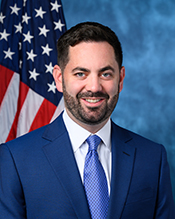
Rep. Michael Lawler
Sponsored bills
Maddy summaryGio’s Law (HR 4019) creates a federal grant program to help state and local law enforcement agencies purchase epinephrine auto-injectors and other emergency epinephrine products, and to train officers on recognizing symptoms of severe allergic reactions (anaphylaxis) and correctly administering the medication. The bill requires the Attorney General to develop standardized training within 180 days of enactment and mandates that states certify officers are protected from civil liability when using epinephrine in good faith. It authorizes $25 million annually for fiscal years 2026-2030 to fund these grants and training. Additionally, the law requires an annual report tracking how often law enforcement officers administer epinephrine during emergencies.
Maddy summaryHR 3753, the Expanding Access for Online Veteran Students Act, would increase housing stipends for veterans using the Post-9/11 GI Bill to take fully online courses. Currently, veterans enrolled solely in distance learning programs receive only 50% of the standard housing allowance; this bill removes that restriction, providing full housing stipends for online students attending more than half-time. The change applies to all veterans pursuing online degrees under the Post-9/11 GI Bill, ensuring they receive the same housing support as on-campus students. The policy takes effect for terms beginning August 1, 2025.
Maddy summaryThe Streamline Emergency Care Act provides federal grants to nonprofit health care providers operating emergency departments (EDs) to improve their efficiency and patient care. Grants of up to $500,000 per recipient can fund hiring staff, modernizing facilities (like renovating spaces or buying equipment), or training existing staff to improve patient flow through the ED. The program, funded at $20 million annually from 2026 to 2030, directly affects hospitals that already run EDs and are nonprofit. It aims to reduce wait times and enhance care capacity by supporting practical operational upgrades.
Maddy summaryThe RISE Act (HR 3939) streamlines documentation for college students with disabilities by requiring institutions to accept multiple forms of proof, including past Individualized Education Programs (IEPs), Section 504 plans, or licensed professional evaluations, instead of demanding current documentation. It mandates that colleges establish transparent, accessible processes for determining accommodation eligibility and share these policies with students, parents, and faculty. The bill also requires institutions to report specific data on students with disabilities (like enrollment numbers and accommodations used) to federal databases, while authorizing $10 million for a national support center. These changes directly affect colleges receiving federal aid and students seeking disability accommodations in higher education.
Maddy summaryThe LEAPS Act requires the U.S. Department of Agriculture (USDA) to create and share practical resources to help farmers and ranchers improve energy efficiency in their irrigation and livestock watering systems. Specifically, it mandates USDA to develop publicly available educational materials about cost and energy savings from efficient pumps, pipes, and controls, plus a user-friendly online tool for farmers to assess their current systems and estimate potential savings. The bill also directs USDA to train energy auditors on pumping system efficiency to strengthen existing conservation programs like the Environmental Quality Incentives Program. These provisions directly affect agricultural operations using pumping systems, aiming to reduce energy use, water waste, and emissions through voluntary upgrades.
Maddy summaryHR 3977, the Campus Housing Affordability for Foster Youth Act, removes a ban preventing foster youth in college from receiving housing assistance. It allows the Secretary to waive income requirements for students who are in foster care (or were formerly in foster care), or are court-emancipated minors, while living in on-campus housing at eligible colleges. The bill ensures that housing assistance provided through this waiver does not count as income when determining eligibility for federal student aid, work-study programs, or other support like living allowances or child support calculations. This directly affects foster youth in higher education who face housing barriers, making campus housing more accessible without jeopardizing their other financial aid.
Maddy summaryHR 3643, the VA Data Transparency and Trust Act, requires the Veterans Health Administration (VHA) and Veterans Benefits Administration (VBA) to submit detailed annual reports on healthcare services and benefits provided to veterans. The VHA report must include data on veterans receiving care, their health conditions (such as traumatic brain injury and diabetes), demographics, and facility management. The VBA report must detail benefit recipients, service-connected disability ratings, compensation amounts, and claims processing times. The bill also establishes a data sharing system allowing researchers to access anonymized, aggregated veteran healthcare and benefits data for research purposes. These requirements will run for five years from the act's enactment date.
Maddy summaryThis resolution (HRES 501) amends House rules to allow two members - one from the majority party and one from the minority party - to jointly sponsor public bills or resolutions. It directly affects House members by changing the sponsorship process for legislative proposals. The key provision adds a new paragraph to Rule XII, permitting this cross-party sponsorship structure while updating related procedures for naming cosponsors and submitting constitutional statements. The change aims to facilitate bipartisan collaboration on legislative proposals within the House rules framework.
Maddy summaryHR 3862, the Clean Water SRF Parity Act of 2025, expands eligibility for Clean Water State Revolving Fund (SRF) assistance to include qualified nonprofit entities and privately owned treatment works operators. The bill adds provisions allowing nonprofits to receive SRF funds for constructing, acquiring, or improving treatment works, and creates a new section (l) for privately owned treatment works to access funds for upgrades, water conservation, energy efficiency, security measures, and other specified activities. Crucially, it requires that financial assistance for private operators must primarily benefit the end-users served by the treatment works, not the shareholders or owners. This directly affects nonprofits managing water infrastructure and private utility companies operating treatment facilities, ensuring SRF funds support community water needs under defined conditions.