

Maddy summaryHR 4199, the Modernize the Au Pair Program Act of 2025, updates federal regulations for the au pair program to improve affordability and flexibility for host families. The bill requires the Department of State to propose new rules within 90 days, including a revised stipend formula reflecting room, board, and childcare costs without making the program prohibitively expensive. It also mandates greater program flexibility to accommodate military families, first responders, single parents, and shift workers with non-traditional schedules. The bill explicitly prohibits states from regulating the program, ensuring all rules remain uniform under federal law as intended by Congress. This directly affects American host families seeking affordable childcare and au pairs participating in the cultural exchange program.
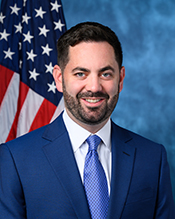
Rep. Michael Lawler
Sponsored bills
Maddy summaryHR 4167, the Expanding Access to Lending Options Act, amends the Federal Credit Union Act to extend the maximum time federally chartered credit unions can hold mortgage loans from 15 years to 20 years (or longer by NCUA regulation). This change directly affects federally chartered credit unions by allowing them to offer longer-term mortgage products to members. The key provision modifies Section 107(5) of the Federal Credit Union Act, specifically updating the time limit for mortgage loans held by credit unions. The bill also includes a non-binding sense of Congress statement emphasizing safety and soundness in NCUA oversight, but the core policy change is the extended mortgage holding period.
Maddy summaryThis bill creates a new designation for foreign countries that unlawfully detain U.S. citizens, allowing the State Department to label such nations as "State Sponsors of Unlawful or Wrongful Detention" based on specific criteria like failing to release detained Americans within 30 days or showing complicity. Designations require congressional approval within six months or expire automatically, and the State Department must submit detailed reports to Congress about the rationale, actions taken to prevent detentions, and potential sanctions. The law mandates annual briefings to Congress on targeted countries (including Iran, Russia, and Venezuela) and requires the department to review existing tools like visa restrictions, aid cuts, and sanctions to deter future detentions. It does not alter how detentions are legally determined but establishes a formal process to address them diplomatically.
Maddy summaryHR 4186, the Connecting Students with Mental Health Services Act, creates a federal grant program to expand mental health services for K-12 students in underserved areas. It authorizes $5 million annually (2026-2029) for grants to school districts partnering with community health providers to establish telehealth programs, focusing on rural, high-poverty, or health-professional-shortage-area schools. Funds can cover telehealth equipment, staffing, and facilities to deliver remote mental health care. The program requires grantees to comply with privacy laws and report on student access to services by 2027. This directly affects students lacking local mental health resources through concrete funding for telehealth infrastructure.
Maddy summaryThis bill makes the Environmental Protection Agency's existing April 2024 rule on PFAS limits in drinking water legally binding. It codifies the EPA's "PFAS National Primary Drinking Water Regulation" (89 Fed. Reg. 32532), which sets enforceable limits for specific PFAS chemicals in public water systems. The rule directly affects municipal water providers and communities relying on public water sources by requiring them to meet these new contaminant standards. The bill does not create new standards but formally adopts the EPA's previously issued rule into law.
Maddy summaryThis bill makes technical corrections to the Camp Lejeune Justice Act of 2022 to streamline claims for individuals harmed by water contamination at Camp Lejeune. It clarifies the evidence required (30+ days at the base plus a link between contaminants and health harm), specifies that cases must be handled in North Carolina courts (with limited transfer options), and sets attorney fee caps (20% before suit, 25% after). These changes directly affect veterans and civilians who lived at Camp Lejeune and filed claims under the 2022 law. The bill does not create new eligibility but aims to improve the legal process for existing cases.
Maddy summaryHR 4129, the "Tailoring for Main Street’s Investors Act," exempts small investment advisers from federal registration requirements if they manage under $5 billion in U.S. assets and serve only specific investors: qualified purchasers, accredited investors (meeting federal income/wealth standards), or certain licensed professionals. It also prohibits these funds from offering routine redemption options to investors, except in emergencies. Additionally, the bill reduces reporting burdens for smaller advisers by requiring biennial filings instead of annual ones for firms with under $1 billion in assets, and mandates a simplified Form ADV for these entities. The changes directly affect small investment advisers and their clients, aiming to reduce regulatory complexity for Main Street-focused firms.
Maddy summaryThis bill modifies U.S. tax law to exclude certain debt forgiveness from taxable income for commercial and retail businesses. Specifically, it allows businesses to avoid paying taxes on debt discharged between December 31, 2023, and January 1, 2028, if the debt was secured by property used in their trade or business (like a storefront) and met specific timing requirements. The exclusion applies only to qualified commercial or retail indebtedness incurred before March 1, 2023, and discharged during the covered period. This directly benefits affected businesses by preserving tax credits and deductions they would otherwise lose when debt is forgiven. The policy change takes effect for debt discharges occurring on or after December 31, 2023.
Maddy summaryHR 4095, the Railroad Yardmaster Protection Act of 2025, extends existing duty hour limits for train employees to specifically include yardmasters. The bill amends federal law to define "yardmaster employee" as someone who supervises and coordinates train movements within rail yards, and adds this role to the rules limiting consecutive work hours. It directly affects rail yard supervisors by requiring the same duty hour restrictions that currently apply to train operators. The key change is formally incorporating yardmasters into the existing regulatory framework without altering the specific hour limits.
Maddy summaryThe Veterans Appeals Efficiency Act of 2025 requires the Department of Veterans Affairs to track and report on key aspects of the appeals process, including average claim processing times after remand and reasons for case dismissals. It mandates the creation of guidelines for advancing cases on the Board's docket and authorizes the Board to aggregate appeals with common legal or factual issues to improve efficiency. The bill also expands the Court of Appeals' jurisdiction to handle class action claims and requires a study on common legal questions to help the Board make more consistent decisions. These changes aim to reduce delays and improve the accuracy of benefits decisions for veterans seeking appeals.