

Maddy summaryHR 4268, the "Remembering Our Local Heroes Act," creates a federal grant program to fund memorials honoring veterans, fallen service members, law enforcement officers, and firefighters. The program, authorized for $2 million annually (2026-2030), provides grants up to $100,000 per project to local governments or nonprofits for constructing, restoring, or maintaining eligible memorials - such as statues, plaques, or gardens - commemorating individuals who served since 1917 or performed acts of bravery. Applicants must provide at least 50% local matching funds (including in-kind support), and grants prioritize community-supported projects honoring those with exemplary public service or bravery. The bill directly affects local communities seeking to preserve memorials for specific service groups, with no funding for interior displays or non-commemorative structures.
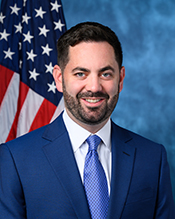
Rep. Michael Lawler
Sponsored bills
Maddy summaryThe Expanding Access to Mental Health Services in Schools Act of 2025 creates a federal grant program to help high-need schools hire and retain mental health professionals like counselors, psychologists, and social workers. It targets schools in the top 15% of need (based on student poverty or counts) that lack required staff ratios, such as one counselor per 250 students. Grants fund recruitment incentives (e.g., student loan repayment), retention programs, and evidence-based mental health services, with recipients required to contribute 25% of costs from non-federal funds. Schools must report annually on staff numbers, student-to-staff ratios, and retention rates to track progress toward improved mental health access.
Maddy summaryHR 4254 establishes the "Iranian Campaign Medal" to recognize military personnel who served during specific operations in the Iran-Israel War, including "Operation Midnight Hammer" on June 22, 2025. It authorizes the Secretary of Defense to award the medal to active-duty service members deployed in designated areas of operation or performing prescribed service related to the conflict. The medal may also be issued to the next-of-kin of deceased eligible service members. The bill specifies the medal’s design, limits awards to one per person, and requires uniform regulations for issuance.
Maddy summaryHRES 554 is a non-binding resolution expressing the House of Representatives' support for President Trump's June 2025 airstrike on Iranian nuclear facilities and affirming unwavering backing for Israel's right to self-defense. It describes the strike as a "proportionate and lawful act of national defense" that disrupted Iran's nuclear infrastructure and calls for continued U.S. efforts to prevent Iran from obtaining nuclear weapons. The resolution reaffirms support for Israel's missile defense systems (like Iron Dome), urges European allies to pressure Iran toward negotiations, and states the U.S. seeks to end Iran's nuclear pursuit without targeting the Iranian people. As a symbolic resolution, it has no legal effect but formally endorses the described military action and policy stance.
Treat and Reduce Obesity Act of 2025 This bill expands Medicare coverage of intensive behavioral therapy for obesity. Specifically, the bill allows coverage for therapy that is provided by (1) a physician who is not a primary care physician; or (2) other health care providers (e.g., physician assistants and nurse practitioners) and approved counseling programs, if provided upon a referral from, and in coordination with, a physician or primary care practitioner. Currently, such therapy is covered only if provided by a primary care practitioner. The bill also allows coverage under Medicare's prescription drug benefit of drugs used for the treatment of obesity or for weight loss management for individuals who are overweight.
Maddy summaryThis bill clarifies the Holocaust Expropriated Art Recovery Act of 2016 by preventing courts from dismissing claims based on time-related defenses (like laches or adverse possession) or other non-merits arguments (such as the act of state doctrine or forum non-conveniens). It specifically bars these defenses for claims seeking recovery of art looted by Nazis during World War II, ensuring cases are resolved on their merits. The bill applies to all pending cases and new claims filed after enactment, regardless of the victim's nationality. It strengthens the original law's purpose of enabling victims' heirs to pursue rightful recovery without procedural barriers.
Maddy summaryThe CONNECT for Health Act of 2025 expands Medicare telehealth coverage by removing geographic restrictions that limited where patients could receive care, expanding the types of health care providers who can offer telehealth services, and eliminating the requirement for an in-person visit before receiving telemental health services. The bill includes specific provisions to support telehealth use for Native American health facilities, rural health clinics, and Federally Qualified Health Centers. It requires the Centers for Medicare & Medicaid Services to collect and publish data on telehealth usage and impacts, and to develop resources to improve accessibility for people with disabilities and limited English proficiency. Program integrity measures are added to monitor telehealth billing practices and prevent fraud while maintaining coverage for telehealth services during public health emergencies.
Maddy summaryHR 4192, the Military PFAS Transparency Act of 2025, requires the Department of Defense to publicly report on its cleanup efforts for PFAS (toxic chemicals used in firefighting foam) at military installations. It mandates annual reports to Congress detailing site-specific funding, progress, and delays in PFAS remediation, plus a public online dashboard showing site-by-site spending, timelines, and community contact points. The bill also requires a remediation acceleration strategy prioritizing sites based on health risks and environmental impact. This directly affects military installations with PFAS contamination and the surrounding communities relying on affected water sources. The law focuses solely on increasing transparency and accountability in existing cleanup efforts, not on new funding or policy changes.
Maddy summaryHR 4202, the Protect Honduran Democracy Act, authorizes U.S. support for free and fair elections in Honduras scheduled for November 30, 2025. The bill requires the Secretary of State to create a strategy including funding for independent election monitoring by groups like the OAS and UN, and prohibits misuse of state resources to influence voters. It also authorizes sanctions - such as visa denials - against Honduran officials or others who prevent candidates from running, harass election participants, or misuse legal processes to undermine the election. The legislation allocates $1 million for each of fiscal years 2026 and 2027 to support these efforts, directly affecting Honduran election officials, candidates, and U.S. agencies implementing the strategy.
Maddy summaryHR 4169, the Preventing Crimes Against Veterans Act of 2025, creates a new federal crime for schemes to defraud veterans of their benefits. It adds Section 1352 to Title 18, making it illegal to knowingly execute or attempt to execute a scheme to defraud an individual of veterans' benefits or to obtain such benefits fraudulently for them. The law specifically defines "veterans' benefits" as any federal benefit for veterans, dependents, or survivors, and sets penalties of fines, up to 5 years in prison, or both. This directly affects veterans and their families by strengthening legal tools to prosecute fraudsters targeting their benefits.