

Maddy summaryHR 5250, the Flooding Prevention, Assessment, and Restoration Act of 2023, requires the U.S. Department of Agriculture to conduct a national study on flood risks to agricultural lands within two years, analyzing economic losses, downstream effects, and existing flood data. It amends the Emergency Watershed Program to allow federal restoration projects that exceed immediate needs for long-term watershed health and adjusts funding for watershed rehabilitation projects, providing up to 65% federal cost coverage (up to 90% for "limited resource areas") for structural repairs near or past their lifespan. The bill directly affects farmers, agricultural producers, and local watershed management groups by mandating a comprehensive flood risk assessment and modifying federal support for flood prevention infrastructure. Key provisions include requiring detailed reports on flood impacts to crops/livestock and establishing new funding tiers for rehabilitation projects.
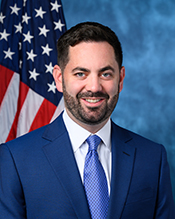
Rep. Michael Lawler
Sponsored bills
Maddy summaryThe Voluntary Public Access Improvement Act of 2023 increases annual funding for the Voluntary Public Access and Habitat Incentive Program to $150 million per year from fiscal years 2024 through 2028. This program provides financial incentives to private landowners who allow public access to their land for recreational activities like hunting and fishing, while also supporting habitat conservation efforts. The bill amends the Food Security Act of 1985 to establish this new funding level, replacing previous annual amounts. It directly affects participating landowners who enroll in the program and the public seeking expanded recreational access to private lands. The change is a specific funding adjustment without altering the program's existing structure or eligibility rules.
Maddy summaryThis bill establishes special pay rates for wildland firefighters employed by the Forest Service or Department of the Interior. It creates a percentage increase over standard General Schedule base rates (ranging from 1.5% for GS-15 to 42% for GS-1), provides 450% premium pay for days deployed to qualifying wildfire incidents, and requires rest and recuperation leave following incident deployment. These changes apply specifically to firefighters whose duties primarily relate to wildland fires, not structural fires. The bill takes effect on October 1, 2023, and replaces standard pay rates for affected firefighters. Premium pay is not considered part of basic pay for various compensation calculations.
Maddy summaryThis bill establishes a standardized methodology for measuring soil carbon in agricultural settings, to be developed within 270 days of enactment. It creates a program for the Department of Agriculture to inventory and analyze soil carbon changes across U.S. agricultural lands every five years, with a focus on monitoring the impacts of land management practices. The legislation requires the development of user-friendly predictive models that help farmers estimate how different conservation activities affect soil carbon sequestration and greenhouse gas emissions. It includes provisions for voluntary reporting by agricultural producers, technical assistance for socially disadvantaged farmers, and strict data privacy protections. The bill authorizes $2 million annually for the measurement methodology and $17.5 million for the soil carbon inventory program.
Maddy summaryHR 4943, the Enabling Farmers to Benefit from Processing Nutrition Programs Act of 2023, simplifies how farmers and ranchers can join federal nutrition programs like SNAP, senior farmers' market programs, and WIC farmers' market initiatives. It requires the USDA to create either a single application for all programs or a system that automatically shares approved vendor information across programs, eliminating duplicate paperwork for farmers. The bill also mandates the use of standardized mobile technology, such as mobile apps or single-point equipment, to process benefits at farmers markets and direct-to-consumer sales. This directly benefits direct marketing farmers and ranchers by reducing administrative barriers to participating in these nutrition assistance programs.
Maddy summaryHRES 719 is a symbolic resolution designating the week beginning September 24, 2023, as "National Source Water Protection Week." It does not create new laws or directly affect individuals or entities, but expresses congressional support for raising public awareness about protecting drinking water sources. The resolution highlights the importance of safeguarding water quality and quantity for public health, the environment, and community resilience. It encourages collaboration among local, state, and federal entities to promote water conservation and protection efforts.
Maddy summaryHR 5686 authorizes $30 million in U.S. humanitarian aid for Armenians in Armenia and Nagorno-Karabakh affected by recent conflicts and blockades, and $12 million in foreign military financing to support Armenia's sovereignty and security cooperation. The bill requires the State Department to develop a strategy protecting Nagorno-Karabakh residents' rights, including cultural heritage and security, and mandates a 90-day report on Azerbaijani military actions during 2022-2023 attacks. It also directs the U.S. to push for International Criminal Court investigations into alleged atrocities and imposes sanctions on Azerbaijani officials involved in blockades or attacks. The legislation focuses on concrete U.S. policy actions - aid, accountability measures, and diplomatic efforts - without prescribing specific outcomes.
Maddy summaryThe FACTS Act (HR 5625) creates a pilot program to fund partnerships between schools and public health agencies to prevent synthetic opioid misuse among students. It authorizes $50 million annually to support evidence-based prevention programs, including professional development for school staff, student workshops, and community outreach. The bill requires schools to collect data on synthetic opioid prevalence and mandates that school health centers stock naloxone. It also amends national surveys to track youth opioid use patterns and establishes an interagency task force to coordinate prevention efforts. These provisions aim to address the growing crisis of synthetic opioid misuse among young people through education, data collection, and prevention programs.
Maddy summaryHRES 720 designates the week of September 24-30, 2023 (and annually thereafter) as "Gold Star Families Remembrance Week" to honor families who have lost loved ones in military service. It specifically recognizes the sacrifices of families of fallen service members and veterans, and encourages Americans to observe the week through community service and celebrating the lives of those who died protecting the nation. This resolution is procedural and symbolic, with no new funding, regulations, or policy changes - only a formal designation to honor these families. It directly affects Gold Star families (those with members who died in military service) and the broader public through its call for observance.
Venezuelans Overcoming Interference and Corruption in Elections Act or the VOICE Act This bill requires the President to impose sanctions on any foreign persons who prevent opposition candidates from participating in the 2024 Venezuelan presidential election. Specifically, the President must impose sanctions on any foreign persons (including Venezuelan officials) who prevent opposition candidates from participating in, or who materially assist in preventing opposition candidates from participating in, the 2024 Venezuelan presidential elections. Sanctions include asset blocking, inadmissibility into the United States, and visa revocation. The President may waive sanctions based on a determination that such a waiver is in the national interest of the United States.