

Maddy summaryHR 5820, the Technology for Energy Security Act, extends a federal tax credit for businesses installing qualified fuel cell technology. It amends the tax code to change the expiration date for this credit from January 1, 2025, to January 1, 2033. This extension provides businesses with a longer timeframe to claim the credit for eligible fuel cell property investments. The bill directly affects companies deploying fuel cell energy systems by making the tax incentive available for an additional decade.
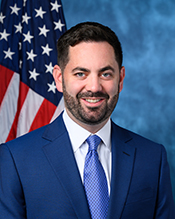
Rep. Michael Lawler
Sponsored bills
Maddy summaryHR 5808, the Preventing Deep Fake Scams Act, establishes a federal Task Force to address AI-driven financial fraud risks. The Task Force, composed of key financial regulators (Treasury, Federal Reserve, CFPB, FDIC, and others), must issue a report within one year detailing current protections, standard AI definitions, deep fake risks, best practices for institutions, and regulatory recommendations. This bill directly affects banks, credit unions, and financial service providers by requiring them to report on AI security measures and collaborate with the Task Force. The report aims to help financial institutions protect consumers from identity theft and fraud using deep fake technology, without creating new regulations itself.
Maddy summaryHR 5641, the Pay Our Troops Act, ensures military personnel and their support staff continue receiving pay during fiscal year 2024 if Congress fails to pass regular budget appropriations. It appropriates existing Treasury funds to cover pay and allowances for active-duty troops, reserve components, and civilian employees or contractors supporting military operations. The bill automatically terminates on January 1, 2025, or earlier if Congress enacts a regular budget or continuing resolution. This provision directly affects service members, Department of Defense staff, and Coast Guard personnel (when not under the Navy) during budget implementation gaps.
Maddy summaryThis bill requires the Department of Veterans Affairs (VA) to review all veteran suicides occurring between 2018-2023 (the five years before enactment) for veterans who received VA care. The review must analyze demographics, medications (including those with strong safety warnings like "black box" labels), prescribing patterns, mental health diagnoses, and facility-level data. The VA must complete the review within 18 months and publicly submit a detailed report to Congress and the public within 30 days of completion. This law directly affects veterans' families, VA healthcare providers, and policymakers by mandating transparency around suicide risk factors and prescribing practices.
Maddy summaryHRES 708 is a symbolic resolution designating the week of September 18-23, 2023, as "Malnutrition Awareness Week." It does not create new laws or funding but formally recognizes malnutrition as a significant issue affecting vulnerable groups, including children (particularly Black children, who are nearly 3 times more likely to experience food insecurity), older adults (up to 50% at risk), and hospitalized patients. The resolution supports existing federal programs like the Older Americans Act and school nutrition initiatives, while acknowledging the high costs of malnutrition (e.g., $51 billion annually for older adults) and urging access to screening and nutrition counseling. It primarily aims to raise public awareness and honor professionals working on malnutrition prevention.
Maddy summaryThis bill authorizes federal funding for precision agriculture workforce training programs. It adds "precision agriculture workforce development" as a specific purpose for research and extension grants under the Food, Agriculture, Conservation, and Trade Act of 1990. It also directs the Agriculture and Food Research Initiative to fund cooperative education programs at colleges and universities that improve precision agriculture training. These changes directly affect educational institutions partnering with public or private entities to develop workforce training curricula.
Peer Learning for Agriculture Conservation Education Act of 2023 or the PLACE Act of 2023 This bill directs the Department of Agriculture (USDA) to establish an initiative and grant program to support peer learning projects related to a wide range of agriculture conservation activities. Under the bill, peer learning means an educational experience for agricultural producers or foresters that includes (1) farmer-, rancher-, or forester- led information sharing, education, or training activities; or (2) the provision of farmer-, rancher-, or forester- led technical assistance. As part of the initiative, USDA must provide at least five grants each fiscal year to support peer learning projects.
Maddy summaryThis bill extends the funding period for the Distance Learning and Telemedicine Program from 2023 to 2028. It directly affects rural communities by ensuring continued access to telehealth services and educational programs through this existing federal initiative. The key provision is a simple amendment to the program's authorization date in existing law, without creating new requirements or altering the program's scope. The change ensures uninterrupted support for rural healthcare and education providers relying on this funding.
Healthy Poultry Assistance and Indemnification Act This bill expands the Animal and Plant Health Inspection Service (APHIS) producer indemnity and compensation program to include compensation for all poultry growers and layers located in an APHIS-determined control area. Currently, APHIS provides indemnity and compensation to producers to remove animals classified as affected, suspect, or exposed to diseases of concern, including highly pathogenic avian influenza (HPAI). An APHIS-determined control area consists of both an infected zone and a buffer zone. Under the bill, APHIS must compensate all owners of poultry growing or laying facilities for flocks of birds that the facility owner was prohibited from growing or laying due to the location of the facility within a control area. This may include facilities that are located in the buffer zones and have non-infected poultry. Further, the bill establishes a new compensation payment formula that requires payments to be based on the owner’s average income from the five most recent flocks. Under the bill, APHIS's compensation determination is final and not subject to judicial or administrative review (other than by the Secretary of Agriculture or a designee).
This bill amends the Emergency Watershed Protection (EWP) Program to allow the Department of Agriculture (USDA) to provide for certain restoration activities. The EWP Program offers technical and financial assistance, including the purchase of floodplain easements, to safeguard people and property from floods, drought, fires, windstorms, and other natural disasters that impair a watershed. Under the bill, USDA may allow restoration above pre-disaster conditions if that restoration is in the best interest of the long-term health and protection of the watershed.