

Maddy summaryThis bill directs the President to establish a task force within 180 days to study whether a new collective security agreement with Indo-Pacific allies could deter aggression by China and North Korea. The task force, led by the Secretary of State and including Defense, Treasury, and intelligence officials, will analyze regional security threats and assess the feasibility of such an agreement. It must submit a report within one year to congressional committees, outlining findings and recommendations on potential terms for a security pact. The bill does not create a treaty but initiates a formal study process involving specific U.S. agencies and designated allies like Japan, South Korea, and Australia.
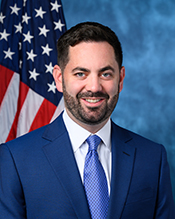
Rep. Michael Lawler
Sponsored bills
Maddy summaryThis bill designates the United States Postal Service facility at 298 Route 292 in Holmes, New York, as the "Sheriff Adrian 'Butch' Anderson Post Office Building." It updates all federal references (including laws, maps, and documents) to use this new name for the location. The bill has no policy changes or financial impact - it solely commemorates Sheriff Adrian "Butch" Anderson through a building designation.
Maddy summaryHR 6605 (STIFLE Act of 2023) requires the Treasury Department to study how criminals exploit location-obfuscation tools like VPNs and manipulated GPS data to evade U.S. financial sanctions and anti-money laundering laws. The bill mandates a report within one year assessing the risks of inaccurate location tracking via IP addresses, the ease of evasion, and potential solutions using aggregated location data. This study targets financial technology platforms that currently rely on IP addresses as their primary method for verifying user locations to comply with sanctions and banking regulations. The bill itself does not change existing laws but sets the stage for future policy decisions based on the Treasury's findings.
Maddy summaryThe Saving Vet Halls Act of 2023 authorizes the Department of Veterans Affairs to provide grants to eligible veterans service organizations (like local VFW or American Legion chapters) for repairing or upgrading existing facilities or technology at their locations. Organizations must submit a detailed plan for their proposed improvements and cannot use funds for new construction. Grants are capped at $75,000 per organization annually, and recipients cannot receive another grant for five consecutive fiscal years. The bill allocates $10 million in funding to support these facility and technology upgrades for veterans service organizations nationwide.
Maddy summaryHR 5785 modifies the Edith Nourse Rogers STEM Scholarship for veterans and military dependents pursuing STEM degrees. It updates eligibility by adding "or graduate" to degree requirements, reduces maximum benefit periods from 60 to 45 months for undergraduate and 90 to 67.5 months for graduate study, and adds new priority criteria for beneficiaries who've used the most entitlement months or are studying STEM fields. The bill also requires veterans to exhaust all other educational benefits before using this scholarship. These changes directly affect individuals seeking STEM education benefits under the program.
Maddy summaryThe COPE Act (HR 3581) creates a new grant program for the VA to fund mental health support services specifically for family caregivers of veterans enrolled in the VA's family caregiver program. It requires grantees to develop equitable plans addressing rural, American Indian/Alaska Native, elderly, women, and other underserved veteran communities, with priority given to areas with high veteran suicide rates or Veterans Crisis Line referrals. Grants must expand or create new mental health services while tracking outcomes like increased service utilization and reduced barriers, with annual reports to Congress. The bill authorizes $50 million annually (2023-2025) to supplement existing VA funding for this purpose.
Maddy summaryHR 6578 establishes a 9-member bipartisan commission to study antisemitism in the United States. The commission will investigate current manifestations of antisemitism, evaluate government efforts to combat it, and report findings and recommendations to Congress within one year. It directly affects Jewish communities by examining incidents like the 300% surge in antisemitic activity reported by the Anti-Defamation League, and impacts federal, state, and local governments through its evaluation of existing policies. The commission terminates 120 days after submitting its report, with no predetermined conclusions or interference in ongoing law enforcement.
Maddy summaryThis bill requires the President to block transactions involving "covered Iranian funds" processed by foreign or international financial institutions. These funds refer specifically to money transferred from South Korea to Qatar under certain Iran sanctions waivers. The law imposes sanctions under existing U.S. authorities to block all U.S.-related transactions with institutions handling these funds. Sanctions can be lifted if Iran stops supporting terrorism and dismantles its weapons programs, as certified by the President. The bill directly affects global financial institutions processing these specific Iranian-linked transfers.
Maddy summaryHRES 905 is a House resolution commemorating the 200th anniversary of the Monroe Doctrine, first articulated by President James Monroe in 1823. The resolution formally recognizes the doctrine's historical significance in establishing U.S. policy against foreign colonization in the Western Hemisphere and its enduring influence on U.S. foreign policy. It resolves that the House will "commemorate" the anniversary, "reassert" the U.S. position against foreign malign influence threatening Western Hemisphere democracies, and "recognize" the doctrine's principles as a foundational element of U.S. foreign policy. This is a purely ceremonial resolution with no new policy or funding implications.
Maddy summaryHRES 897 is a symbolic resolution expressing congressional support for November National Lung Cancer Awareness Month. It promotes public education about lung cancer, early detection methods, and increased screening access for high-risk individuals, including those with risk factors like family history or secondhand smoke exposure. The resolution highlights statistics on lung cancer's impact (e.g., it being the leading cause of cancer deaths) but does not create new laws, allocate funding, or mandate policy changes. It serves as a statement of support for awareness and screening efforts without altering existing healthcare programs.